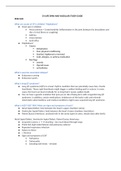
NURS 5335 FNP2 - Module 5 Study Guide/CV/LIFE SPAN AND VASCULAR STUDY GUIDE
PEDI CAD What are causes of CP in children? Palpitations? ● Chest pain in children ○ Most common = Costochondritis (inflammation in the joint between the breastbone and ribs s/t viral illness or coughing) ○ Asthma ○ stress/anxiety ○ Acid reflux ● Palpitations? ○ Causes Dehydration Poor physical conditioning Startled, frightened or stressed Cold, allergies, or asthma medication ○ Red flags anemia thyroid issues arrhythmias What is exercise associated collapse? ● Endurance running ● Endurance sports What is long QT syndrome? ● Long QT syndrome (LQTS) is a heart rhythm condition that can potentially cause fast, chaotic heartbeats. These rapid heartbeats might trigger a sudden fainting spell or seizure. In some cases, the heart can beat erratically for so long that it causes sudden death. ● You can have a genetic mutation that puts you at risk of being born with congenital long QT syndrome. In addition, certain medications, imbalances of the body's salts and minerals (electrolyte abnormalities), and medical conditions might cause acquired long QT syndrome. What is ASD? VSD? PDA? What are signs and symptoms of each? ● Atrial Septal Defect: hole between the heart’s upper chambers (atria). ● Ventricular Septal Defect: hole between the heart’s lower chambers (ventricles). ● Patent Ductus Arteriosus: unclosed hole in the aorta (open in utero, should close after birth). Atrial Septal Defect, Ventricular Septal Defect, Patent Ductus Arteriosus: ● Acyanotic Lesions: L → R shunting = too much blood through lungs ● Think CHF (right sided failure) and pulmonary edema! ● Repeated respiratory infection ● Failure to thrive ● + Murmur ● Signs and symptoms of CHF ○ Tachypnea ○ Tachycardia ○ Sweating with feeds – Irritable ○ Edema ○ Rales ○ + Dyspnea ○ Hepatomegaly ***Know that a child should be referred for elevated B/P if under the age of 10. What are common cardiovascular problems seen in children with Down’s Syndrome? Atrioventricular Septal Defect Ventricular Septal Defect Persistent Ductus Arteriosus Tetralogy of Fallot Know 7 S’s of innocent murmurs 1. Sensitive (Murmur accentuates with position changes, activity - see below) 2. Short duration (Not holosystolic) 3. Single (Isolated murmur without click, gallop or other extra heart sounds) 4. Small (Murmur limited to small, focal distribution without radiation) - pulmonic area L sternal border 5. Soft (Low amplitude Grade I- II) 6. Sweet (Non-harsh quality- vibratory or musical) 7. Systolic (Limited to systole) Pathologic murmurs in children: Grade 3 or greater Holosystolic timing Max intensity at LUSB Harsh or blowing Systolic clicks Diastolic murmurs Increased intensity
Geschreven voor
Documentinformatie
- Geüpload op
- 4 mei 2023
- Aantal pagina's
- 35
- Geschreven in
- 2022/2023
- Type
- Overig
- Persoon
- Onbekend
Onderwerpen
- nurs 5335
-
cvlife span and vascular study guide

Ook beschikbaar in voordeelbundel