3.9 – Coastal Management
Traditional approaches: designing hard engineering structures
CBA – Cost-benefit analysis carried out before a coastal-management project is given the
go-ahead, costs are forecast and then compared with expected benefits
2 types of costs and benefits:
1. Tangible – where costs and benefits are known and can be given a monetary value (eg.
building costs)
2. Intangible – where costs may be difficult to assess but are important (eg. visual impact)
Hard engineering: hard engineering management involves using artificial structures
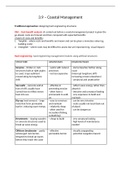
STRUCTURE ADVANTAGES DISADVANTAGES
Groynes – timber or rock - works with natural - starve beaches further along
structures built at right angles processes coast
to coast, traps sediment - not too expensive (interrupt longshore drift-
moved along by longshore increasing erosion elsewhere)
drift. - unnatural and unattractive
Sea walls – concrete wall at - effective in - reflect wave energy rather than
foot of cliff, usually have preventing erosion absorb it
curved face to reflect waves - often have a - intrusive and unnatural looking
back into sea promenade to walk - very expensive to build and
on maintain
Rip rap (rock armour) – large - easy to construct - can be very intrusive
rocks that form permeable and maintain - rocks usually not local (look out
barrier, reducing wave energy - relatively cheap of place)
- often used for - can be dangerous
recreation (fishing,
sunbathing)
Revetments – sloping wooden - cheap to build - very unnatural looking
or concrete structures used to - high levels of maintenance
break up wave energy needed
Offshore breakwater – partly - effective - visually unappealing
submerged rock barrier, permeable barrier - potential navigation hazard
designed to break up waves
before they reach the coast
Traditional approaches: designing hard engineering structures
CBA – Cost-benefit analysis carried out before a coastal-management project is given the
go-ahead, costs are forecast and then compared with expected benefits
2 types of costs and benefits:
1. Tangible – where costs and benefits are known and can be given a monetary value (eg.
building costs)
2. Intangible – where costs may be difficult to assess but are important (eg. visual impact)
Hard engineering: hard engineering management involves using artificial structures
STRUCTURE ADVANTAGES DISADVANTAGES
Groynes – timber or rock - works with natural - starve beaches further along
structures built at right angles processes coast
to coast, traps sediment - not too expensive (interrupt longshore drift-
moved along by longshore increasing erosion elsewhere)
drift. - unnatural and unattractive
Sea walls – concrete wall at - effective in - reflect wave energy rather than
foot of cliff, usually have preventing erosion absorb it
curved face to reflect waves - often have a - intrusive and unnatural looking
back into sea promenade to walk - very expensive to build and
on maintain
Rip rap (rock armour) – large - easy to construct - can be very intrusive
rocks that form permeable and maintain - rocks usually not local (look out
barrier, reducing wave energy - relatively cheap of place)
- often used for - can be dangerous
recreation (fishing,
sunbathing)
Revetments – sloping wooden - cheap to build - very unnatural looking
or concrete structures used to - high levels of maintenance
break up wave energy needed
Offshore breakwater – partly - effective - visually unappealing
submerged rock barrier, permeable barrier - potential navigation hazard
designed to break up waves
before they reach the coast