M2:1 Relevant and Non-Relevant Costs
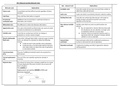
Non - relevant costs Explanations
Relevant costs Explanations
Avoidable costs Costs that would not have been incurred if they activity to
Future costs A committed cost that will be incurred regardless of future which they relate did not exist
decisions
Sunk costs A past cost which is not directly relevant in decision making
Cash flows Only cash flow information is required
Existing fixed costs Costs that are constant but decrease per unit output as
Incremental Additional costs incurred due to a particular decision or activity increases and will be incurred in any event,
overheads/costs alternative cost of action regardless of the decision
Differential costs The difference in total costs between alternatives Non-relevant variable Variable costs which are sunk cost and therefore not
costs relevant
Opportunity costs The value of the benefit sacrificed when one course of action ● Eg, raw materials in a factory that have been paid
is chosen in preference to an alternative for already but are now obsolete, no longer used
in production and have no scrap value
Variable costs Costs that are constant per unit but can change as ● However, these raw materials could be used in a
production or service volume changes special job which the company is trying to decide
whether or not to undertake
Directly attributable Costs which, although fixed within a relevant range of activity
fixed costs levels, are relevant to a decision for either the following General fixed Fixed overheads which will be unaffected by decisions to
reasons: overheads increase or decrease the scale of operations
● Could increase if extra activities were undertaken
● Could decrease or be eliminated entirely if decision Absorbed overheads A notional accounting cost which is ignored for decision
were taken either to reduce the scale of operations making purposes
or shut down entirely
Current purchase The price if additional materials need to be acquired for a
price job/contract
Current replacement The cost if the raw materials required are already in
cost inventory
Deprival value The amount of money that a company would have to receive
if it were deprived of the asset in order to be no worse off
than it already is
The LOWER of :
Replacement cost and the HIGHER of NRV and
Revenues expected
,1.4 Controllable and Uncontrollable costs
Controllable costs Uncontrollable costs
Items of expenditure Features Items of expenditure
which can be directly which cannot be directly
influenced by a given influenced by a given
manager within a given manager within a given
time span time span
Discretionary fixed costs Examples Committed fixed costs
Research and Rental costs
development costs - Uncontrollable in the
- Incurred as a result of short term because they
decisions made by have been committed by
management long-term decisions
- Can be
increased/decreased at
fairly short notice)
M2:2 Introduction to Cost Behavior
, 2.1 Behaviour and decision making
Cost behavior
● The way in which costs are affected by changes in the level of activity
● As the level of activity rises, costs will usually rise
Management decisions that are based on how costs and revenues vary at different
activity levels
● What should the planned activity level be for the next period?
● Should the selling price be reduced in order to sell more units?
● Should a particular component be manufactured internally or bought in?
● Should a contract be undertaken?
Major influence of costs
● Volume of output
● Level of activity
Examples of cost drivers/level of activity :
● The number of units produced
● The number of invoices issued
● The number of units of electricity consumed
● The value of items sold
● The number of items sold
Cost behavior understanding is useful for:
● Cost control
● Budgeting
M2:3 Fixed costs and Variable costs
Non - relevant costs Explanations
Relevant costs Explanations
Avoidable costs Costs that would not have been incurred if they activity to
Future costs A committed cost that will be incurred regardless of future which they relate did not exist
decisions
Sunk costs A past cost which is not directly relevant in decision making
Cash flows Only cash flow information is required
Existing fixed costs Costs that are constant but decrease per unit output as
Incremental Additional costs incurred due to a particular decision or activity increases and will be incurred in any event,
overheads/costs alternative cost of action regardless of the decision
Differential costs The difference in total costs between alternatives Non-relevant variable Variable costs which are sunk cost and therefore not
costs relevant
Opportunity costs The value of the benefit sacrificed when one course of action ● Eg, raw materials in a factory that have been paid
is chosen in preference to an alternative for already but are now obsolete, no longer used
in production and have no scrap value
Variable costs Costs that are constant per unit but can change as ● However, these raw materials could be used in a
production or service volume changes special job which the company is trying to decide
whether or not to undertake
Directly attributable Costs which, although fixed within a relevant range of activity
fixed costs levels, are relevant to a decision for either the following General fixed Fixed overheads which will be unaffected by decisions to
reasons: overheads increase or decrease the scale of operations
● Could increase if extra activities were undertaken
● Could decrease or be eliminated entirely if decision Absorbed overheads A notional accounting cost which is ignored for decision
were taken either to reduce the scale of operations making purposes
or shut down entirely
Current purchase The price if additional materials need to be acquired for a
price job/contract
Current replacement The cost if the raw materials required are already in
cost inventory
Deprival value The amount of money that a company would have to receive
if it were deprived of the asset in order to be no worse off
than it already is
The LOWER of :
Replacement cost and the HIGHER of NRV and
Revenues expected
,1.4 Controllable and Uncontrollable costs
Controllable costs Uncontrollable costs
Items of expenditure Features Items of expenditure
which can be directly which cannot be directly
influenced by a given influenced by a given
manager within a given manager within a given
time span time span
Discretionary fixed costs Examples Committed fixed costs
Research and Rental costs
development costs - Uncontrollable in the
- Incurred as a result of short term because they
decisions made by have been committed by
management long-term decisions
- Can be
increased/decreased at
fairly short notice)
M2:2 Introduction to Cost Behavior
, 2.1 Behaviour and decision making
Cost behavior
● The way in which costs are affected by changes in the level of activity
● As the level of activity rises, costs will usually rise
Management decisions that are based on how costs and revenues vary at different
activity levels
● What should the planned activity level be for the next period?
● Should the selling price be reduced in order to sell more units?
● Should a particular component be manufactured internally or bought in?
● Should a contract be undertaken?
Major influence of costs
● Volume of output
● Level of activity
Examples of cost drivers/level of activity :
● The number of units produced
● The number of invoices issued
● The number of units of electricity consumed
● The value of items sold
● The number of items sold
Cost behavior understanding is useful for:
● Cost control
● Budgeting
M2:3 Fixed costs and Variable costs