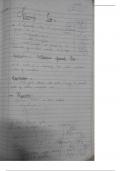
CHAPTER -1
ELECTRIC CHARGES AND FIELDS
Charging by induction:
Electrostatics is the branch of science which When a charged body is brought near an
deals with study of electric charges at rest. uncharged body without contact, that end of
uncharged conductor which is near to a
Frictional electricity: charged body gets positively charged and
• The charge obtained by a body on farther end gets the same type of charge.
rubbing with another body is called
Frictional Electricity/ Electrification by
friction/ Charging by rubbing.
• When a glass rod is rubbed with silk,
due to friction the heat energy produced
is utilized by the electrons in glass rod
which gets transferred to silk cloth. The
silk cloth gets negatively charged and
glass rod gets positively charged. The
negatively charged body gains
electrons and hence its mass increases.
• The substances in column 1 when
rubbed with substances in column 2
acquire positive charge while in
column 2 acquire negative charge.
COLUMN 1 COLUMN 2 Properties of electric charges:
(1) Like charges repel and unlike charges
Glass Silk
attract.
Wool Amber, Ebonite,
Plastic (2) Additivity of Charges
Charges are additive in nature.
Ebonite Polythene If q1, q2,q3 …..qn N be the charges in a
Dry hair Comb system.
Charging by conduction: ⸫Total charge of system
q = q1 + q2 + q3 + …….qn
When a charged body is brought near an
(3) Law of Conservation of charge:
uncharged body (conductor), charge flows
The charge can neither be created nor be
from charged body to uncharged body.
destroyed but can be transferred from one
body to another. The total charge of an
, isolated system is constant. is a charge in mass (True or False).
(4) Quantization of charges:
Answers
According to quantization of charge, the
charge of any body is an integer multiple 1) Refer note
of basic electronic charge (e). 2) According question of charge,
Total charge is 𝑄 = ±𝑁𝑒 ,where N is
𝑄 = ±𝑁𝑒 an integer
𝑄 0.8×10⁻¹⁹
∴𝑁= = = 0.5
𝑒 1.6×10⁻¹⁹
Where N is an integer and e
Since N is a fractional value. It is not
= 1.6 X 10 C -19
Possible.
3) a) frictional electricity.
i.e. charges 1e, 2e, 3e …… are
b) The word acquired positive charge
possible but not 2.5e. of 8 × 10⁻⁷ 𝑐
Important Questions (1) ؞electrons must be transferred from
Therefore rubber acquires more
1) Any 2 basic properties of charge? Mass.
2) Can a body have 0.8 × 10⁻¹⁹ C of charge?
𝑄 6.4×10⁻⁷
Which basic property of electric charge is 4) 𝑁 = = 1.6×10−19 = 4 × 10¹²
𝑒
the reason? Electrons
3) When a rubber sheet rubbed with wool, 5) Note reference
the wool is found to acquire a positive 6) Note reference
charge of 7) Note reference
8 × 10⁻⁷ C? 8) Note reference
What is the above process of charging?
Among rubber and wool which one Coulomb’s inverse square law
acquires more mass?
in electrostatics:
4) A glass rod is rubbed with silk found to
The electrostatic force between two
have acquired a positive charge of 6.4 ×
stationary point charges is directly
10-7C. Find the number of electrons
proportional to the product of magnitude of
transferred?
the charges and inversely proportional to
5) A glass rod rubbed with silk is brought
square of distance between them
near paper bits. What happens explain?
6) What are the three methods of charging a 𝑞1 𝑞2
F∝
body? 𝑟2
7) What do you mean by frictional
electricity? 𝜀0 is the permitivity of
8) During charging there is a charging there freespace (air/vacum)
, 1 𝑞1𝑞2 𝜀
𝐹𝑎𝑖𝑟 = 𝜀𝑟 =
4𝜋𝜀0 𝑟 2 𝜀0
𝑞1 𝑞2
𝐹𝑎𝑖𝑟 = 9 × 10⁹ Coulomb’s law in vector form:
𝑟2
Case 1: Unlike charges (force is attractive)
−12 2 2
𝜀0 = 8.85 × 10 𝐶 /𝑁𝑚
If placed in another medium,
1 𝑞1 𝑞2
𝐹𝑚𝑒𝑑𝑖𝑢𝑚 = ɛ is
4𝜋𝜀 𝑟 2
permittivity of
Force on charge q1due to q2:
the medium
=
Relative permittivity (dielectric Force on charge q2 due to q1:
constant) Ԑr
=
Dielectric constant of a medium is the
ratio of permittivity of medium to Case 2:
permittivity of free space.
1 Coulomb:
One Coulomb is that charge which when
placed in free space with an equal and similar
charge at a distance of 1m repels with a force
9
of 9 X 10 N
Superposition principle:
If there are a number of charges q1, q2, q3, ….qn
around a charge ‘q’, then according to
𝐹𝑎𝑖𝑟 superposition principle “the total force acting
𝜀𝑟 =
𝐹𝑚𝑒𝑑 on ‘q’ is the vector sum of the forces on ‘q’
ELECTRIC CHARGES AND FIELDS
Charging by induction:
Electrostatics is the branch of science which When a charged body is brought near an
deals with study of electric charges at rest. uncharged body without contact, that end of
uncharged conductor which is near to a
Frictional electricity: charged body gets positively charged and
• The charge obtained by a body on farther end gets the same type of charge.
rubbing with another body is called
Frictional Electricity/ Electrification by
friction/ Charging by rubbing.
• When a glass rod is rubbed with silk,
due to friction the heat energy produced
is utilized by the electrons in glass rod
which gets transferred to silk cloth. The
silk cloth gets negatively charged and
glass rod gets positively charged. The
negatively charged body gains
electrons and hence its mass increases.
• The substances in column 1 when
rubbed with substances in column 2
acquire positive charge while in
column 2 acquire negative charge.
COLUMN 1 COLUMN 2 Properties of electric charges:
(1) Like charges repel and unlike charges
Glass Silk
attract.
Wool Amber, Ebonite,
Plastic (2) Additivity of Charges
Charges are additive in nature.
Ebonite Polythene If q1, q2,q3 …..qn N be the charges in a
Dry hair Comb system.
Charging by conduction: ⸫Total charge of system
q = q1 + q2 + q3 + …….qn
When a charged body is brought near an
(3) Law of Conservation of charge:
uncharged body (conductor), charge flows
The charge can neither be created nor be
from charged body to uncharged body.
destroyed but can be transferred from one
body to another. The total charge of an
, isolated system is constant. is a charge in mass (True or False).
(4) Quantization of charges:
Answers
According to quantization of charge, the
charge of any body is an integer multiple 1) Refer note
of basic electronic charge (e). 2) According question of charge,
Total charge is 𝑄 = ±𝑁𝑒 ,where N is
𝑄 = ±𝑁𝑒 an integer
𝑄 0.8×10⁻¹⁹
∴𝑁= = = 0.5
𝑒 1.6×10⁻¹⁹
Where N is an integer and e
Since N is a fractional value. It is not
= 1.6 X 10 C -19
Possible.
3) a) frictional electricity.
i.e. charges 1e, 2e, 3e …… are
b) The word acquired positive charge
possible but not 2.5e. of 8 × 10⁻⁷ 𝑐
Important Questions (1) ؞electrons must be transferred from
Therefore rubber acquires more
1) Any 2 basic properties of charge? Mass.
2) Can a body have 0.8 × 10⁻¹⁹ C of charge?
𝑄 6.4×10⁻⁷
Which basic property of electric charge is 4) 𝑁 = = 1.6×10−19 = 4 × 10¹²
𝑒
the reason? Electrons
3) When a rubber sheet rubbed with wool, 5) Note reference
the wool is found to acquire a positive 6) Note reference
charge of 7) Note reference
8 × 10⁻⁷ C? 8) Note reference
What is the above process of charging?
Among rubber and wool which one Coulomb’s inverse square law
acquires more mass?
in electrostatics:
4) A glass rod is rubbed with silk found to
The electrostatic force between two
have acquired a positive charge of 6.4 ×
stationary point charges is directly
10-7C. Find the number of electrons
proportional to the product of magnitude of
transferred?
the charges and inversely proportional to
5) A glass rod rubbed with silk is brought
square of distance between them
near paper bits. What happens explain?
6) What are the three methods of charging a 𝑞1 𝑞2
F∝
body? 𝑟2
7) What do you mean by frictional
electricity? 𝜀0 is the permitivity of
8) During charging there is a charging there freespace (air/vacum)
, 1 𝑞1𝑞2 𝜀
𝐹𝑎𝑖𝑟 = 𝜀𝑟 =
4𝜋𝜀0 𝑟 2 𝜀0
𝑞1 𝑞2
𝐹𝑎𝑖𝑟 = 9 × 10⁹ Coulomb’s law in vector form:
𝑟2
Case 1: Unlike charges (force is attractive)
−12 2 2
𝜀0 = 8.85 × 10 𝐶 /𝑁𝑚
If placed in another medium,
1 𝑞1 𝑞2
𝐹𝑚𝑒𝑑𝑖𝑢𝑚 = ɛ is
4𝜋𝜀 𝑟 2
permittivity of
Force on charge q1due to q2:
the medium
=
Relative permittivity (dielectric Force on charge q2 due to q1:
constant) Ԑr
=
Dielectric constant of a medium is the
ratio of permittivity of medium to Case 2:
permittivity of free space.
1 Coulomb:
One Coulomb is that charge which when
placed in free space with an equal and similar
charge at a distance of 1m repels with a force
9
of 9 X 10 N
Superposition principle:
If there are a number of charges q1, q2, q3, ….qn
around a charge ‘q’, then according to
𝐹𝑎𝑖𝑟 superposition principle “the total force acting
𝜀𝑟 =
𝐹𝑚𝑒𝑑 on ‘q’ is the vector sum of the forces on ‘q’