The Assessment and Management of Pain
Correct answers are shown below
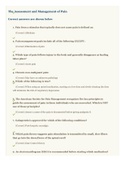
1.Pain from a stimulus that typically does not cause pain is defined as:
(Correct) Allodynia
2.Pain management goals include all of the following EXCEPT:
(Correct) Elimination of pain
3.Which type of pain follows injury to the body and generally disappears as healing takes place?
(Correct) Acute pain
4.Chronic non-malignant pain:
(Correct) May have an unknown pathology
5.Which of the following is true?
(Correct) When using an opioid medication, starting at a low dose and slowly titrating the dose will minimize the risk of respiratory depression.
6.The American Society for Pain Management recognizes five key principles to
guide the assessment of pain in those individuals who are nonverbal. Which is NOT one of those principles?
(Correct) Assure a cause of the pain is documented before giving analgesia 8.
7.Gabapentin is approved for which of the following conditions?
(Correct) Post-herpetic neuralgia
8.Which pain theory suggests pain stimulation is transmitted by small, slow fibers that go into the dorsal horn of the spinal cord?
(Correct) Gate Control theory
9.An electrocardiogram (EKG) is recommended before starting which medication?
Correct answers are shown below
1.Pain from a stimulus that typically does not cause pain is defined as:
(Correct) Allodynia
2.Pain management goals include all of the following EXCEPT:
(Correct) Elimination of pain
3.Which type of pain follows injury to the body and generally disappears as healing takes place?
(Correct) Acute pain
4.Chronic non-malignant pain:
(Correct) May have an unknown pathology
5.Which of the following is true?
(Correct) When using an opioid medication, starting at a low dose and slowly titrating the dose will minimize the risk of respiratory depression.
6.The American Society for Pain Management recognizes five key principles to
guide the assessment of pain in those individuals who are nonverbal. Which is NOT one of those principles?
(Correct) Assure a cause of the pain is documented before giving analgesia 8.
7.Gabapentin is approved for which of the following conditions?
(Correct) Post-herpetic neuralgia
8.Which pain theory suggests pain stimulation is transmitted by small, slow fibers that go into the dorsal horn of the spinal cord?
(Correct) Gate Control theory
9.An electrocardiogram (EKG) is recommended before starting which medication?