HESI Med-Surg Exam Questions and Answers Graded 100% Update
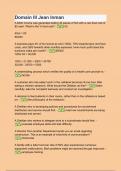
HESI Med-Surg Exam Questions and Answers Graded 100% Update 2023 A client with history of atrial fibrillation is admitted to the telemetry unit with sudden onset of shortness of breath. The nurse observes a new irregular heart rhythm and should perform which assessment at this time? • Check for a pulse deficit. • Palpate the apical impulse. • Inspect jugular vein pulse. • Examine for a carotid bruit. A client with a past history of atrial fibrillation may return to that rhythm. Any signs of atrial fibrillation, such as sudden onset shortness of breath, requires further investigation. The nurse should assess this client for a pulse deficit because this condition occurs with atrial fibrillation. Jarvis. (2016); Physical Examination and Health Assessment, (Chap 19) 7th ed., p. 481 4. Which client should be further assessed for an ectopic pregnancy? • A 24-year-old with shoulder and lower abdominal quadrant pain. • A 33-year-old with intermittent lower abdominal cramping. • A 20-year-old with fever and right lower abdominal colic. • A 40-year-old with jaundice and right lower abdominal pain. A 24-year-old with sudden onset of lower abdominal quadrant pain should be assessed for an ectopic pregnancy. The pain can also be referred to the shoulder and may be associated with vaginal bleeding. Health Assessment for Nursing Practice, Wilson and Giddens. p.269 5. Which dietary assessment finding is most important for the nurse to address when caring for a client with diabetic nephropathy? • Drinks a six pack of beer every day. • Enjoys a hamburger once a month. • Eats fortified breakfast cereal daily. • Consumes beans and rice every day. Drinking six beers every day is the dietary assessment finding most important for the nurse to address when caring for a client with diabetic nephropathy. The usual can of beer is 12 ounces (355 mL). Clients with diabetes are recommended to drink no more than 12 ounces of beer per day because beer contains carbohydrates that can create unhealthy fluctuations in blood glucose and promote poor glucose control. Nephropathy is exacerbated by poor blood glucose control. 6. Which assessment finding is of greatest concern to the nurse who is caring for a client with stomatitis? • Cough brought on by swallowing. • Sore throat caused by speaking. • Painful and dry oral cavity. • Unintended weight loss. A cough brought on by swallowing is a sign of dysphagia, which is a finding of particular concern in a client with stomatitis. Dysphagia can cause numerous problems, including airway obstruction, and should be reported to the healthcare provider immediately. Ignatavicius, (2016). Medical-surgical nursing: Patient-centered collaborative care, eight edition., Ch. 53, p. 1100. 7. The nurse is teaching a client diagnosed with peripheral arterial disease. Which genitourinary system complication should the nurse include in the teaching? • Altered sexual response. • Sterility. • Urinary incontinence. • Decreased pelvic muscle tone. Peripheral arterial disease (PAD) is a cardiovascular condition characterized by narrowing of the arteries and reduced blood flow to the extremities. PAD is known to alter the blood flow to the male's penis and is associated with erectile dysfunction in men. Ignatavicius,. (2016). Medical-surgical nursing: Patient-centered collaborative care, eight edition., Ch. 69, p. 1452. 8. A 40-year-old female client has a history of smoking. Which finding should the nurse identify as a risk factor for myocardia infarction? • Oral contraceptives. • Senile osteopenia.
Written for
- Institution
- HESI Med-Surg
- Course
- HESI Med-Surg
Document information
- Uploaded on
- April 12, 2023
- Number of pages
- 88
- Written in
- 2022/2023
- Type
- Exam (elaborations)
- Contains
- Questions & answers
Subjects
- hesi med surg
- hesi
- med surg
- hesi med surg exam
-
hesi med surg exam questions and answers graded a latest update 2023
-
hesi med surg exam questions and answers graded 100 update 2023

Also available in package deal