

N1 exam 1 reviewer
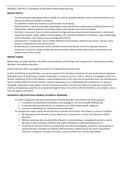
VIDEBECK CHAPTER 1: Foundations of Psychiatric-mental Health Nursing MENTAL HEALTH The World Health Organization defines health as a state of complete physical, mental, and social wellness, not merely the absence of disease or infirmity. This definition emphasizes health as a positive state of well-being Mental health is a state of emotional, psychological, and social wellness evidenced by satisfying interpersonal relationships, effective behavior and coping, positive self-concept, and emotional stability. Individual, or personal, factors include a person’s biologic makeup, autonomy and independence, self-esteem, capacity for growth, vitality, ability to find meaning in life, emotional resilience or hardiness, sense of belonging, reality orientation, and coping or stress management abilities. Interpersonal, or relationship, factors include effective communication, ability to help others, intimacy, and a balance of separateness and connectedness. Social/cultural, or environmental, factors include a sense of community, access to adequate resources, intolerance of violence, support of diversity among people, mastery of the environment, and a positive, yet realistic, view of one’s world. MENTAL ILLNESS Mental illness includes disorders that affect mood, behavior, and thinking, such as depression, schizophrenia, anxiety disorders, and addictive disorders. Mental disorders often cause significant distress or impaired functioning or both. Factors contributing to mental illness can also be viewed within individual, interpersonal, and social/cultural categories. Individual factors include biologic makeup, intolerable or unrealistic worries or fears, inability to distinguish reality from fantasy, intolerance of life’s uncertainties, a sense of disharmony in life, and a loss of meaning in one’s life. Interpersonal factors include ineffective communication, excessive dependency on or withdrawal from relationships, no sense of belonging, inadequate social support, and loss of emotional control. Social/cultural factors include lack of resources, violence, homelessness, poverty, an unwarranted negative view of the world, and discrimination such as stigma, racism, classism, ageism, and sexism
Document information
- Uploaded on
- April 7, 2023
- Number of pages
- 4
- Written in
- 2022/2023
- Type
- Class notes
- Professor(s)
- Professor
- Contains
- All classes


