Disclosure at the police station
General position:
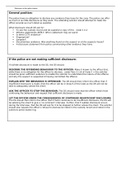
The police have no obligation to disclose any evidence they have for the case. The police can offer
as much or as little disclosure as they want. The attending solicitor should attempt to make the
officer provide as much detail as possible.
What disclosure should DS ask for:
To see the custody record and be supplied a copy of this – Code C 2.4
Witness statements (APPLY: Who’s statement may we want)
Is there CCTV evidence?
Fingerprints?
Samples?
Documentary evidence: Was anything found on the suspect or at the suspects house?
A disclosure statement from police summarising other evidence they have.
If the police are not making sufficient disclosure:
If no/little disclosure is made to the DS, the DS should:
DESCRIBE THE OFFENDING BEHAVIOUR TO THE OFFICER: Make it known to the officer that,
while there is no obligation for the officer to disclose, under Para 11.1A of Code C = the solicitor
should be given sufficient evidence to enable the solicitor to understand the nature of the offence
and why the suspect is suspected of having committed the offence.
EXPLAIN WHY THE BEHAVIOUS IS OFFENSIVE: The DS should then inform the officer that if
insufficient disclosure is made, that the officer will be in breach of the Code as the DS will not be
able to adequately advise the client.
ASK THE OFFICER TO STOP THE BEHVIOUR: The DS should insist that the officer refrain from
continuing the behaviour and request that sufficient disclosure is made.
LET THE OFFICER KNOW THE CONSEQUENCES OF CONTINUED INSUFFICIENT DISCLOSURE:
The DS should then inform the officer that if there continues to be insufficient disclosure, the DS will
be advising the client to give a ‘no comment’ interview. Further, that if sudden disclosure occurs
during the interview, that the DS will ask for it to be stopped to further advise the client. The solicitor
should also request the officer’s refusal to disclose be noted in the custody record and noted in the
solicitors police station log.
General position:
The police have no obligation to disclose any evidence they have for the case. The police can offer
as much or as little disclosure as they want. The attending solicitor should attempt to make the
officer provide as much detail as possible.
What disclosure should DS ask for:
To see the custody record and be supplied a copy of this – Code C 2.4
Witness statements (APPLY: Who’s statement may we want)
Is there CCTV evidence?
Fingerprints?
Samples?
Documentary evidence: Was anything found on the suspect or at the suspects house?
A disclosure statement from police summarising other evidence they have.
If the police are not making sufficient disclosure:
If no/little disclosure is made to the DS, the DS should:
DESCRIBE THE OFFENDING BEHAVIOUR TO THE OFFICER: Make it known to the officer that,
while there is no obligation for the officer to disclose, under Para 11.1A of Code C = the solicitor
should be given sufficient evidence to enable the solicitor to understand the nature of the offence
and why the suspect is suspected of having committed the offence.
EXPLAIN WHY THE BEHAVIOUS IS OFFENSIVE: The DS should then inform the officer that if
insufficient disclosure is made, that the officer will be in breach of the Code as the DS will not be
able to adequately advise the client.
ASK THE OFFICER TO STOP THE BEHVIOUR: The DS should insist that the officer refrain from
continuing the behaviour and request that sufficient disclosure is made.
LET THE OFFICER KNOW THE CONSEQUENCES OF CONTINUED INSUFFICIENT DISCLOSURE:
The DS should then inform the officer that if there continues to be insufficient disclosure, the DS will
be advising the client to give a ‘no comment’ interview. Further, that if sudden disclosure occurs
during the interview, that the DS will ask for it to be stopped to further advise the client. The solicitor
should also request the officer’s refusal to disclose be noted in the custody record and noted in the
solicitors police station log.