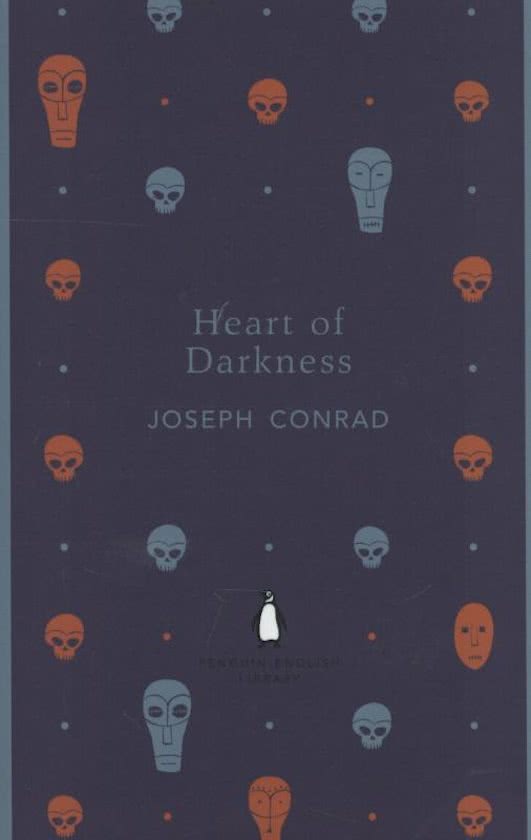
Heart of Darkness
&
A Passage to India
English Literature (Prose): Comparative [A04]
Place/ setting
,Heart of Darkness A Passage to India
Para 1: Both HoD and APTI employ setting to convey
how, in the absence of the Western social mechanisms
that govern human behaviour, the latent immorality of
the colonisers emerges.
In APTI, the novel’s setting – the city of Chandrapore –
In Heart of Darkness, the Europeans’ moral depravity also functions as a metaphor for the colonisers’ moral
manifests itself in the novel’s setting. The Congo bankruptcy: it ‘[…] presents nothing extraordinary’ and
Central Station, for instance, which lies between the is ‘edged rather than washed by the river Ganges’ (1).
Outer and Inner stations, might be interpreted as a With the Ganges considered by Hindus to be the most
liminal moral space – a stage of moral paralysis/ sacred river in the world, the negation of the adjective
hollowness. Indeed, the manager of the station ‘washed’, suggesting not only submersion in water but
establishes that ‘men who come out here should have also moral cleanliness, establishes a clear framework of
no entrails’ (123), suggesting the sacrifice of morality – morality - an image that recalls the moral decay of
symbolised by the loss of ‘entrails’ – is a precondition Conrad’s Central Station, which is bordered by ‘smelly
for survival in Africa. The manager embodies the mud’. As with Heart of Darkness, negative sentence
vacancy of the setting: ‘He inspired neither love nor structures are also attached to setting (‘nothing
fear’; ‘he was neither civil nor uncivil’ (123 and 124). extraordinary’, ‘no bathing-steps’, and ‘no painting’),
Here, Conrad’s use of dual negation could enact the similarly denoting a moral hollowness. Both dismantle
moral paralysis of the manager – a metonym, we White Man’s Burden – important AO3. Both novels thus
might argue, for the colonisers in the Central Station. shed light on the moral bankruptcy of the colonisers
Thomas Moser’s assertion that the ‘whites are but through setting; and within these spaces, moral
hollow men’ therefore seems particularly apt; we emptiness is symbolised by linguistic nothingness.
might recall TS Eliot’s ‘Hollow Men’ – characters
without moral fibre or resolution.
However, whilst in HoD setting is employed to convey
universal moral hollowness, the depravity manifested
in setting is somewhat contained in APTI. Setting in Heart of Darkness, by contrast, expands the
moral void of the Central Station to encompass all of
Mrs Moore’s morality and spirituality collapses in the humanity. The unidentified narrator observes: ‘the
setting of the Marabar Caves; yet these qualities are tranquil waterway leading to the uttermost ends of the
preserved by the Indians’ chant in the trial scene earth flowed sombre under an overcast sky – seemed
following her departure. We might infer the anaphoric to lead into the heart of an immense darkness’ (189).
repetition of ‘Esmiss Esmoor’ – a Hindu goddess – to Conrad ascribes a deliberate ambiguity to this image
partially contain the hollow, nullifying ‘boum’ of the here: the Thames leads to both London and the sea,
Caves which echoes throughout the novel. This and thus could position London itself (the ‘heart’ of the
defiance could reflect the growing backlash against British Empire’) as the heart of darkness. The Thames
imperialism of the 1920s, with the 1919 Treaty of is thus an objective correlative for human nature.
Versailles promoting self-determination and nationalist Reflects Conrad’s own nihilistic beliefs: he wrote to his
sentiment. aunt: ‘Everything is repellent to me. Men and things;
but especially men’ – supports reading.
Para 2: Both Forster and Conrad convey how the
settings/ environments of Africa and India ironically
inflict psychological and physical suffering on the
colonisers.
In A Passage to India, Forster also conveys the
In Heart of Darkness, perhaps the most striking suffering inflicted by the wilderness, although it is
example of this, and one that prefigures Marlow’s own physical: Adela is a passive victim to the ‘hundreds of
degeneration, is Fresleven, who ‘[whacks]’ the chief cactus spines’ and ‘fresh colonies, tiny hairs that might
‘mercilessly’ leading to his own death where ‘the grass snap off’ (182). The noun ‘colonies’ is particularly
growing through his ribs [is] tall enough to hide his notable in suggesting India has “colonised” the
bones’ (109). The violent verb ‘whacked’ emphasises colonisers and invaded Adela’s body, similar to how the
the intensity of the mental suffering and degradation African grass ‘grow[s] through [Fresleven’s] ribs’ and
inflicted by Africa: even the latent savage instincts of therefore subjugates him.
the benign Fresleven surface. This culminates in
Fresleven’s own suffering, with the image of the ‘grass
growing through his ribs’ recalling powerful scriptural
images of mortality and human transience such as ‘All
flesh is grass’. By contrast, the suffering of the colonisers in A
Passage to India is less unsettling as they are able to
However, the suffering inflicted on characters in A anchor themselves in the English microcosm. In
Passage to India is tempered somewhat by the English contrast to the Marlow’s disconnection and individual
microcosm in Chandrapore, whereas Heart of suffering in Heart of Darkness, Adela is surrounded by
Darkness is more unsettling in conveying how the ‘Mesdames Callendar and Lesley’ and ‘Mrs Turton’, who
, colonisers are completely isolated in an alien express ‘What can we do for our sister?’. The noun
environment. ‘sister’, although infantilising and superficial in this
context, at least emphasises a sense of solidarity in
In the latter, Marlow describes the psychological contrast to the adjectives ‘bewitched’ and ‘cut off’ in
suffering and degradation induced by Africa: ‘you Heart of Darkness which imply Marlow’s individual
thought yourself bewitched and cut off for ever from suffering. Overall, whilst both novels convey the
everything you had known once – somewhere – far suffering of the colonisers in alien environments, Heart
away – in another existence perhaps’ (137). The of Darkness is therefore more unsettling in portraying
dashes employed here elongate and fragment the the colonisers’ disconnection and lack of emotional
sentence, enacting the isolation felt by the colonisers proximity, in line with the nascent Modernist style of
and their drawn-out state of suffering. The lexical the fin-de-siecle.
choices ‘bewitched’ and ‘cut off’ both reflect the idea
of epistemological relativism frequently explored in
Modernist literature, suggesting such suffering and
disconnection is individual and therefore worse.
Para 3: The novels fundamentally differ in that setting
is shown to be wholly intractable in Heart of Darkness,
whereas in APTI setting is somewhat malleable/
controllable.
Directly contrasts to: ‘The roads, named after
HoD: ‘Can’t say I saw any road or any upkeep’ (121). victorious generals and intersecting at right angles,
Roads and road maintenance are a metonymy for the were symbolic of the net Great Britain had thrown over
institutions of civilization which claim to exist but have India’ (14). Aziz’s sense of place has been overwritten
in actual fact become functionless and therefore and reconstructed by others. This renaming of roads
absurd. Failure to implement the White Man’s Burden demonstrates that language is both a means of
+ civilisation (one of Livingstone’s 3 Cs). communication as well as a carrier of culture. Link to
Edwardian social convention – perceived rigidity of
If time: ‘it was covered with patches all over, with Edwardian sensibilities.
bright patches, blue, red, and yellow’ (158). The
harlequin is a living emblem of Africa’s dividedness/
manifest disorder and the map that Marlowe
encountered in Brussels – reflects the Scramble for
Africa.
&
A Passage to India
English Literature (Prose): Comparative [A04]
Place/ setting
,Heart of Darkness A Passage to India
Para 1: Both HoD and APTI employ setting to convey
how, in the absence of the Western social mechanisms
that govern human behaviour, the latent immorality of
the colonisers emerges.
In APTI, the novel’s setting – the city of Chandrapore –
In Heart of Darkness, the Europeans’ moral depravity also functions as a metaphor for the colonisers’ moral
manifests itself in the novel’s setting. The Congo bankruptcy: it ‘[…] presents nothing extraordinary’ and
Central Station, for instance, which lies between the is ‘edged rather than washed by the river Ganges’ (1).
Outer and Inner stations, might be interpreted as a With the Ganges considered by Hindus to be the most
liminal moral space – a stage of moral paralysis/ sacred river in the world, the negation of the adjective
hollowness. Indeed, the manager of the station ‘washed’, suggesting not only submersion in water but
establishes that ‘men who come out here should have also moral cleanliness, establishes a clear framework of
no entrails’ (123), suggesting the sacrifice of morality – morality - an image that recalls the moral decay of
symbolised by the loss of ‘entrails’ – is a precondition Conrad’s Central Station, which is bordered by ‘smelly
for survival in Africa. The manager embodies the mud’. As with Heart of Darkness, negative sentence
vacancy of the setting: ‘He inspired neither love nor structures are also attached to setting (‘nothing
fear’; ‘he was neither civil nor uncivil’ (123 and 124). extraordinary’, ‘no bathing-steps’, and ‘no painting’),
Here, Conrad’s use of dual negation could enact the similarly denoting a moral hollowness. Both dismantle
moral paralysis of the manager – a metonym, we White Man’s Burden – important AO3. Both novels thus
might argue, for the colonisers in the Central Station. shed light on the moral bankruptcy of the colonisers
Thomas Moser’s assertion that the ‘whites are but through setting; and within these spaces, moral
hollow men’ therefore seems particularly apt; we emptiness is symbolised by linguistic nothingness.
might recall TS Eliot’s ‘Hollow Men’ – characters
without moral fibre or resolution.
However, whilst in HoD setting is employed to convey
universal moral hollowness, the depravity manifested
in setting is somewhat contained in APTI. Setting in Heart of Darkness, by contrast, expands the
moral void of the Central Station to encompass all of
Mrs Moore’s morality and spirituality collapses in the humanity. The unidentified narrator observes: ‘the
setting of the Marabar Caves; yet these qualities are tranquil waterway leading to the uttermost ends of the
preserved by the Indians’ chant in the trial scene earth flowed sombre under an overcast sky – seemed
following her departure. We might infer the anaphoric to lead into the heart of an immense darkness’ (189).
repetition of ‘Esmiss Esmoor’ – a Hindu goddess – to Conrad ascribes a deliberate ambiguity to this image
partially contain the hollow, nullifying ‘boum’ of the here: the Thames leads to both London and the sea,
Caves which echoes throughout the novel. This and thus could position London itself (the ‘heart’ of the
defiance could reflect the growing backlash against British Empire’) as the heart of darkness. The Thames
imperialism of the 1920s, with the 1919 Treaty of is thus an objective correlative for human nature.
Versailles promoting self-determination and nationalist Reflects Conrad’s own nihilistic beliefs: he wrote to his
sentiment. aunt: ‘Everything is repellent to me. Men and things;
but especially men’ – supports reading.
Para 2: Both Forster and Conrad convey how the
settings/ environments of Africa and India ironically
inflict psychological and physical suffering on the
colonisers.
In A Passage to India, Forster also conveys the
In Heart of Darkness, perhaps the most striking suffering inflicted by the wilderness, although it is
example of this, and one that prefigures Marlow’s own physical: Adela is a passive victim to the ‘hundreds of
degeneration, is Fresleven, who ‘[whacks]’ the chief cactus spines’ and ‘fresh colonies, tiny hairs that might
‘mercilessly’ leading to his own death where ‘the grass snap off’ (182). The noun ‘colonies’ is particularly
growing through his ribs [is] tall enough to hide his notable in suggesting India has “colonised” the
bones’ (109). The violent verb ‘whacked’ emphasises colonisers and invaded Adela’s body, similar to how the
the intensity of the mental suffering and degradation African grass ‘grow[s] through [Fresleven’s] ribs’ and
inflicted by Africa: even the latent savage instincts of therefore subjugates him.
the benign Fresleven surface. This culminates in
Fresleven’s own suffering, with the image of the ‘grass
growing through his ribs’ recalling powerful scriptural
images of mortality and human transience such as ‘All
flesh is grass’. By contrast, the suffering of the colonisers in A
Passage to India is less unsettling as they are able to
However, the suffering inflicted on characters in A anchor themselves in the English microcosm. In
Passage to India is tempered somewhat by the English contrast to the Marlow’s disconnection and individual
microcosm in Chandrapore, whereas Heart of suffering in Heart of Darkness, Adela is surrounded by
Darkness is more unsettling in conveying how the ‘Mesdames Callendar and Lesley’ and ‘Mrs Turton’, who
, colonisers are completely isolated in an alien express ‘What can we do for our sister?’. The noun
environment. ‘sister’, although infantilising and superficial in this
context, at least emphasises a sense of solidarity in
In the latter, Marlow describes the psychological contrast to the adjectives ‘bewitched’ and ‘cut off’ in
suffering and degradation induced by Africa: ‘you Heart of Darkness which imply Marlow’s individual
thought yourself bewitched and cut off for ever from suffering. Overall, whilst both novels convey the
everything you had known once – somewhere – far suffering of the colonisers in alien environments, Heart
away – in another existence perhaps’ (137). The of Darkness is therefore more unsettling in portraying
dashes employed here elongate and fragment the the colonisers’ disconnection and lack of emotional
sentence, enacting the isolation felt by the colonisers proximity, in line with the nascent Modernist style of
and their drawn-out state of suffering. The lexical the fin-de-siecle.
choices ‘bewitched’ and ‘cut off’ both reflect the idea
of epistemological relativism frequently explored in
Modernist literature, suggesting such suffering and
disconnection is individual and therefore worse.
Para 3: The novels fundamentally differ in that setting
is shown to be wholly intractable in Heart of Darkness,
whereas in APTI setting is somewhat malleable/
controllable.
Directly contrasts to: ‘The roads, named after
HoD: ‘Can’t say I saw any road or any upkeep’ (121). victorious generals and intersecting at right angles,
Roads and road maintenance are a metonymy for the were symbolic of the net Great Britain had thrown over
institutions of civilization which claim to exist but have India’ (14). Aziz’s sense of place has been overwritten
in actual fact become functionless and therefore and reconstructed by others. This renaming of roads
absurd. Failure to implement the White Man’s Burden demonstrates that language is both a means of
+ civilisation (one of Livingstone’s 3 Cs). communication as well as a carrier of culture. Link to
Edwardian social convention – perceived rigidity of
If time: ‘it was covered with patches all over, with Edwardian sensibilities.
bright patches, blue, red, and yellow’ (158). The
harlequin is a living emblem of Africa’s dividedness/
manifest disorder and the map that Marlowe
encountered in Brussels – reflects the Scramble for
Africa.