

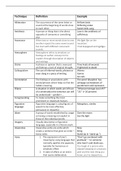
Technique Definition Example
Alliteration The occurrence of the same letter or Brilliant birds
sound at the beginning of words close Slithering snake
to each other. Sweet birds sang
Antithesis A person or thing that is the direct Love is the antithesis of
opposite of someone or something selfishness
else
Assonance When two or more words close to one We light fire on the
another repeat the same vowel sound mountain.
but start with different consonant I feel depressed and restless.
sounds.
Atmosphere Atmosphere refers to emotions or
feelings an author conveys to his
readers through description of objects
and settings
Cliché A phrase or opinion that is overused Time heals all wounds
and betrays a lack of original thought. Frightened to death
Colloquialism The use of informal words, phrases or Wanna
even slang in a piece of writing. Gonna
Go nuts
Connotation The feelings or associations with The word ‘discipline’ has
words/phrases which helps to find the unhappy connotations of
hidden meaning. punishment and repression
Ellipsis A situation in which words are left out "What percentage was left?"
of a sentencebut the sentence can still "20." (= 20 percent)
be understood – symbol = …
Foregrounding To make something the most
prominent or important feature.
Figurative Figurative language is using figures of Metaphors, similes
language speech to be more effective,
persuasive or impactful
Idiom A group of words established by usage Over the moon
as having a meaning not explicit in See the light
those of the individual words
Imagery Visually descriptive or figurative
language, especially in a literary work.
Imperative Imperative verbs are verbs which Stop
create a sentence that gives an order – Bring
bossy verbs Stand (as in ‘stand up.’)
Irony 1. The expression of one's “Don’t go overboard with
meaning by using language that gratitude” – to someone
normally signifies the opposite, who hasn’t said thank you.
typically for humorous or You laugh at a person who
emphatic effect. slipped stepping on a banana
2. A state of affairs or an event peel and the next thing you
that seems deliberately know, you’ve slipped too.
Alliteration The occurrence of the same letter or Brilliant birds
sound at the beginning of words close Slithering snake
to each other. Sweet birds sang
Antithesis A person or thing that is the direct Love is the antithesis of
opposite of someone or something selfishness
else
Assonance When two or more words close to one We light fire on the
another repeat the same vowel sound mountain.
but start with different consonant I feel depressed and restless.
sounds.
Atmosphere Atmosphere refers to emotions or
feelings an author conveys to his
readers through description of objects
and settings
Cliché A phrase or opinion that is overused Time heals all wounds
and betrays a lack of original thought. Frightened to death
Colloquialism The use of informal words, phrases or Wanna
even slang in a piece of writing. Gonna
Go nuts
Connotation The feelings or associations with The word ‘discipline’ has
words/phrases which helps to find the unhappy connotations of
hidden meaning. punishment and repression
Ellipsis A situation in which words are left out "What percentage was left?"
of a sentencebut the sentence can still "20." (= 20 percent)
be understood – symbol = …
Foregrounding To make something the most
prominent or important feature.
Figurative Figurative language is using figures of Metaphors, similes
language speech to be more effective,
persuasive or impactful
Idiom A group of words established by usage Over the moon
as having a meaning not explicit in See the light
those of the individual words
Imagery Visually descriptive or figurative
language, especially in a literary work.
Imperative Imperative verbs are verbs which Stop
create a sentence that gives an order – Bring
bossy verbs Stand (as in ‘stand up.’)
Irony 1. The expression of one's “Don’t go overboard with
meaning by using language that gratitude” – to someone
normally signifies the opposite, who hasn’t said thank you.
typically for humorous or You laugh at a person who
emphatic effect. slipped stepping on a banana
2. A state of affairs or an event peel and the next thing you
that seems deliberately know, you’ve slipped too.


