School Neuropsychology: Mind, Brain, and Education
Summary of Literature
Week 1 and Week 2
Contents:
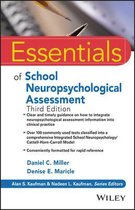
Book: Essentials of School Neuropsychological Assessment
Chapters: 1, 5, 7, 13, 14
Articles:
Article #1: Otero, T.M., Barker, L.A., Naglieri, J.A. (2014). Executive Function
Treatment and Intervention in Schools, Applied Neuropsychology: Child, 3:3, 205-
214.
http://proxy-ub.rug.nl/login?url=http://dx.doi.org/10.1080/21622965.2014.897903
Article #2: Hoza, B., Martin, C.P., Pirog, A., Shoulberg, E.K. (2016). Using Physical
Activity to Manage ADHD Symptoms: The State of the Evidence. Current Psychiatry
Reports, 18(12): 113.
http://proxyub.rug.nl/login?url=https://link.springer.com/content/pdf/
10.1007%2Fs11920-016-0749-3.pdf
,Chapter 1 – The specialisation of school neuropsychology
Introduction
CHC (Catell-Horn-Carroll) based neuropsychological assessment holds great potential
SNP/CHC (School NeuroPsychology) model
XBA (cross-battery assessment) with neuropsychological measures
Reasons for a growing interest in school neuropsychology
Recognition of the neurobiological bases of childhood learning and behavioural disorders
Nature vs nurture
B.F. Skinner and John B. Watson were behaviourists and thus believed that
observable behaviour was the only essential element to be considered
George Miller, Noam Chomsky, and Michael Posner were cognitive psychologists
who recognised that brain function should be considered
Integration of neuropsychological testing in the educational setting had a rough start
which reinforced the role of behaviourism.
Increased number of children with medical conditions that affect school performance
Low birth weight (LBW) infants tend to have more neurosensory, cognitive/
neuropsychological, behavioural, and school/academic difficulties
Medical advances have led better neurodevelopmental outcomes
o Early neurodevelopmental assessment is necessary
o But it does not always predict accurately
Modern medical advances have also shown an increase in chronic health conditions
that lead to secondary academic and behavioural problems
Rapid reference 1.1
Increased medical influences for school neuropsychology
More children are surviving birth traumas and other major medical illnesses with
known correlates with later academic and behavioural concerns
Children and adolescents with TBI present unique challenges to educators
There has been tremendous increase in the number of children who are
prescribed medications to control mood and behavioural disorders
Increased number of research studies illuminating neuropsychological deficits
associated with chronic illnesses such as asthma, diabetes, and heart disease
There has been an increased recognition of the limitations of clinical treatment for
neurological disorders such as autism in school-based settings
Children are not as often offered cognitive rehabilitation after TBI
Rehabilitation and return to school are not well coordinated or integrated
School personnel are not trained to deal with children with or recovering from
severe and chronic illness
School neuropsychologists can be the liaisons between he school and medical
community
o Develop transitional re-entry plans
o Assisting with IEP (individual educational plan) development and monitoring
Increased use of medications with school-aged children
, 7.5% of children 6-17 are prescribed psychotropic medication
o Many medications prescribed are not even approved for children
Polypharmacy is also increasing among youth, and it may be appropriate when:
o The child has multiple distinct disorders for which there are different and
appropriate multiple medications
o The symptoms of the disorder are only partially treated by one medication
o An additional medication is used to reduce side effects of the first medication
o There is diagnostic uncertainty that complicates prescription
School neuropsychologists should educate parents and teachers about the effects of
medication of behaviour and learning
Increase in the number of challenging educational and behavioural issues in the schools
There are more children today with problems compares to 10-20 years ago
o Mostly ADHD, followed by behavioural and conduct problems, anxiety,
depression, and ASD
All these have known or suspected neurological aetiology but go unnoticed
Inaccurate diagnoses are another major concern
o Often mislabelled for emotionally disturbed or learning impaired
Educators often try to treat the problem and not so much the underlying cause of
the problem,
Increased emphasis on the identification of processing disorders in children diagnosed with
specific learning disorder (SLD)
SLD
o “A disorder in one or more of the basic psychological processes involved in
the understanding or in using language, spoken or written, that may manifest
itself in an imperfect ability to listen, think, speak, read, write, spell, or do
mathematical calculations, including conditions such as perceptual
disabilities, brain injury, minimal brain dysfunction, dyslexia, and
developmental aphasia” but does not include” learning problems that are
primarily the result of visual, hearing, or motor disabilities, or intellectual
disability, or emotional disturbance, or of environmental, cultural, or
economic disadvantage”
The definition encourages finding the reason for the learning delay
Identifying SLD: by assessing PSW (patterns of strengths and weaknesses)
The need for neuropsychological assessment in schools
Access to neuropsychological services in schools
Often limited because of limited availability
Ideally each school district should have a paediatric neuropsychologist to write
informative and educationally relevant reports and consult educators/parents
Most paediatric neuropsychologists work in a hospital with children with severe
impairment, and normal neuropsychologists are not trained to assess children
Limited usefulness of some neuropsychological reports
Often, neuropsychological reports lack prescriptive recommendations
, The report is often viewed as educationally irrelevant and is thus not used to help
the child in the classroom
Paediatric- and school neuropsychologists actually differ greatly
o The former does not observe children in their classroom
Thus cannot follow up on effectiveness of intervention
o The latter does
School psychologists are ideal candidates to broaden their competencies in
neuropsychology because they are increasingly being held accountable for evidence
of success or failure of interventions
The unique contribution of school neuropsychological assessments
More in-depth
They are useful for:
o Identifying processing deficits that affects educational attainment and
development of remediation and/or compensatory strategies to maximise
learning potential
o Describing a profile of neurocognitive strengths and weaknesses and relating
it to learning and behaviour at home and at school
o Documenting if changed in learning or behaviour are because of neurological
disease, psychological conditions, neurodevelopmental disorders, or non-
neurological disorders
o Monitoring educational progress, especially when there is severe
neuropsychological insults such as TBI
o Providing assessment data to increase success with evidence-based
interventions
Summary
There is a need for neuropsychological services
Finding a neuropsychologist is difficult
Traditional reports written by neuropsychologists are useful in schools
Reports tend to be long and cumbersome, describe tests more than the child
Reports often have recommendations irrelevant for school-based learning
Clinical neuropsychologists cannot be held accountable for evidence of success or
failure of interventions, but school psychologists can
Definition of school neuropsychology
Requires integration of neuropsychological and educational principles
Play an important role in curriculum development, classroom design, and the
integration of differentiated instruction based on brain-behaviour principles
Family involvement in crucial in effecting positive behavioural and academic change
Roles and functions of a school neuropsychologist
Hynd (1981) suggests that a doctoral-level school neuropsychologist with training in
school neuropsychology:
o Interprets the results of neuropsychological assessment and develops
intervention strategies
o Presents recommendations for remediation
Summary of Literature
Week 1 and Week 2
Contents:
Book: Essentials of School Neuropsychological Assessment
Chapters: 1, 5, 7, 13, 14
Articles:
Article #1: Otero, T.M., Barker, L.A., Naglieri, J.A. (2014). Executive Function
Treatment and Intervention in Schools, Applied Neuropsychology: Child, 3:3, 205-
214.
http://proxy-ub.rug.nl/login?url=http://dx.doi.org/10.1080/21622965.2014.897903
Article #2: Hoza, B., Martin, C.P., Pirog, A., Shoulberg, E.K. (2016). Using Physical
Activity to Manage ADHD Symptoms: The State of the Evidence. Current Psychiatry
Reports, 18(12): 113.
http://proxyub.rug.nl/login?url=https://link.springer.com/content/pdf/
10.1007%2Fs11920-016-0749-3.pdf
,Chapter 1 – The specialisation of school neuropsychology
Introduction
CHC (Catell-Horn-Carroll) based neuropsychological assessment holds great potential
SNP/CHC (School NeuroPsychology) model
XBA (cross-battery assessment) with neuropsychological measures
Reasons for a growing interest in school neuropsychology
Recognition of the neurobiological bases of childhood learning and behavioural disorders
Nature vs nurture
B.F. Skinner and John B. Watson were behaviourists and thus believed that
observable behaviour was the only essential element to be considered
George Miller, Noam Chomsky, and Michael Posner were cognitive psychologists
who recognised that brain function should be considered
Integration of neuropsychological testing in the educational setting had a rough start
which reinforced the role of behaviourism.
Increased number of children with medical conditions that affect school performance
Low birth weight (LBW) infants tend to have more neurosensory, cognitive/
neuropsychological, behavioural, and school/academic difficulties
Medical advances have led better neurodevelopmental outcomes
o Early neurodevelopmental assessment is necessary
o But it does not always predict accurately
Modern medical advances have also shown an increase in chronic health conditions
that lead to secondary academic and behavioural problems
Rapid reference 1.1
Increased medical influences for school neuropsychology
More children are surviving birth traumas and other major medical illnesses with
known correlates with later academic and behavioural concerns
Children and adolescents with TBI present unique challenges to educators
There has been tremendous increase in the number of children who are
prescribed medications to control mood and behavioural disorders
Increased number of research studies illuminating neuropsychological deficits
associated with chronic illnesses such as asthma, diabetes, and heart disease
There has been an increased recognition of the limitations of clinical treatment for
neurological disorders such as autism in school-based settings
Children are not as often offered cognitive rehabilitation after TBI
Rehabilitation and return to school are not well coordinated or integrated
School personnel are not trained to deal with children with or recovering from
severe and chronic illness
School neuropsychologists can be the liaisons between he school and medical
community
o Develop transitional re-entry plans
o Assisting with IEP (individual educational plan) development and monitoring
Increased use of medications with school-aged children
, 7.5% of children 6-17 are prescribed psychotropic medication
o Many medications prescribed are not even approved for children
Polypharmacy is also increasing among youth, and it may be appropriate when:
o The child has multiple distinct disorders for which there are different and
appropriate multiple medications
o The symptoms of the disorder are only partially treated by one medication
o An additional medication is used to reduce side effects of the first medication
o There is diagnostic uncertainty that complicates prescription
School neuropsychologists should educate parents and teachers about the effects of
medication of behaviour and learning
Increase in the number of challenging educational and behavioural issues in the schools
There are more children today with problems compares to 10-20 years ago
o Mostly ADHD, followed by behavioural and conduct problems, anxiety,
depression, and ASD
All these have known or suspected neurological aetiology but go unnoticed
Inaccurate diagnoses are another major concern
o Often mislabelled for emotionally disturbed or learning impaired
Educators often try to treat the problem and not so much the underlying cause of
the problem,
Increased emphasis on the identification of processing disorders in children diagnosed with
specific learning disorder (SLD)
SLD
o “A disorder in one or more of the basic psychological processes involved in
the understanding or in using language, spoken or written, that may manifest
itself in an imperfect ability to listen, think, speak, read, write, spell, or do
mathematical calculations, including conditions such as perceptual
disabilities, brain injury, minimal brain dysfunction, dyslexia, and
developmental aphasia” but does not include” learning problems that are
primarily the result of visual, hearing, or motor disabilities, or intellectual
disability, or emotional disturbance, or of environmental, cultural, or
economic disadvantage”
The definition encourages finding the reason for the learning delay
Identifying SLD: by assessing PSW (patterns of strengths and weaknesses)
The need for neuropsychological assessment in schools
Access to neuropsychological services in schools
Often limited because of limited availability
Ideally each school district should have a paediatric neuropsychologist to write
informative and educationally relevant reports and consult educators/parents
Most paediatric neuropsychologists work in a hospital with children with severe
impairment, and normal neuropsychologists are not trained to assess children
Limited usefulness of some neuropsychological reports
Often, neuropsychological reports lack prescriptive recommendations
, The report is often viewed as educationally irrelevant and is thus not used to help
the child in the classroom
Paediatric- and school neuropsychologists actually differ greatly
o The former does not observe children in their classroom
Thus cannot follow up on effectiveness of intervention
o The latter does
School psychologists are ideal candidates to broaden their competencies in
neuropsychology because they are increasingly being held accountable for evidence
of success or failure of interventions
The unique contribution of school neuropsychological assessments
More in-depth
They are useful for:
o Identifying processing deficits that affects educational attainment and
development of remediation and/or compensatory strategies to maximise
learning potential
o Describing a profile of neurocognitive strengths and weaknesses and relating
it to learning and behaviour at home and at school
o Documenting if changed in learning or behaviour are because of neurological
disease, psychological conditions, neurodevelopmental disorders, or non-
neurological disorders
o Monitoring educational progress, especially when there is severe
neuropsychological insults such as TBI
o Providing assessment data to increase success with evidence-based
interventions
Summary
There is a need for neuropsychological services
Finding a neuropsychologist is difficult
Traditional reports written by neuropsychologists are useful in schools
Reports tend to be long and cumbersome, describe tests more than the child
Reports often have recommendations irrelevant for school-based learning
Clinical neuropsychologists cannot be held accountable for evidence of success or
failure of interventions, but school psychologists can
Definition of school neuropsychology
Requires integration of neuropsychological and educational principles
Play an important role in curriculum development, classroom design, and the
integration of differentiated instruction based on brain-behaviour principles
Family involvement in crucial in effecting positive behavioural and academic change
Roles and functions of a school neuropsychologist
Hynd (1981) suggests that a doctoral-level school neuropsychologist with training in
school neuropsychology:
o Interprets the results of neuropsychological assessment and develops
intervention strategies
o Presents recommendations for remediation