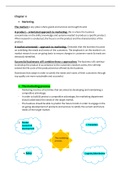
Chapter 11
• Marketing.
The market: is any place where goods and services are bought & sold.
A product – orientated approach to marketing: this is where the business
concentrates on the skills, knowledge and systems needed to produce a specific product.
When research is conducted, the focus is on the product and the characteristics of the
product.
A market orientated – approach to marketing: Demands that the business focusses
on satisfying the needs and wants of the customers. The emphasis is on the market is on
market research on an on-going basis to ensure changes in customers wants & needs are
timeously identified.
Successful businesses will combine these 2 approaches: The business will continue
to develop the product in accordance to the customers needs & wants, this will help
extend the life cycle of the product/service offered by the business.
Businesses that adapt in order to satisfy the needs and wants of their customers through
top quality are more sustainable and successful.
• The marketing process.
- Marketing involves all activities that are aimed at developing and maintaining a
competitive advantage.
- In order to build & protect a competitive advantage, the marketing department
should understand the needs of the target market.
- The business should be able to predict the future trends in order to engage in the
on-going development of products and services to satisfy the current and future
needs of the target market.
1. Market
research & 2. Promotion
development
The marketing
process.
4. Sales 3. Logistics/distribution
,• Market research and development:
- Marketing starts with market research.
- The research process helps the business to understand the expectations of
consumers in terms of:
➢ The product/service and the demands in terms of packaging.
➢ The price people are prepared to pay
➢ Where the target market wants to have access to the product/service
➢ Preferential channels of communication to receive information about
product/service.
• Promotion:
- Is about informing the target market about the target market about the
product/service or brand that is offered by the business.
• Logistics/distribution:
- Involves the movement of the product/service to ensure that the product/service
reaches the desired market on time.
• Sales:
- Refers to the processes of transferring ownership of the product from the
business to the customer.
• The aims of the marketing function.
➢ Creating and maintaining a competitive advantage., which will help to increase
the market share.
➢ Developing new products/services or improving the current offering may help
broaden target market.
➢ Identifying new markets for the business, will ensure business has opportunity
to grow and improve profitability.
, • Understanding market segmentation.
➢ Market segmentation looks at dividing the overall market into different groups in
order to focus the businesses resources on customers.
➢ In order to identify an appropriate segment and then gain an understanding of the
chosen segment the business has to conduct market research.
➢ A business can be segmented based on a variety of criteria. The idea is to “create a
market” that is big enough to achieve sufficient returns of investment by
combining some of those characteristics.
Income groups.
Similar ages.
Cultural.
Lifestyle.
Market segments:
Genders.
Product use.
Geographical regions.
• Market segmentation could also lead to identifying possible gaps in
the market which are not yet fulfilled.
• Marketing.
The market: is any place where goods and services are bought & sold.
A product – orientated approach to marketing: this is where the business
concentrates on the skills, knowledge and systems needed to produce a specific product.
When research is conducted, the focus is on the product and the characteristics of the
product.
A market orientated – approach to marketing: Demands that the business focusses
on satisfying the needs and wants of the customers. The emphasis is on the market is on
market research on an on-going basis to ensure changes in customers wants & needs are
timeously identified.
Successful businesses will combine these 2 approaches: The business will continue
to develop the product in accordance to the customers needs & wants, this will help
extend the life cycle of the product/service offered by the business.
Businesses that adapt in order to satisfy the needs and wants of their customers through
top quality are more sustainable and successful.
• The marketing process.
- Marketing involves all activities that are aimed at developing and maintaining a
competitive advantage.
- In order to build & protect a competitive advantage, the marketing department
should understand the needs of the target market.
- The business should be able to predict the future trends in order to engage in the
on-going development of products and services to satisfy the current and future
needs of the target market.
1. Market
research & 2. Promotion
development
The marketing
process.
4. Sales 3. Logistics/distribution
,• Market research and development:
- Marketing starts with market research.
- The research process helps the business to understand the expectations of
consumers in terms of:
➢ The product/service and the demands in terms of packaging.
➢ The price people are prepared to pay
➢ Where the target market wants to have access to the product/service
➢ Preferential channels of communication to receive information about
product/service.
• Promotion:
- Is about informing the target market about the target market about the
product/service or brand that is offered by the business.
• Logistics/distribution:
- Involves the movement of the product/service to ensure that the product/service
reaches the desired market on time.
• Sales:
- Refers to the processes of transferring ownership of the product from the
business to the customer.
• The aims of the marketing function.
➢ Creating and maintaining a competitive advantage., which will help to increase
the market share.
➢ Developing new products/services or improving the current offering may help
broaden target market.
➢ Identifying new markets for the business, will ensure business has opportunity
to grow and improve profitability.
, • Understanding market segmentation.
➢ Market segmentation looks at dividing the overall market into different groups in
order to focus the businesses resources on customers.
➢ In order to identify an appropriate segment and then gain an understanding of the
chosen segment the business has to conduct market research.
➢ A business can be segmented based on a variety of criteria. The idea is to “create a
market” that is big enough to achieve sufficient returns of investment by
combining some of those characteristics.
Income groups.
Similar ages.
Cultural.
Lifestyle.
Market segments:
Genders.
Product use.
Geographical regions.
• Market segmentation could also lead to identifying possible gaps in
the market which are not yet fulfilled.