QUESTION 1
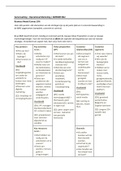
Literacy-privileged The limited frame of
learners reference
What does it mean? Children who have a wide Children who have had
frame of reference and little access to books and
are language-rich and are very seldom engaged
knowledge-rich when they in discussions with adults.
enter school. They also
know and understand
many things about the
world and have a wide
vocabulary.
Briefly explain any two Invisible privilege of Difficulty in retaining new
possible causes. people who, because of information. If the children
privileged education and begin with something they
class background, use the already know, they will
oppressor language retain any other new
simply and well. information better, so we
need to build on the
familiar.
Provide any two activities - Word games - Read and tell
to support the learners. - Reading and stories with
writing. different settings,
people, pictures,
and words.
- Engage students in
a variety of
speaking, singing,
and play-acting
situations,
introducing new
songs and rhymes.
QUESTION 2
The phrase "emergent reading," which is derived from "emergent literacy," is used to
promote the idea that reading instruction should begin before a child enters school.
Reading and writing are both a part of nascent literacy.
Activities for emergent readers:
- Reading texts with repetition.
- Listen to reading.
- Fluency puzzles.
, QUESTION 3
3.1 multi-word stage
3.2 How successfully a youngster can interact with friends, family, and other
members of society is strongly influenced by their language development. A child's
capacity for social engagement can be enhanced by well-developed language, so as
they learn to utilize language successfully, their social and interpersonal skills can
also advance. To guarantee that kids can operate well in a social situation, it's crucial
to pay attention to how well kids learn language.
Children's brains develop more quickly and more intelligently and creatively because
of learning a new language. Children with more advanced language abilities
frequently have lower risks of cognitive impairment and may have an easier time
grasping fundamental ideas, which can be beneficial in the classroom as they learn
to read and write. As a result, it's crucial to support a child's proper language
development to aid in learning.
Children can express themselves and communicate with siblings, parents, and
babysitters daily because to language development. Children gain from language
abilities outside of the home when they play with peers, participate in class, and
communicate with teachers at school. The ability to communicate verbally in children
can make social situations and daily living easier for them
QUESTION 4
4.1 The Three-Cues model, commonly known as MSV, educates kids to rely on
meaning, structure, and then visual cues before attempting to read an unfamiliar
word. It is a typical teaching strategy in educational institutions that employ a whole
language and balanced literacy approach. In the MSV model, M stands for
meaning or the contextual cues students can lean on to figure out an unknown word.
The S in the MSV model represents the syntax or structure. It relates to what
students know about grammar or word order. Finally, V represents visual. This
includes letter and letter patterns. To prompt students to look at the visual
Literacy-privileged The limited frame of
learners reference
What does it mean? Children who have a wide Children who have had
frame of reference and little access to books and
are language-rich and are very seldom engaged
knowledge-rich when they in discussions with adults.
enter school. They also
know and understand
many things about the
world and have a wide
vocabulary.
Briefly explain any two Invisible privilege of Difficulty in retaining new
possible causes. people who, because of information. If the children
privileged education and begin with something they
class background, use the already know, they will
oppressor language retain any other new
simply and well. information better, so we
need to build on the
familiar.
Provide any two activities - Word games - Read and tell
to support the learners. - Reading and stories with
writing. different settings,
people, pictures,
and words.
- Engage students in
a variety of
speaking, singing,
and play-acting
situations,
introducing new
songs and rhymes.
QUESTION 2
The phrase "emergent reading," which is derived from "emergent literacy," is used to
promote the idea that reading instruction should begin before a child enters school.
Reading and writing are both a part of nascent literacy.
Activities for emergent readers:
- Reading texts with repetition.
- Listen to reading.
- Fluency puzzles.
, QUESTION 3
3.1 multi-word stage
3.2 How successfully a youngster can interact with friends, family, and other
members of society is strongly influenced by their language development. A child's
capacity for social engagement can be enhanced by well-developed language, so as
they learn to utilize language successfully, their social and interpersonal skills can
also advance. To guarantee that kids can operate well in a social situation, it's crucial
to pay attention to how well kids learn language.
Children's brains develop more quickly and more intelligently and creatively because
of learning a new language. Children with more advanced language abilities
frequently have lower risks of cognitive impairment and may have an easier time
grasping fundamental ideas, which can be beneficial in the classroom as they learn
to read and write. As a result, it's crucial to support a child's proper language
development to aid in learning.
Children can express themselves and communicate with siblings, parents, and
babysitters daily because to language development. Children gain from language
abilities outside of the home when they play with peers, participate in class, and
communicate with teachers at school. The ability to communicate verbally in children
can make social situations and daily living easier for them
QUESTION 4
4.1 The Three-Cues model, commonly known as MSV, educates kids to rely on
meaning, structure, and then visual cues before attempting to read an unfamiliar
word. It is a typical teaching strategy in educational institutions that employ a whole
language and balanced literacy approach. In the MSV model, M stands for
meaning or the contextual cues students can lean on to figure out an unknown word.
The S in the MSV model represents the syntax or structure. It relates to what
students know about grammar or word order. Finally, V represents visual. This
includes letter and letter patterns. To prompt students to look at the visual