The relationship between Caliban and Stephano in "The Tempest"
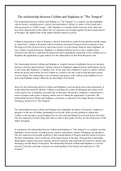
The relationship between Caliban and Stephano in "The Tempest" is a complex one that highlights
various themes, including power, control, and exploitation. Caliban is a native of the island and is
often portrayed as a "noble savage," while Stephano is a drunken butler from one of the ships that
have been shipwrecked on the island. The two characters are brought together by their mutual hatred
of Prospero, the rightful ruler of the island, and their desire for power.
Caliban is depicted as a slave to Prospero, who has forced him to work for him and has used his magic
to control him. Caliban is frustrated with his situation and resents Prospero for his treatment of him.
He longs to be free from his slavery and to have power over the island. When he meets Stephano, he
sees a chance to gain that power. Stephano is a drunken buffoon, but he is also a symbol of the
colonial forces that have exploited and oppressed native populations around the world. Caliban sees in
Stephano the opportunity to gain control over the island and to be free from Prospero's rule.
The relationship between Caliban and Stephano is complex because it highlights the power dynamic
between colonizer and colonized. Caliban is drawn to Stephano's apparent power and freedom, but he
is also aware that Stephano is a drunken fool. At the same time, Stephano is eager to exploit Caliban's
desire for power and control. He sees Caliban as a means to an end, a tool to help him gain control
over the island. The relationship is one of mutual exploitation, with Caliban using Stephano for his
power and Stephano using Caliban for his knowledge of the island.
However, the relationship between Caliban and Stephano is not just about power and exploitation. It
is also about the search for identity. Caliban is searching for a sense of belonging and a place in the
world, and he sees in Stephano a possible ally in that quest. Meanwhile, Stephano is searching for a
sense of purpose and a place to belong, and he sees in Caliban the opportunity to gain that. The
relationship between Caliban and Stephano is, therefore, a reflection of the larger themes of identity,
belonging, and power in "The Tempest."
The relationship between Caliban and Stephano also highlights the theme of deception. Stephano is
deceptive in his use of Caliban, pretending to be his ally while secretly plotting to exploit him.
Caliban is also deceptive, using Stephano for his own ends and hiding his true motivations from him.
The two characters are both using each other to achieve their goals, but they are also both aware of the
other's deception.
In conclusion, the relationship between Caliban and Stephano in "The Tempest" is a complex one that
highlights various themes, including power, control, exploitation, identity, belonging, and deception.
The two characters are brought together by their mutual hatred of Prospero and their desire for power,
but their relationship is also a reflection of the larger themes of the play. Through their relationship,
Shakespeare explores the power dynamic between colonizer and colonized, the search for identity and
belonging, and the theme of deception. The relationship between Caliban and Stephano is a crucial
element in the play and helps to deepen our understanding of the themes and characters in "The
Tempest."
The relationship between Caliban and Stephano in "The Tempest" is a complex one that highlights
various themes, including power, control, and exploitation. Caliban is a native of the island and is
often portrayed as a "noble savage," while Stephano is a drunken butler from one of the ships that
have been shipwrecked on the island. The two characters are brought together by their mutual hatred
of Prospero, the rightful ruler of the island, and their desire for power.
Caliban is depicted as a slave to Prospero, who has forced him to work for him and has used his magic
to control him. Caliban is frustrated with his situation and resents Prospero for his treatment of him.
He longs to be free from his slavery and to have power over the island. When he meets Stephano, he
sees a chance to gain that power. Stephano is a drunken buffoon, but he is also a symbol of the
colonial forces that have exploited and oppressed native populations around the world. Caliban sees in
Stephano the opportunity to gain control over the island and to be free from Prospero's rule.
The relationship between Caliban and Stephano is complex because it highlights the power dynamic
between colonizer and colonized. Caliban is drawn to Stephano's apparent power and freedom, but he
is also aware that Stephano is a drunken fool. At the same time, Stephano is eager to exploit Caliban's
desire for power and control. He sees Caliban as a means to an end, a tool to help him gain control
over the island. The relationship is one of mutual exploitation, with Caliban using Stephano for his
power and Stephano using Caliban for his knowledge of the island.
However, the relationship between Caliban and Stephano is not just about power and exploitation. It
is also about the search for identity. Caliban is searching for a sense of belonging and a place in the
world, and he sees in Stephano a possible ally in that quest. Meanwhile, Stephano is searching for a
sense of purpose and a place to belong, and he sees in Caliban the opportunity to gain that. The
relationship between Caliban and Stephano is, therefore, a reflection of the larger themes of identity,
belonging, and power in "The Tempest."
The relationship between Caliban and Stephano also highlights the theme of deception. Stephano is
deceptive in his use of Caliban, pretending to be his ally while secretly plotting to exploit him.
Caliban is also deceptive, using Stephano for his own ends and hiding his true motivations from him.
The two characters are both using each other to achieve their goals, but they are also both aware of the
other's deception.
In conclusion, the relationship between Caliban and Stephano in "The Tempest" is a complex one that
highlights various themes, including power, control, exploitation, identity, belonging, and deception.
The two characters are brought together by their mutual hatred of Prospero and their desire for power,
but their relationship is also a reflection of the larger themes of the play. Through their relationship,
Shakespeare explores the power dynamic between colonizer and colonized, the search for identity and
belonging, and the theme of deception. The relationship between Caliban and Stephano is a crucial
element in the play and helps to deepen our understanding of the themes and characters in "The
Tempest."