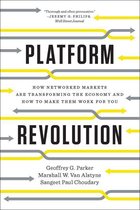
1. PLATFORM REVOLUTION
venerdì 30 settembre 2022 09:44
• PLATFORM = a business based on enabling value-creating interactions between external
producers and consumers. Platform provides an open, participative infrastructure for these
interactions and sets governance conditions for them. The platform's purpose: to consummate
matches among users and facilitate the exchange of goods, services or social currency thereby
enabling value creation for all participants
• The traditional system employed by most business is one we describe as pipeline --> a pipeline
is a business that employs a step-by-step arrangement for creating and transferring value, with
producers at one hand and consumers at the other (linear value chain)
• Platform --> different types of users connect and conduct interactions with one another using
the resources provided by the platform. In the process they exchange, consume and
sometimes cocreate something of value and value can be created, changed, exchanged and
consumed in a variety of ways and places
BASIC ELEMENTS ALL PLATFORM BUSINESS HAS:
1)PLATFORM BEAT PIPELINES BECAUSE PLATFORMS SCALE MORE EFFICIENTLY BY ELIMINATING
GATEKEEPERS
• Pipelines rely on inefficient gatekeepers to manage the flow of value from producer to
consumer
• Platforms system can grow to scale more rapidly and efficiently because the traditional
gatekeepers are replaced by market signals provided automatically by the community
• Eliminating gatekeepers allows consumers greater freedom to select products that suit their
needs
• Example: book editors vs Amazon Kindle
2)PLATFORMS BEAT PIPELINES BECAUSE PLATFORMS UNLOCK NEW SOURCES OF VALUE CREATION
AND SUPPLY
• Growth is no longer constrained by the ability to deploy capital and manage physical assets
• In platform markets, the nature of supply changes --> supply now unlocks spare capacity and
harnesses contributions from the community which used to be only a source of demand (not-
even-mine inventory)
• Platforms disrupt the traditional competitive landscape by exposing new supply to the market
• The effort necessary to individually verify credit- and trustworthiness is an example of the high
transaction costs that used to prevent exchange. By providing default insurance contracts and
reputation systems to encourage good behavior, platforms dramatically lower transaction
costs and create new markets as new producers start producing for the first time
• Ex. Hotels vs Airbnb
3)PLATFORMS BEAT PIPELINES BY USING DATA-BASED TOOLS TO CREATE COMMUNITY FEEDBACK
LOOPS
• Traditional pipelines rely on mechanisms of control to ensure quality and shape market
interactions --> these control mechanisms are costly and inefficient to grow to scale
4)PLATFORMS INVERT THE FIRM
• Platform compared to pip shift their focus from internal to external activities --> the firm
inverts by centering on people and resources that exist outside the business
• Marketing --> from broadcast to segmentation, virality and social influence, from push to pull,
from outbound to inbound (marketing messages now spread via consumers themselves and
not by company employees)
• Information technology --> from back-office enterprise resource planning systems to front-
office consumer relationship management systems
• Finance --> from shareholder-focus to stakeholder-focus
• Operations management --> from optimizing the firm's inventory and supply chain systems to
managing external assets the firm doesn't directly control
• Strategy --> from controlling unique internal resources and creating competitive barriers to
DIGITAL INNOVATION Page 1
,• Strategy --> from controlling unique internal resources and creating competitive barriers to
orchestrating external resources and engaging vibrant communities
• Innovation --> produced through crowdsourcing and the contribution of ideas by independent
participants in the platform
• External resources don’t completely replace internal resources—more often they serve as a
complement. But platform firms emphasize ecosystem governance more than product
optimization, and persuasion of outside partners more than control of internal employees.
DIGITAL INNOVATION Page 2
, 1. NAMBISAN - DIGITAL TECH PERSPECTIVE OF
ENTREPRENEURSHIP
• New digital technologies have transformed the nature of uncertainty inherent in
entrepreneurial processes and outcomes as well as the ways of dealing with such uncertainty
• We consider two broad implication and advance a research agenda that calls for the explicit
theorizing of concepts related to digital technologies
- Less bounded entrepreneurial processes and outcomes
- Less predefined locus of entrepreneurial agency
INTRODUCTION
• First digital technologies have rendered entrepreneurial outcomes and processes LESS
BOUNDED --> a shift from stable boundaries to fluid boundaries
- Digitization --> greater flexibility making entrepreneurial outcomes intentionally
incomplete
- In terms of the structure of the product (features, scope, market reach) and of processes
(ex where and when activities are carried out)
• Second digitization has led to LESS PREDEFINITION in the locus of entrepreneurial agency as it
increasingly involves a broader, more diverse and often continuously evolving set of actors
- More collective ways of pursuing entrepreneurship
• Given that unique characteristics and aspects of digital technologies shape these
changes, we propose that such novel explanation will need to be informed by the digital
technology perspective—one that incorporates digital-technology–related theories, concepts
and constructs
DIGITAL TECHNOLOGIES
• DIGITAL ARTIFACT = digital artifact is defined here as a digital component, application, or
media content that is part of a new product (or service) and offers a specific functionality or
value to the end-user
- The decoupling of information from its related physical form or device has led to the
gradual infusion of such digital artifacts or components into a wide range of products
and services
• DIGITAL PLATFORM = A digital platform is defined as a shared, common set of services and
architecture that to host complementary offerings, including digital artifacts
- Digital platforms provide a wealth of opportunities for entrepreneurs—opportunities
that involve developing complementary products
- Apple’s iOS platform and Google’s Android platform enable apps to run on their
respective smartphones
• DIGITAL INFRASTRUCTURE = is defined as digital technology tools and systems (e.g., cloud
computing, data analytics, online communities, social media, 3D printing, digital
makerspaces, etc.) that offer communication, collaboration and/or computing capabilities to
support innovation and entrepreneurship
- Such digital infrastructures have led to the democratization of entrepreneurship
i.e., the engagement of a greater number and diverse set of people in all stages of the
entrepreneurial process—from opportunity exploration to concept testing to venture
funding and launch
• Entrepreneurial opportunity framework, digital artifacts and digital platforms serve as part of
the new venture idea (outcome) while digital infrastructure serves as an external enabler
(supporting the process
LESS BOUNDED ENTREPRENEURIAL OUTCOMES AND PROCESSES
• Prior studies on innovation and entrepreneurship have, by and large, presupposed a
stable or fixed and discrete set of boundaries for the new product (or service) idea that
underlie an entrepreneurial opportunity
DIGITAL INNOVATION Page 3
venerdì 30 settembre 2022 09:44
• PLATFORM = a business based on enabling value-creating interactions between external
producers and consumers. Platform provides an open, participative infrastructure for these
interactions and sets governance conditions for them. The platform's purpose: to consummate
matches among users and facilitate the exchange of goods, services or social currency thereby
enabling value creation for all participants
• The traditional system employed by most business is one we describe as pipeline --> a pipeline
is a business that employs a step-by-step arrangement for creating and transferring value, with
producers at one hand and consumers at the other (linear value chain)
• Platform --> different types of users connect and conduct interactions with one another using
the resources provided by the platform. In the process they exchange, consume and
sometimes cocreate something of value and value can be created, changed, exchanged and
consumed in a variety of ways and places
BASIC ELEMENTS ALL PLATFORM BUSINESS HAS:
1)PLATFORM BEAT PIPELINES BECAUSE PLATFORMS SCALE MORE EFFICIENTLY BY ELIMINATING
GATEKEEPERS
• Pipelines rely on inefficient gatekeepers to manage the flow of value from producer to
consumer
• Platforms system can grow to scale more rapidly and efficiently because the traditional
gatekeepers are replaced by market signals provided automatically by the community
• Eliminating gatekeepers allows consumers greater freedom to select products that suit their
needs
• Example: book editors vs Amazon Kindle
2)PLATFORMS BEAT PIPELINES BECAUSE PLATFORMS UNLOCK NEW SOURCES OF VALUE CREATION
AND SUPPLY
• Growth is no longer constrained by the ability to deploy capital and manage physical assets
• In platform markets, the nature of supply changes --> supply now unlocks spare capacity and
harnesses contributions from the community which used to be only a source of demand (not-
even-mine inventory)
• Platforms disrupt the traditional competitive landscape by exposing new supply to the market
• The effort necessary to individually verify credit- and trustworthiness is an example of the high
transaction costs that used to prevent exchange. By providing default insurance contracts and
reputation systems to encourage good behavior, platforms dramatically lower transaction
costs and create new markets as new producers start producing for the first time
• Ex. Hotels vs Airbnb
3)PLATFORMS BEAT PIPELINES BY USING DATA-BASED TOOLS TO CREATE COMMUNITY FEEDBACK
LOOPS
• Traditional pipelines rely on mechanisms of control to ensure quality and shape market
interactions --> these control mechanisms are costly and inefficient to grow to scale
4)PLATFORMS INVERT THE FIRM
• Platform compared to pip shift their focus from internal to external activities --> the firm
inverts by centering on people and resources that exist outside the business
• Marketing --> from broadcast to segmentation, virality and social influence, from push to pull,
from outbound to inbound (marketing messages now spread via consumers themselves and
not by company employees)
• Information technology --> from back-office enterprise resource planning systems to front-
office consumer relationship management systems
• Finance --> from shareholder-focus to stakeholder-focus
• Operations management --> from optimizing the firm's inventory and supply chain systems to
managing external assets the firm doesn't directly control
• Strategy --> from controlling unique internal resources and creating competitive barriers to
DIGITAL INNOVATION Page 1
,• Strategy --> from controlling unique internal resources and creating competitive barriers to
orchestrating external resources and engaging vibrant communities
• Innovation --> produced through crowdsourcing and the contribution of ideas by independent
participants in the platform
• External resources don’t completely replace internal resources—more often they serve as a
complement. But platform firms emphasize ecosystem governance more than product
optimization, and persuasion of outside partners more than control of internal employees.
DIGITAL INNOVATION Page 2
, 1. NAMBISAN - DIGITAL TECH PERSPECTIVE OF
ENTREPRENEURSHIP
• New digital technologies have transformed the nature of uncertainty inherent in
entrepreneurial processes and outcomes as well as the ways of dealing with such uncertainty
• We consider two broad implication and advance a research agenda that calls for the explicit
theorizing of concepts related to digital technologies
- Less bounded entrepreneurial processes and outcomes
- Less predefined locus of entrepreneurial agency
INTRODUCTION
• First digital technologies have rendered entrepreneurial outcomes and processes LESS
BOUNDED --> a shift from stable boundaries to fluid boundaries
- Digitization --> greater flexibility making entrepreneurial outcomes intentionally
incomplete
- In terms of the structure of the product (features, scope, market reach) and of processes
(ex where and when activities are carried out)
• Second digitization has led to LESS PREDEFINITION in the locus of entrepreneurial agency as it
increasingly involves a broader, more diverse and often continuously evolving set of actors
- More collective ways of pursuing entrepreneurship
• Given that unique characteristics and aspects of digital technologies shape these
changes, we propose that such novel explanation will need to be informed by the digital
technology perspective—one that incorporates digital-technology–related theories, concepts
and constructs
DIGITAL TECHNOLOGIES
• DIGITAL ARTIFACT = digital artifact is defined here as a digital component, application, or
media content that is part of a new product (or service) and offers a specific functionality or
value to the end-user
- The decoupling of information from its related physical form or device has led to the
gradual infusion of such digital artifacts or components into a wide range of products
and services
• DIGITAL PLATFORM = A digital platform is defined as a shared, common set of services and
architecture that to host complementary offerings, including digital artifacts
- Digital platforms provide a wealth of opportunities for entrepreneurs—opportunities
that involve developing complementary products
- Apple’s iOS platform and Google’s Android platform enable apps to run on their
respective smartphones
• DIGITAL INFRASTRUCTURE = is defined as digital technology tools and systems (e.g., cloud
computing, data analytics, online communities, social media, 3D printing, digital
makerspaces, etc.) that offer communication, collaboration and/or computing capabilities to
support innovation and entrepreneurship
- Such digital infrastructures have led to the democratization of entrepreneurship
i.e., the engagement of a greater number and diverse set of people in all stages of the
entrepreneurial process—from opportunity exploration to concept testing to venture
funding and launch
• Entrepreneurial opportunity framework, digital artifacts and digital platforms serve as part of
the new venture idea (outcome) while digital infrastructure serves as an external enabler
(supporting the process
LESS BOUNDED ENTREPRENEURIAL OUTCOMES AND PROCESSES
• Prior studies on innovation and entrepreneurship have, by and large, presupposed a
stable or fixed and discrete set of boundaries for the new product (or service) idea that
underlie an entrepreneurial opportunity
DIGITAL INNOVATION Page 3