AMCA CMAC Cert Exam Study Guide Review
Exam 2023 – 2024 (100% Verified Solution)
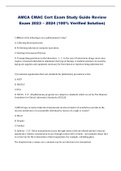
1) Which of the following is not a phlebotomist's duty?
A. Collecting blood specimens
B. Performing laboratory computer operations
C. Starting intravenous (IV) lines
D. Transporting specimens to the laboratory - 1. C - In the case of intravenous drugs, most cases
require a licensed individual to administer this type of therapy. A medical assistant can assist by
laying out supplies and equipment necessary for the infusion or injection being administered.
2) A national organization that sets standards for phlebotomy procedures is the:
A. ASCP
B. NAACLS
C. NCA
D. NCCLS - 2. D - All phlebotomy programs are subject to standards which are set by The National
Committee for Clinical Laboratory Standards. (NCCLS)
3) Which type of contact infection transmission involves transfer of an infective microbe to the
mucous membranes of a susceptible individual by means of a cough or sneeze?
A. Direct
B. Droplet
C. Fomites
D. Indirect - 3. B - Direct transmission occurs through contact with an infected person's mucous
membranes. Indirect transmission occurs through contact with a fomite - an inanimate object that
is a reservoir for the transmission of microorganisms. For example, a drinking glass.
The droplets from a sneeze are a common way for an infection to be transmitted.
, 4) Which of the following is a test of the respiratory system?
A. ABGs
B. CSF
C. TSH
D. UA - 4. A - ABG or Arterial blood gas deals directly with the respiratory system. CSF is
cerebrospinal fluid and TSH is thyroid stimulating hormone. UA is a distracter.
5) Urine C & S is typically ordered to detect:
A. Abnormal urine pH
B. Glucose spillage into the urine
C. Kidney damage
D. Presence of UTI - 5. D - C&S testing is used for UTI symptoms -must be a mid-stream clean catch
specimen.
6) Which statement describes proper centrifuge operation?
A. Centrifuge serum specimens before they have a chance to clot
B. Never centrifuge both serum and plasma specimens in the same centrifuge
C. Place tubes of equal size and volume opposite one another
D. Remove stoppers before placing tubes in the centrifuge - 6. C - Tubes should be balanced in the
centrifuge - tubes of the same size and volume are placed opposite one another in the centrifuge
holders
7) What type of motion would a phlebotomist use when cleaning a site for a routine venipuncture?
A. Vertical
B. Horizontal
C. Crossing
D. Concentric - 7. D - concentric or circular is the motion necessary for performing phlebotomy.
Exam 2023 – 2024 (100% Verified Solution)
1) Which of the following is not a phlebotomist's duty?
A. Collecting blood specimens
B. Performing laboratory computer operations
C. Starting intravenous (IV) lines
D. Transporting specimens to the laboratory - 1. C - In the case of intravenous drugs, most cases
require a licensed individual to administer this type of therapy. A medical assistant can assist by
laying out supplies and equipment necessary for the infusion or injection being administered.
2) A national organization that sets standards for phlebotomy procedures is the:
A. ASCP
B. NAACLS
C. NCA
D. NCCLS - 2. D - All phlebotomy programs are subject to standards which are set by The National
Committee for Clinical Laboratory Standards. (NCCLS)
3) Which type of contact infection transmission involves transfer of an infective microbe to the
mucous membranes of a susceptible individual by means of a cough or sneeze?
A. Direct
B. Droplet
C. Fomites
D. Indirect - 3. B - Direct transmission occurs through contact with an infected person's mucous
membranes. Indirect transmission occurs through contact with a fomite - an inanimate object that
is a reservoir for the transmission of microorganisms. For example, a drinking glass.
The droplets from a sneeze are a common way for an infection to be transmitted.
, 4) Which of the following is a test of the respiratory system?
A. ABGs
B. CSF
C. TSH
D. UA - 4. A - ABG or Arterial blood gas deals directly with the respiratory system. CSF is
cerebrospinal fluid and TSH is thyroid stimulating hormone. UA is a distracter.
5) Urine C & S is typically ordered to detect:
A. Abnormal urine pH
B. Glucose spillage into the urine
C. Kidney damage
D. Presence of UTI - 5. D - C&S testing is used for UTI symptoms -must be a mid-stream clean catch
specimen.
6) Which statement describes proper centrifuge operation?
A. Centrifuge serum specimens before they have a chance to clot
B. Never centrifuge both serum and plasma specimens in the same centrifuge
C. Place tubes of equal size and volume opposite one another
D. Remove stoppers before placing tubes in the centrifuge - 6. C - Tubes should be balanced in the
centrifuge - tubes of the same size and volume are placed opposite one another in the centrifuge
holders
7) What type of motion would a phlebotomist use when cleaning a site for a routine venipuncture?
A. Vertical
B. Horizontal
C. Crossing
D. Concentric - 7. D - concentric or circular is the motion necessary for performing phlebotomy.