IONIC BONDING
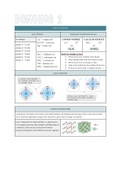
ionic fórmula compounds formed between ions
2+
ion charges Cu = copper ion COPPER NITRIDE CALCIUM NITRATE
2+ 3+ +2 -3 -1 2+
Fe Fe = iron ions Cu N NO3 Ca
group 1= +1 ions +1
Ag = silver ion 3:2 2:1
group 2= +2 ions
Cu3 N2 Ca (NO3)2
group 3= +3 ions
group 5= -3 ions -2
SO4 = sulphate ion HOW TO WORK IT OUT
group 6= -2 ions -2
CO = carbonate ion
3
1) Write down ionic symbols with charge
group 7= -1 ions NO
-1
= nitrate ion 2) Swap charge nums and write down in ratio
3
- 3) Write + ions first in formula, - after
OH = hydrate ion
+ 4) After each symbol put the number from ratio
NH4 = ammonium ion
5) If there are more than 1 complex ion put ( )
ionic compounds
LATTICE STRUCTURE
Compounds with giant ionic lattices have high melting and boiling point because of the strong electrostatic
forces between oppositely charged ions that take a great deal of energy to separate.
Ionic compounds are held together in a giant lattice.
It’s a regular structure that extends in all directions in
a substance. Electrostatic attractions between
positive and negative ions hold the structure together.
ionic fórmula compounds formed between ions
2+
ion charges Cu = copper ion COPPER NITRIDE CALCIUM NITRATE
2+ 3+ +2 -3 -1 2+
Fe Fe = iron ions Cu N NO3 Ca
group 1= +1 ions +1
Ag = silver ion 3:2 2:1
group 2= +2 ions
Cu3 N2 Ca (NO3)2
group 3= +3 ions
group 5= -3 ions -2
SO4 = sulphate ion HOW TO WORK IT OUT
group 6= -2 ions -2
CO = carbonate ion
3
1) Write down ionic symbols with charge
group 7= -1 ions NO
-1
= nitrate ion 2) Swap charge nums and write down in ratio
3
- 3) Write + ions first in formula, - after
OH = hydrate ion
+ 4) After each symbol put the number from ratio
NH4 = ammonium ion
5) If there are more than 1 complex ion put ( )
ionic compounds
LATTICE STRUCTURE
Compounds with giant ionic lattices have high melting and boiling point because of the strong electrostatic
forces between oppositely charged ions that take a great deal of energy to separate.
Ionic compounds are held together in a giant lattice.
It’s a regular structure that extends in all directions in
a substance. Electrostatic attractions between
positive and negative ions hold the structure together.