Pathophysiology Exam 2 Rasmussen’s latest solution guide 2023
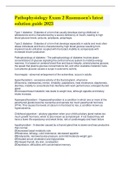
Type 1 diabetes - Diabetes of a form that usually develops during childhood or adolescence and is characterized by a severe deficiency of insulin, leading to high blood glucose levels. polyuria, polydipsia, polyphagia. Type 2 diabetes - Diabetes of a form that develops especially in adults and most often obese individuals and that is characterized by high blood glucose resulting from impaired insulin utilization coupled with the body's inability to compensate with increased insulin production. Pathophysiology of diabetes - The pathophysiology of diabetes involves plasm concentrations of glucose signaling the central nervous system to mobilize energy reserves. It is based on cerebral blood flow and tissue integrity, arterial plasma glucose, the speed that plasma glucose concentrations fall, and other available metabolic fuels. Low plasma glucose causes a surge in autonomic activity. Acromegaly - abnormal enlargement of the extremities. occurs in adults Hyperthyroidism - excessive activity of the thyroid gland- >thyroxine ØInsomnia, restlessness, tremor, irritability, palpitations, heat intolerance, diaphoresis, diarrhea, inability to concentrate that interferes with work performance; enlarged thyroid gland ØIncreased basal metabolic rate leads to weight loss, although appetite and dietary intake increase. Hyperparathyroidism - Hyperparathyroidism is a condition in which one or more of the parathyroid glands become overactive and secrete too much parathyroid hormone (PTH). This causes the levels of calcium in the blood to rise, a condition known as hypercalcemia.
Written for
- Institution
-
Rasmussen College
- Module
-
Pathophysiology
Document information
- Uploaded on
- January 12, 2023
- Number of pages
- 7
- Written in
- 2022/2023
- Type
- Exam (elaborations)
- Contains
- Questions & answers
Subjects

Also available in package deal