Kausar Khan
One World International School
IGCSE History
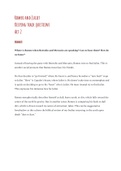
IGCSE History Exam Style Questions
Describe the events in Hungary on the days immediately following the outbreak of
revolution against the government on 23rd October 1956
(4)
Immediately after the outbreak of the revolution against the government on 23rd October
1956, a giant statue of Stalin was pulled down in Budapest by students who protested.
Furthermore, Nagy set up a new government that would hold free elections, and leave the
Warsaw Pact, both of which went against Stalin’s ideologies of communism. Additionally, in
1956 a group within the communist party tried to overthrow Rakoski, and he had asked
Kruschev for help in arresting 400 opponents. Furthermore, Janos Kadar was put in charge
by Kruschev.
Describe the economic crisis facing the Polish government by 1980
(4)
In 1979, the polish industry was overwhelmed with destruction, despite this, the government
increased the prices of meat. In August 1980, workers at the Gdansk shipyard led by their
leader, Lech Walesa put forward their 21 demands to the government, some of which
included higher pay, free Trade Unions and the right to strike. However, the government
refused to increase wages despite the countless number of strikes and as a result, even the
once-wealthy people became financially unstable and therefore were unable to purchase
necessities.
Why were the Soviets worried about events in Czechoslovakia in 1968?
(6)
, One of the reasons why the Soviets were worried about the events in Czechoslovakia in 1968
was because of the appointment of the new leader of Czechoslovakia, called Alexander
Dubcek. Soviet’s became anxious and suspicious about Dubcek's reforms because
although he claimed to be a committed communist, his ideologies differed from that of the
Soviets. Dubcek wanted “socialism with a human face”, which suggested less censorship,
more freedom, and reduction of the secret police. All of this objected to the conventional
rules of communism. Due to all these new ideas, critics of communism were prevalent, this
was known as ‘The Prague Spring’. Even more extreme ideas evolved such as the
establishment of a Social Democratic Party, a major opposition to the Communist Party.
Another reason why the Soviets were worried about the events in Czechoslovakia in 1968
was because they thought that the Czechs were on the verge of leaving the Warsaw Pact.
Stalin established the pact in 1955 in response to West Germany joining NATO. The Warsaw
Pact aimed to resist an attack on the Soviet bloc, some of the countries included were
USSR, Czechoslovakia, Poland, and East Germany. This allowed Stalin to spot
independent-minded leaders, and to replace them with more loyal ones. The pact can be
considered as the Cominform in action which allowed Stalin to spot independent-minded
leaders, and to replace them with more loyal ones. The pact ensured nations relied on the
USSR. Additionally, the pact is considered to have been motivated by Soviet desires to
maintain control over military forces in Eastern Europe, in particular Czechoslovakia. In
retaliation, to ease their worries, the Soviets placed Polish, East German and the Warsaw
Pact soldiers at borders to ensure complete domination of Czechloslovika which they
thought could have been gradually received.
Why were people leaving East Berlin before 1960?
(6)
One reason why people were leaving East Berlin before 1960 was because of the vast
contrast in living standards. Evidently, the Western powers with the aid of the Marshall Aid,
made West Berlin seem deliberately wealthy. For instance, shops were full of goods of
different varieties, there was freedom of speech and no oppression, unlike east berlin. It was
One World International School
IGCSE History
IGCSE History Exam Style Questions
Describe the events in Hungary on the days immediately following the outbreak of
revolution against the government on 23rd October 1956
(4)
Immediately after the outbreak of the revolution against the government on 23rd October
1956, a giant statue of Stalin was pulled down in Budapest by students who protested.
Furthermore, Nagy set up a new government that would hold free elections, and leave the
Warsaw Pact, both of which went against Stalin’s ideologies of communism. Additionally, in
1956 a group within the communist party tried to overthrow Rakoski, and he had asked
Kruschev for help in arresting 400 opponents. Furthermore, Janos Kadar was put in charge
by Kruschev.
Describe the economic crisis facing the Polish government by 1980
(4)
In 1979, the polish industry was overwhelmed with destruction, despite this, the government
increased the prices of meat. In August 1980, workers at the Gdansk shipyard led by their
leader, Lech Walesa put forward their 21 demands to the government, some of which
included higher pay, free Trade Unions and the right to strike. However, the government
refused to increase wages despite the countless number of strikes and as a result, even the
once-wealthy people became financially unstable and therefore were unable to purchase
necessities.
Why were the Soviets worried about events in Czechoslovakia in 1968?
(6)
, One of the reasons why the Soviets were worried about the events in Czechoslovakia in 1968
was because of the appointment of the new leader of Czechoslovakia, called Alexander
Dubcek. Soviet’s became anxious and suspicious about Dubcek's reforms because
although he claimed to be a committed communist, his ideologies differed from that of the
Soviets. Dubcek wanted “socialism with a human face”, which suggested less censorship,
more freedom, and reduction of the secret police. All of this objected to the conventional
rules of communism. Due to all these new ideas, critics of communism were prevalent, this
was known as ‘The Prague Spring’. Even more extreme ideas evolved such as the
establishment of a Social Democratic Party, a major opposition to the Communist Party.
Another reason why the Soviets were worried about the events in Czechoslovakia in 1968
was because they thought that the Czechs were on the verge of leaving the Warsaw Pact.
Stalin established the pact in 1955 in response to West Germany joining NATO. The Warsaw
Pact aimed to resist an attack on the Soviet bloc, some of the countries included were
USSR, Czechoslovakia, Poland, and East Germany. This allowed Stalin to spot
independent-minded leaders, and to replace them with more loyal ones. The pact can be
considered as the Cominform in action which allowed Stalin to spot independent-minded
leaders, and to replace them with more loyal ones. The pact ensured nations relied on the
USSR. Additionally, the pact is considered to have been motivated by Soviet desires to
maintain control over military forces in Eastern Europe, in particular Czechoslovakia. In
retaliation, to ease their worries, the Soviets placed Polish, East German and the Warsaw
Pact soldiers at borders to ensure complete domination of Czechloslovika which they
thought could have been gradually received.
Why were people leaving East Berlin before 1960?
(6)
One reason why people were leaving East Berlin before 1960 was because of the vast
contrast in living standards. Evidently, the Western powers with the aid of the Marshall Aid,
made West Berlin seem deliberately wealthy. For instance, shops were full of goods of
different varieties, there was freedom of speech and no oppression, unlike east berlin. It was