1. Introduction
The most recent report of the Edelman Trust Barometer (2022) shows that in the Netherlands trust in
institutions referring to the government, the media and NGOs has declined. The Netherlands fell out
of the so-called ‘trust zone’. In 2021, the Netherlands was the last Western country left in the group of
‘trusters’. In 2022, trust in the government has decreased by 11%, leaving only 58% of Dutch
respondents that indicate they trust the government (Edelman Trust Barometer, 2022).
The Netherlands is a parliamentary constitutional monarchy. The country is the sixth largest
economy in the European Union and plays an important role as a European transportation hub. The
country has a consistently high trade surplus, stable industrial relations and low unemployment (CIA -
The World Factbook, 2022).
Many social researchers are trying to explain why institutional trust in Western countries has
been declining. This paper focuses solely on the Netherlands. The paper provides a theoretical
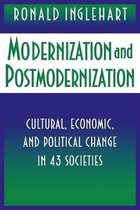
framework in which Inglehart’s (1997) main thesis on intergenerational value change is discussed and
linked to a declining confidence in governmental institutions. On the basis of this theoretical
framework, two hypotheses were formed predicting a negative effect of birth year and postmaterialist
values on confidence in governmental institutions. The hypotheses will be tested through a regression
analysis. Finally, a conclusion will be drawn based on the results of the regression analysis.
2. Theory
This chapter will firstly provide an introduction of Inglehart’s (1997) main thesis on intergenerational
value change. Subsequently, Inglehart’s assumption about the influence of birth cohorts and
postmaterialist values on confidence in governmental institutions will be discussed. Based on this
theoretical framework two hypotheses are formulated. These hypotheses form the basis of the
regression analysis carried out in this report.
Theory of intergenerational value change
Over two decades ago Inglehart (1997) proposed a ‘theory of intergenerational value change’. He
predicted that, in advanced industrial societies, value priorities would gradually shift away from
‘materialist values’, towards ‘postmaterialist values’. Materialist values concern economic and
financial security, personal safety, and law and order. Postmaterialist values place a greater emphasis
on social and self-actualization needs, subjective well-being and quality of life (Inglehart, 1997).
Inglehart emphasizes that this shift in values is not random, and advances two hypotheses to explain
this phenomenon.
Firstly, ‘The scarcity hypothesis’ states that an individual's value priorities reflect the
socioeconomic environment: one places the greatest subjective value on things that are relatively short
on supply. Therefore, in societies in which survival is seen as secure, there is a growing emphasis on
The most recent report of the Edelman Trust Barometer (2022) shows that in the Netherlands trust in
institutions referring to the government, the media and NGOs has declined. The Netherlands fell out
of the so-called ‘trust zone’. In 2021, the Netherlands was the last Western country left in the group of
‘trusters’. In 2022, trust in the government has decreased by 11%, leaving only 58% of Dutch
respondents that indicate they trust the government (Edelman Trust Barometer, 2022).
The Netherlands is a parliamentary constitutional monarchy. The country is the sixth largest
economy in the European Union and plays an important role as a European transportation hub. The
country has a consistently high trade surplus, stable industrial relations and low unemployment (CIA -
The World Factbook, 2022).
Many social researchers are trying to explain why institutional trust in Western countries has
been declining. This paper focuses solely on the Netherlands. The paper provides a theoretical
framework in which Inglehart’s (1997) main thesis on intergenerational value change is discussed and
linked to a declining confidence in governmental institutions. On the basis of this theoretical
framework, two hypotheses were formed predicting a negative effect of birth year and postmaterialist
values on confidence in governmental institutions. The hypotheses will be tested through a regression
analysis. Finally, a conclusion will be drawn based on the results of the regression analysis.
2. Theory
This chapter will firstly provide an introduction of Inglehart’s (1997) main thesis on intergenerational
value change. Subsequently, Inglehart’s assumption about the influence of birth cohorts and
postmaterialist values on confidence in governmental institutions will be discussed. Based on this
theoretical framework two hypotheses are formulated. These hypotheses form the basis of the
regression analysis carried out in this report.
Theory of intergenerational value change
Over two decades ago Inglehart (1997) proposed a ‘theory of intergenerational value change’. He
predicted that, in advanced industrial societies, value priorities would gradually shift away from
‘materialist values’, towards ‘postmaterialist values’. Materialist values concern economic and
financial security, personal safety, and law and order. Postmaterialist values place a greater emphasis
on social and self-actualization needs, subjective well-being and quality of life (Inglehart, 1997).
Inglehart emphasizes that this shift in values is not random, and advances two hypotheses to explain
this phenomenon.
Firstly, ‘The scarcity hypothesis’ states that an individual's value priorities reflect the
socioeconomic environment: one places the greatest subjective value on things that are relatively short
on supply. Therefore, in societies in which survival is seen as secure, there is a growing emphasis on