Topic 7 – Hormones and Animal Coordination
Hormones
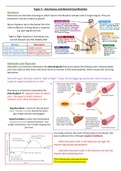
Hormones are chemical messengers which travel in the blood to activate cells in target organs. They are
produced in various endocrine glands:
Nerve impulses carry information from the
CNS to effectors to bring about a response
e.g. pain signals are fast
Fight or flight response is hormonal; you
can tell because you feel wobbly after
Nerves Hormones
Fast action Slower action
Acts for a short time Act for a long time
Acts on a precise area Acts in a general area
Adrenaline and Thyroxine
Adrenaline is a hormone released by the adrenal glands (found just above the kidneys) and is released when
your brain detects fear/stress and sends nervous impulses to the adrenal glands, which respond by secreting
adrenaline.
Adrenaline gets the body ready for 'fight or flight.’ It does this by triggering mechanisms that increase the
supply of oxygen and glucose to cells.
Thyroxine is a hormone released by the
thyroid gland à regulates basal metabolic
rate – the speed at which chemical
reactions occur while the body is at rest.
Hypothyroidism is where the thyroid gland
doesn’t produce enough thyroid hormones -
gain weight and feel tired/sluggish.
Hyperthyroidism is where the thyroid gland
produces too much thyroid hormones - lose
weight, feel anxious, have trouble sleeping and
feel tired.
Your body controls the levels of hormones in the blood. One
way it achieves this is through negative feedback.
- When thyroxine levels in the blood are too high, the
thyroid stops producing thyroxine.
- And when thyroxine levels in the blood are too low the
thyroid starts producing more.
TRH is thyrotropin-releasing hormone
TSH is thyroid-stimulating hormone.
, Negative feedback of the blood
concentration of thyroxine involves two
other hormones.
When the level of thyroxine in the blood is too high:
When thyroxine in the blood is too low:
• Release of TRH from the hypothalamus is
• The hypothalamus (a structure in the brain) is stimulated
inhibited (stopped).
to release thyrotropin releasing hormone (TRH).
• Less TRH from the hypothalamus means less
• TRH stimulates the pituitary gland (also in the brain) to
TSH from the pituitary gland.
release thyroid stimulating hormone (TSH).
• Which reduces the amount of thyroxine
• TSH stimulates thyroid gland to release thyroxine into
released from the thyroid gland.
the blood.
• The level of thyroxine in the blood falls back
• The level of thyroxine rises again.
towards normal.
The Menstrual Cycle
FSH (Follicle Stimulating Hormone) is produced in the pituitary gland.
It causes a follicle to mature in one of the ovaries and stimulates the ovaries to produce oestrogen.
Oestrogen is produced in the ovaries.
It causes the lining of the uterus to thicken and grow. A high level of oestrogen stimulates an LH surge
which leads to ovulation.
LH (Luteinising Hormone) is produced by the pituitary gland.
The LH surge causes the follicle to rupture and the egg to be released. LH also stimulates the remains of the
follicle to develop into a structure called a corpus luteum.
Progesterone is released by the corpus luteum after ovulation.
It maintains the lining of the uterus for the second half of the cycle and inhibits the release of FSH and LH.
When the level of progesterone falls, and
there's a low oestrogen level, the uterus
lining breaks down. A low progesterone level
allows FSH to increase allowing the whole
cycle to start again.
If a fertilised egg implants in the uterus then
the level of progesterone will stay high to
maintain the lining of the uterus during
pregnancy.
Egg released
Hormones
Hormones are chemical messengers which travel in the blood to activate cells in target organs. They are
produced in various endocrine glands:
Nerve impulses carry information from the
CNS to effectors to bring about a response
e.g. pain signals are fast
Fight or flight response is hormonal; you
can tell because you feel wobbly after
Nerves Hormones
Fast action Slower action
Acts for a short time Act for a long time
Acts on a precise area Acts in a general area
Adrenaline and Thyroxine
Adrenaline is a hormone released by the adrenal glands (found just above the kidneys) and is released when
your brain detects fear/stress and sends nervous impulses to the adrenal glands, which respond by secreting
adrenaline.
Adrenaline gets the body ready for 'fight or flight.’ It does this by triggering mechanisms that increase the
supply of oxygen and glucose to cells.
Thyroxine is a hormone released by the
thyroid gland à regulates basal metabolic
rate – the speed at which chemical
reactions occur while the body is at rest.
Hypothyroidism is where the thyroid gland
doesn’t produce enough thyroid hormones -
gain weight and feel tired/sluggish.
Hyperthyroidism is where the thyroid gland
produces too much thyroid hormones - lose
weight, feel anxious, have trouble sleeping and
feel tired.
Your body controls the levels of hormones in the blood. One
way it achieves this is through negative feedback.
- When thyroxine levels in the blood are too high, the
thyroid stops producing thyroxine.
- And when thyroxine levels in the blood are too low the
thyroid starts producing more.
TRH is thyrotropin-releasing hormone
TSH is thyroid-stimulating hormone.
, Negative feedback of the blood
concentration of thyroxine involves two
other hormones.
When the level of thyroxine in the blood is too high:
When thyroxine in the blood is too low:
• Release of TRH from the hypothalamus is
• The hypothalamus (a structure in the brain) is stimulated
inhibited (stopped).
to release thyrotropin releasing hormone (TRH).
• Less TRH from the hypothalamus means less
• TRH stimulates the pituitary gland (also in the brain) to
TSH from the pituitary gland.
release thyroid stimulating hormone (TSH).
• Which reduces the amount of thyroxine
• TSH stimulates thyroid gland to release thyroxine into
released from the thyroid gland.
the blood.
• The level of thyroxine in the blood falls back
• The level of thyroxine rises again.
towards normal.
The Menstrual Cycle
FSH (Follicle Stimulating Hormone) is produced in the pituitary gland.
It causes a follicle to mature in one of the ovaries and stimulates the ovaries to produce oestrogen.
Oestrogen is produced in the ovaries.
It causes the lining of the uterus to thicken and grow. A high level of oestrogen stimulates an LH surge
which leads to ovulation.
LH (Luteinising Hormone) is produced by the pituitary gland.
The LH surge causes the follicle to rupture and the egg to be released. LH also stimulates the remains of the
follicle to develop into a structure called a corpus luteum.
Progesterone is released by the corpus luteum after ovulation.
It maintains the lining of the uterus for the second half of the cycle and inhibits the release of FSH and LH.
When the level of progesterone falls, and
there's a low oestrogen level, the uterus
lining breaks down. A low progesterone level
allows FSH to increase allowing the whole
cycle to start again.
If a fertilised egg implants in the uterus then
the level of progesterone will stay high to
maintain the lining of the uterus during
pregnancy.
Egg released