

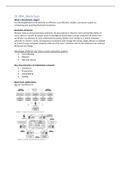
01-IBM_Blockchain
What is blockchains origin?
It is developed due to the need for an efficient, cost-effective, reliable, and secure system for
conducting and recording financial transactions.
Blockchain & Bitcoin.
Bitcoins have no central monetary authority. No one controls it. Bitcoins aren’t printed like dollars or
euros; they’re “mined” by people (and increasingly by businesses) running computers all around the
world who use software to solve mathematical puzzles. Rather than relying on a central monetary
authority to monitor, verify, and approve transactions and manage the money supply, Bitcoin is enabled
by a peer-to-peer computer network made up of its users’ machines, akin to the networks that underpin
BitTorrent and Skype.
Advantages of Bitcoin over other current transaction systems:
Cost-effective
Efficient
Safe and secure
Key characteristics of a blockchain network.
Consensus
Provenance
Immutability
Finality
Blockchain applications
VB: Car manufacturer
,Benefits of blockchain.
A. Business
Time savings
Cost savings
Tighter security
B. Regulated industries
Enhanced privacy
Improved auditability
Increased operational efficiency
How can we build trust with blockchain.
Blockchain is particularly valuable at increasing the level of trust among network participants because it
provides cryptographic proof over a set of transactions; because transactions can’t be tampered with and
are signed by the relevant counterparties, any corruption is readily apparent. This self-policing can
mitigate the need to depend on the current level of legal or government safe-guards and sanctions to
monitor and control the flow of business transactions. The community of participants does that.
Blockchain builds trust through 5 attributes:
Distributed and sustainable
Secure, private and indelible
Transparent and auditable
Consensus-based and transactional
Orchestrated and flexible
Why is “blockchain” an appropriate name?
Blockchain owes its name to the way it stores transaction data in blocks that are linked together to form a
chain. As the number of transactions grows, so does the blockchain. Each block contains a hash (a digital
fingerprint or unique identifier), timestamped batches of recent valid transactions, and the hash of the
previous block. The previous block hash links the blocks together and prevents any block from being
altered or a block being inserted between two existing blocks.
, To be clear, while the blockchain contains transaction data, it’s not a replacement for databases,
messaging technology, transaction processing, or business processes. Instead, the blockchain contains
verified proof of transactions.
Key concepts for explaining how a blockchain for business works:
It is a private, permissioned network with known identities and without the need for cryptocurrencies. 4
key concepts:
Shared ledger
Permissions
Smart contract
Consensus
A. Shared ledger
= an immutable record for all transactions
on the network, a record that all network participants can access.
Transactions are recorded only once, eliminating the duplication of effort that’s typical of
traditional business networks.
3 characteristics:
Records all transactions across the business network; the shared ledger is the system
of record, the single source of truth.
Is shared among all participants in the network; through replication, each participant
has a duplicate copy of the ledger.
Is permissioned, so participants see only those transactions they’re authorized to
view. Participants have identities that link them to transactions, but they can choose
the transaction information that other participants are authorized to view.
B. Permissions
With a permissioned blockchain, each participant has a unique identity, which enables the use of
policies to constrain network participation and access to transaction details.
Also more effective at controlling the consistency of data that gets appended to the
blockchain.
C. Consensus (agreement)
Consensus mechanisms vary from blockchain to blockchain, but include the following:
Proof of stake
Multi-signature
Practical Byzantine Fault Tolerance(PBFT)
D. Smart contracts
= an agreement or set of rules that govern a business transaction; it’s stored on the
blockchain and is executed automatically as a part of a transaction
What is blockchains origin?
It is developed due to the need for an efficient, cost-effective, reliable, and secure system for
conducting and recording financial transactions.
Blockchain & Bitcoin.
Bitcoins have no central monetary authority. No one controls it. Bitcoins aren’t printed like dollars or
euros; they’re “mined” by people (and increasingly by businesses) running computers all around the
world who use software to solve mathematical puzzles. Rather than relying on a central monetary
authority to monitor, verify, and approve transactions and manage the money supply, Bitcoin is enabled
by a peer-to-peer computer network made up of its users’ machines, akin to the networks that underpin
BitTorrent and Skype.
Advantages of Bitcoin over other current transaction systems:
Cost-effective
Efficient
Safe and secure
Key characteristics of a blockchain network.
Consensus
Provenance
Immutability
Finality
Blockchain applications
VB: Car manufacturer
,Benefits of blockchain.
A. Business
Time savings
Cost savings
Tighter security
B. Regulated industries
Enhanced privacy
Improved auditability
Increased operational efficiency
How can we build trust with blockchain.
Blockchain is particularly valuable at increasing the level of trust among network participants because it
provides cryptographic proof over a set of transactions; because transactions can’t be tampered with and
are signed by the relevant counterparties, any corruption is readily apparent. This self-policing can
mitigate the need to depend on the current level of legal or government safe-guards and sanctions to
monitor and control the flow of business transactions. The community of participants does that.
Blockchain builds trust through 5 attributes:
Distributed and sustainable
Secure, private and indelible
Transparent and auditable
Consensus-based and transactional
Orchestrated and flexible
Why is “blockchain” an appropriate name?
Blockchain owes its name to the way it stores transaction data in blocks that are linked together to form a
chain. As the number of transactions grows, so does the blockchain. Each block contains a hash (a digital
fingerprint or unique identifier), timestamped batches of recent valid transactions, and the hash of the
previous block. The previous block hash links the blocks together and prevents any block from being
altered or a block being inserted between two existing blocks.
, To be clear, while the blockchain contains transaction data, it’s not a replacement for databases,
messaging technology, transaction processing, or business processes. Instead, the blockchain contains
verified proof of transactions.
Key concepts for explaining how a blockchain for business works:
It is a private, permissioned network with known identities and without the need for cryptocurrencies. 4
key concepts:
Shared ledger
Permissions
Smart contract
Consensus
A. Shared ledger
= an immutable record for all transactions
on the network, a record that all network participants can access.
Transactions are recorded only once, eliminating the duplication of effort that’s typical of
traditional business networks.
3 characteristics:
Records all transactions across the business network; the shared ledger is the system
of record, the single source of truth.
Is shared among all participants in the network; through replication, each participant
has a duplicate copy of the ledger.
Is permissioned, so participants see only those transactions they’re authorized to
view. Participants have identities that link them to transactions, but they can choose
the transaction information that other participants are authorized to view.
B. Permissions
With a permissioned blockchain, each participant has a unique identity, which enables the use of
policies to constrain network participation and access to transaction details.
Also more effective at controlling the consistency of data that gets appended to the
blockchain.
C. Consensus (agreement)
Consensus mechanisms vary from blockchain to blockchain, but include the following:
Proof of stake
Multi-signature
Practical Byzantine Fault Tolerance(PBFT)
D. Smart contracts
= an agreement or set of rules that govern a business transaction; it’s stored on the
blockchain and is executed automatically as a part of a transaction


