

Chapter 8: Procurement
P142-166in textbook + extra content added
1. Purchasing vs procurement
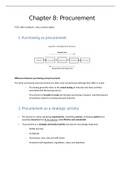
Logistics management process
Difference between purchasing and procurement
The terms purchasing and procurement are often used synonymously although they differ in scope:
- Purchasing generally refers to the actual buying of materials and those activities
associated with the buying process.
- Procurement is broader in scope and includes purchasing, transport, warehousing and
all activities related to receiving inbound materials.
2. Procurement as a strategic activity
• Procurement is about specifying requirements, identifying sources, evaluating options and
acquiring resources that fit for purpose, cost effective and sustainable
• Procurement as a strategic and tactical activity has become increasingly important:
- Global sourcing
- Complexity
- Governance: how, why and with whom
- Consistent with legislation, regulations, values and objectives
, - From spend management (traditional view) to profit potential, to corporate social
responsibility (CSR), governance and environmental commitment
• Contemporary procurement reflects a wide range of criteria that includes cost, or more
particularly value, rather than price
3. The difference between public and private sector
• Public sector procurement: focus on objectivity and transparency
• Private sector procurement: focused on own specific objectives, less transparent
4. Procurement and markets
• Defining sourcing strategies is the first step for an organisation (SME (small or medium-sized
company) or multinational) in considering how it will secure supply either on a local, national,
regional or global basis and how to interact with the market place and suppliers.
• As a minimum, a sourcing strategy for a clearly defined requirement should include:
Level (amount) of spend being considered
Risk
One-off (project) or recurring procurement
Market maturity
Number of sources and potential suppliers
P142-166in textbook + extra content added
1. Purchasing vs procurement
Logistics management process
Difference between purchasing and procurement
The terms purchasing and procurement are often used synonymously although they differ in scope:
- Purchasing generally refers to the actual buying of materials and those activities
associated with the buying process.
- Procurement is broader in scope and includes purchasing, transport, warehousing and
all activities related to receiving inbound materials.
2. Procurement as a strategic activity
• Procurement is about specifying requirements, identifying sources, evaluating options and
acquiring resources that fit for purpose, cost effective and sustainable
• Procurement as a strategic and tactical activity has become increasingly important:
- Global sourcing
- Complexity
- Governance: how, why and with whom
- Consistent with legislation, regulations, values and objectives
, - From spend management (traditional view) to profit potential, to corporate social
responsibility (CSR), governance and environmental commitment
• Contemporary procurement reflects a wide range of criteria that includes cost, or more
particularly value, rather than price
3. The difference between public and private sector
• Public sector procurement: focus on objectivity and transparency
• Private sector procurement: focused on own specific objectives, less transparent
4. Procurement and markets
• Defining sourcing strategies is the first step for an organisation (SME (small or medium-sized
company) or multinational) in considering how it will secure supply either on a local, national,
regional or global basis and how to interact with the market place and suppliers.
• As a minimum, a sourcing strategy for a clearly defined requirement should include:
Level (amount) of spend being considered
Risk
One-off (project) or recurring procurement
Market maturity
Number of sources and potential suppliers


