Psychopathology & pychodiagnostics
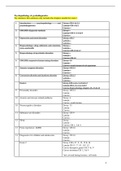
Pay attention: this summary only includes the chapters needed for exam 1
1 Introduction: psychopathology and Davey: CH 1 & 2.1
psychodiagnostics Luteijn: CH 1 & 2
Canvas: -
2 ONLINE: diagnostic methods Davey: -
Luteijn: CH 3, 4, 6 & 9
Canvas: -
3 Depression and mood disorders Davey: CH 7
Luteijn: -
Canvas: -
4 Biopsychology: drug addiction and emotions, Davey: -
stress and health Luteijn: -
Canvas: CH 15 & 17
5 Biopsychology of psychiatric disorders Davey: -
Luteijn: -
Canvas: CH 18
6 ONLINE: responsive lecture eating disorders Davey: 10
Luteijn: -
Canvas: watch lecture & ask questions
7 Somatic symptom disorders Davey: CH 13
Luteijn: -
Canvas: -
8 Conversion disorder and factitious disorder Davey: CH 13
Luteijn: -
Canvas: -
Exam 1 Davey CH 1, 2.1, 7, 10 & 13
Luteijn CH 1, 2, 3, 4, 6 & 9
Canvas biopsychology chapter 15, 17 & 18
9 Personality disorders Davey: CH 12
Luteijn: -
Canvas: -
10 Anxiety and stressor-related problems Davey: 6
Luteijn: -
Canvas: watch lecture
10 Neurocognitive disorders Davey: 15
Luteijn: -
Canvas: -
11 Substance use disorders Davey: CH 9
Luteijn: -
Canvas: -
12 Sleep Davey: -
Luteijn: -
Canvas: CH 1, 3 & 4
13 From experience: ADHD Davey: CH 16
Luteijn: -
Canvas: -
14 Diagnostics for children and adolescents Davey: CH 16
Luteijn: -
Canvas: -
Exam 2 Davey CH 6, 8*, 9, 12, 15 & 16
Luteijn CH 5*, 7*, 8*, 10* 11*
Canvas therapists guide CH 2* & 3*
Canvas insomnia CH 1, 3 & 4
*not covered during lectures, self study
1
,Psychopathology Davey
Chapter 12: personality disorders
Introduction
Personalities = global term that described how you cope with, adapt to and response to a range of life events,
including challenges, frustrations, opportunities, successes and failures.
- We inwardly experience
- Outwardly project to others
Personality disorders diagnostic category create the most controversy amongst clinical psychologists.
Personality disorder (according to DSM 5) = an enduring pattern of inner experience and behaviour that
deviates markedly from the expectations of the individual's culture, is pervasive and inflexible, has an onset
in adolescence or early adulthood, is stable over time, and leads to distress and impairment.
Three clusters
1. A: paranoid, schizoid, schizotypical personality disorders: appearing odd or eccentric
2. B: antisocial, borderline, histrionic, narcissistic: individuals appear dramatic, emotional or erratic
3. C: avoidant, dependent, obsessive-compulsive: individuals often appear anxious or fearful
12.1. contemporary issues in the diagnosis of personality disorders
There have been a number of concerns about how personality disorders have been traditionally categorized
and diagnosed. DSM-5 includes an alternative model that could be used to generate research on other
diagnostic approaches. The issues will be described in the following paragraphs.
12.1.1. the categorical approach to personality disorders in the DSM-IV-TR and DSM-5.
1. A: appearing odd or eccentric
a. Paranoid personality disorder
b. Schizotypical personality disorder
c. Schizoid personality disorder
2. B: individuals appear dramatic, emotional or erratic
a. Antisocial personality disorder
b. Borderline personality disorder
c. Narcissistic personality disorder
d. Histrionic personality disorder
3. C: individuals often appear anxious or fearful
a. Avoidant personality disorder
b. Dependent personality disorder
c. Obsessive compulsive personality disorder
12.1.2. problems with the traditional categorical model
Many researchers have argued that personality disorders do not exist as categories.
There is evidence for a dimensional approach to personality disorders. This comes from the findings that
extreme scores on conventional measures of personality are highly associated with personality disorder. This
suggest personality disorders may not be disorders, but simply represent extreme cases.
Many of the personality disorder contain characteristics that overlap (impulsivity, poor self-image, etc). this
makes it possible to diagnose one person with multiple personality disorders.
Some personality disorders are really rare in the general population (e.g. histrionic personality disorder and
dependent personality disorder) and may therefore not represent independent disorder categories.
Personality disorders are highly stable over time and so in some sense immutable, according to the DSM.
This led to professionals giving diagnosis of personality disorder because it may have implied that the client
was untreatable. However, personality disorders do not seem so stable over time in practice. This again
suggest a dimensional approach.
2
,12.1.3. DSM-5’s alternative model
The alternative diagnostic model proposed as a basis for further research in DSM‐5 has three discrete types
of personality ratings that contribute to a diagnosis. This system is designed to provide ratings of an
individual's personality on a series of personality dimensions (rather than diagnosing in an all‐or‐none
categorical way), and reduces the number of personality disorder categories from 10 down to 6. This model
also provides information about personality functioning and whether they possess pathological personality
traits.
level of personality functioning = Disturbances in self and interpersonal functioning are at the core of
personality disorders, with the severity of impairment indicating whether the individual may have more than
one personality disorder.
personality disorder types = Each of six personality disorder traits specified in the alternative diagnostic
schemes published in DSM‐5.
personality trait domains = In the alternative classification of personality disorders published in DSM‐5, there
are five personality trait domains covering negative affectivity, detachment, antagonism, disinhibition, and
psychoticism.
3
, !! The alternative diagnostic model in DSM‐5 has reduced the number of individual diagnosable personality
disorders from 10 down to 6. Each individual personality disorder then has its own set of criteria by which it
can be diagnosed, and these criteria are dependent on the presence of high scores on the measures of
personality functioning and high scores on specified personality traits. For example, under this proposed
scheme, a diagnosis of APD would be dependent on high ratings on two of the four elements of personality
functioning, and six or more of the following seven pathological personality traits: manipulativeness,
callousness, deceitfulness, and hostility (all aspects of antagonism), and risk taking, impulsivity, and
irresponsibility (all aspects of disinhibition
DSM diagnostic criteria for general personality disorder
- An ongoing rigid pattern of thought and behaviour that is significantly different from the
expectations of the person's culture, displaying manifestation in two or more of the following areas:
o Cognition
o Affectivity
o Interpersonal functioning
o Impulse control
- The pattern is constant and long lasting and can be traced back to adolescence or early childhood
- The pattern leads to distress or impairment in social, occupational, and other areas of life
- The symptoms are not better accounted for by another mental disorder or due to the effects of a
substance or other medical condition
12.1.4. summary
The ICD-11 will probably involve a fully dimensional classification of personality disorders, in which a
severity dimension will be the most diagnostic dimension (mild, moderate, severe). This should allow the
clinician to make a diagnosis that
- is more clinically meaningful in terms of how the severity of the symptoms affects functioning
- does not require the need for multiple comorbid diagnoses (this would be covered by the severity
dimension
- would enable treatment to be directed towards aiding functioning rather than treating dysfunctional
trait
Section summary
DSM‐5 retains previous diagnostic criteria by defining personality disorders on a categorical rather than
dimensional basis
DSM‐5 also discusses a dimensional approach to diagnosing personality disorders which it hopes will
generate further research.
12.2. personality disorders and their diagnosis
We use the categorical perspective for now. only when personality traits are inflexible and maladaptive and
cause significant functional impairment or distress are they diagnosed as personality disorders. The main
criterion is that a person's inner experience and behaviour must differ markedly from expectations of the
individual's culture and be reflected in at least two of the following four areas
- cognition (e.g. ways of perceiving the self, other people)
- affectivity (e.g. the range, intensity and changeability of emotions)
- interpersonal functioning
- impulse control
patterns of behaviour and inner experience must be inflexible and pervasive and lead to distress.
12.2.1. odd/eccentric personality disorders (cluster A)
Resembles schizophrenia, but unlike schizophrenia there is no apparent loss of touch with reality not the
experiencing of sensory hallucinations. Sufferers may have delusional thinking or exhibit rambling or poorly
organized speech.
4
Pay attention: this summary only includes the chapters needed for exam 1
1 Introduction: psychopathology and Davey: CH 1 & 2.1
psychodiagnostics Luteijn: CH 1 & 2
Canvas: -
2 ONLINE: diagnostic methods Davey: -
Luteijn: CH 3, 4, 6 & 9
Canvas: -
3 Depression and mood disorders Davey: CH 7
Luteijn: -
Canvas: -
4 Biopsychology: drug addiction and emotions, Davey: -
stress and health Luteijn: -
Canvas: CH 15 & 17
5 Biopsychology of psychiatric disorders Davey: -
Luteijn: -
Canvas: CH 18
6 ONLINE: responsive lecture eating disorders Davey: 10
Luteijn: -
Canvas: watch lecture & ask questions
7 Somatic symptom disorders Davey: CH 13
Luteijn: -
Canvas: -
8 Conversion disorder and factitious disorder Davey: CH 13
Luteijn: -
Canvas: -
Exam 1 Davey CH 1, 2.1, 7, 10 & 13
Luteijn CH 1, 2, 3, 4, 6 & 9
Canvas biopsychology chapter 15, 17 & 18
9 Personality disorders Davey: CH 12
Luteijn: -
Canvas: -
10 Anxiety and stressor-related problems Davey: 6
Luteijn: -
Canvas: watch lecture
10 Neurocognitive disorders Davey: 15
Luteijn: -
Canvas: -
11 Substance use disorders Davey: CH 9
Luteijn: -
Canvas: -
12 Sleep Davey: -
Luteijn: -
Canvas: CH 1, 3 & 4
13 From experience: ADHD Davey: CH 16
Luteijn: -
Canvas: -
14 Diagnostics for children and adolescents Davey: CH 16
Luteijn: -
Canvas: -
Exam 2 Davey CH 6, 8*, 9, 12, 15 & 16
Luteijn CH 5*, 7*, 8*, 10* 11*
Canvas therapists guide CH 2* & 3*
Canvas insomnia CH 1, 3 & 4
*not covered during lectures, self study
1
,Psychopathology Davey
Chapter 12: personality disorders
Introduction
Personalities = global term that described how you cope with, adapt to and response to a range of life events,
including challenges, frustrations, opportunities, successes and failures.
- We inwardly experience
- Outwardly project to others
Personality disorders diagnostic category create the most controversy amongst clinical psychologists.
Personality disorder (according to DSM 5) = an enduring pattern of inner experience and behaviour that
deviates markedly from the expectations of the individual's culture, is pervasive and inflexible, has an onset
in adolescence or early adulthood, is stable over time, and leads to distress and impairment.
Three clusters
1. A: paranoid, schizoid, schizotypical personality disorders: appearing odd or eccentric
2. B: antisocial, borderline, histrionic, narcissistic: individuals appear dramatic, emotional or erratic
3. C: avoidant, dependent, obsessive-compulsive: individuals often appear anxious or fearful
12.1. contemporary issues in the diagnosis of personality disorders
There have been a number of concerns about how personality disorders have been traditionally categorized
and diagnosed. DSM-5 includes an alternative model that could be used to generate research on other
diagnostic approaches. The issues will be described in the following paragraphs.
12.1.1. the categorical approach to personality disorders in the DSM-IV-TR and DSM-5.
1. A: appearing odd or eccentric
a. Paranoid personality disorder
b. Schizotypical personality disorder
c. Schizoid personality disorder
2. B: individuals appear dramatic, emotional or erratic
a. Antisocial personality disorder
b. Borderline personality disorder
c. Narcissistic personality disorder
d. Histrionic personality disorder
3. C: individuals often appear anxious or fearful
a. Avoidant personality disorder
b. Dependent personality disorder
c. Obsessive compulsive personality disorder
12.1.2. problems with the traditional categorical model
Many researchers have argued that personality disorders do not exist as categories.
There is evidence for a dimensional approach to personality disorders. This comes from the findings that
extreme scores on conventional measures of personality are highly associated with personality disorder. This
suggest personality disorders may not be disorders, but simply represent extreme cases.
Many of the personality disorder contain characteristics that overlap (impulsivity, poor self-image, etc). this
makes it possible to diagnose one person with multiple personality disorders.
Some personality disorders are really rare in the general population (e.g. histrionic personality disorder and
dependent personality disorder) and may therefore not represent independent disorder categories.
Personality disorders are highly stable over time and so in some sense immutable, according to the DSM.
This led to professionals giving diagnosis of personality disorder because it may have implied that the client
was untreatable. However, personality disorders do not seem so stable over time in practice. This again
suggest a dimensional approach.
2
,12.1.3. DSM-5’s alternative model
The alternative diagnostic model proposed as a basis for further research in DSM‐5 has three discrete types
of personality ratings that contribute to a diagnosis. This system is designed to provide ratings of an
individual's personality on a series of personality dimensions (rather than diagnosing in an all‐or‐none
categorical way), and reduces the number of personality disorder categories from 10 down to 6. This model
also provides information about personality functioning and whether they possess pathological personality
traits.
level of personality functioning = Disturbances in self and interpersonal functioning are at the core of
personality disorders, with the severity of impairment indicating whether the individual may have more than
one personality disorder.
personality disorder types = Each of six personality disorder traits specified in the alternative diagnostic
schemes published in DSM‐5.
personality trait domains = In the alternative classification of personality disorders published in DSM‐5, there
are five personality trait domains covering negative affectivity, detachment, antagonism, disinhibition, and
psychoticism.
3
, !! The alternative diagnostic model in DSM‐5 has reduced the number of individual diagnosable personality
disorders from 10 down to 6. Each individual personality disorder then has its own set of criteria by which it
can be diagnosed, and these criteria are dependent on the presence of high scores on the measures of
personality functioning and high scores on specified personality traits. For example, under this proposed
scheme, a diagnosis of APD would be dependent on high ratings on two of the four elements of personality
functioning, and six or more of the following seven pathological personality traits: manipulativeness,
callousness, deceitfulness, and hostility (all aspects of antagonism), and risk taking, impulsivity, and
irresponsibility (all aspects of disinhibition
DSM diagnostic criteria for general personality disorder
- An ongoing rigid pattern of thought and behaviour that is significantly different from the
expectations of the person's culture, displaying manifestation in two or more of the following areas:
o Cognition
o Affectivity
o Interpersonal functioning
o Impulse control
- The pattern is constant and long lasting and can be traced back to adolescence or early childhood
- The pattern leads to distress or impairment in social, occupational, and other areas of life
- The symptoms are not better accounted for by another mental disorder or due to the effects of a
substance or other medical condition
12.1.4. summary
The ICD-11 will probably involve a fully dimensional classification of personality disorders, in which a
severity dimension will be the most diagnostic dimension (mild, moderate, severe). This should allow the
clinician to make a diagnosis that
- is more clinically meaningful in terms of how the severity of the symptoms affects functioning
- does not require the need for multiple comorbid diagnoses (this would be covered by the severity
dimension
- would enable treatment to be directed towards aiding functioning rather than treating dysfunctional
trait
Section summary
DSM‐5 retains previous diagnostic criteria by defining personality disorders on a categorical rather than
dimensional basis
DSM‐5 also discusses a dimensional approach to diagnosing personality disorders which it hopes will
generate further research.
12.2. personality disorders and their diagnosis
We use the categorical perspective for now. only when personality traits are inflexible and maladaptive and
cause significant functional impairment or distress are they diagnosed as personality disorders. The main
criterion is that a person's inner experience and behaviour must differ markedly from expectations of the
individual's culture and be reflected in at least two of the following four areas
- cognition (e.g. ways of perceiving the self, other people)
- affectivity (e.g. the range, intensity and changeability of emotions)
- interpersonal functioning
- impulse control
patterns of behaviour and inner experience must be inflexible and pervasive and lead to distress.
12.2.1. odd/eccentric personality disorders (cluster A)
Resembles schizophrenia, but unlike schizophrenia there is no apparent loss of touch with reality not the
experiencing of sensory hallucinations. Sufferers may have delusional thinking or exhibit rambling or poorly
organized speech.
4