
THE THEORY OF PLANNED
BEHAVIOR
AO1-
HOW THE THEORY OF PLANNED BEHAVIOUR CAN BE USED TO PREVENT
ADDICTION
Proposed by Ajzen (1989)
Cognitive theory about factors that lead to a person’s decision to engage in an
addictive behaviour.
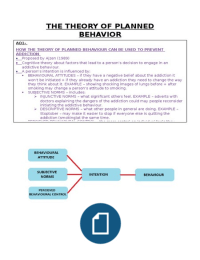
A person’s intention is influenced by:
BEHAVIOURAL ATTITUDES – if they have a negative belief about the addiction it
won’t be initiated + if they already have an addiction they need to change the way
they think about it. EXAMPLE – showing shocking images of lungs before + after
smoking may change a person’s attitude to smoking.
SUBJECTIVE NORMS – includes:
INJUNCTIVE NORMS – what significant others feel. EXAMPLE – adverts with
doctors explaining the dangers of the addiction could may people reconsider
initiating the addictive behaviour.
DESCRIPTIVE NORMS – what other people in general are doing. EXAMPLE –
Stoptober – may make it easier to stop if everyone else is quitting the
addiction (smoking)at the same time.
PERCIEVED BEHAVIOURAL CONTROL – the more control an individual feels they
BEHAVIOR
AO1-
HOW THE THEORY OF PLANNED BEHAVIOUR CAN BE USED TO PREVENT
ADDICTION
Proposed by Ajzen (1989)
Cognitive theory about factors that lead to a person’s decision to engage in an
addictive behaviour.
A person’s intention is influenced by:
BEHAVIOURAL ATTITUDES – if they have a negative belief about the addiction it
won’t be initiated + if they already have an addiction they need to change the way
they think about it. EXAMPLE – showing shocking images of lungs before + after
smoking may change a person’s attitude to smoking.
SUBJECTIVE NORMS – includes:
INJUNCTIVE NORMS – what significant others feel. EXAMPLE – adverts with
doctors explaining the dangers of the addiction could may people reconsider
initiating the addictive behaviour.
DESCRIPTIVE NORMS – what other people in general are doing. EXAMPLE –
Stoptober – may make it easier to stop if everyone else is quitting the
addiction (smoking)at the same time.
PERCIEVED BEHAVIOURAL CONTROL – the more control an individual feels they


