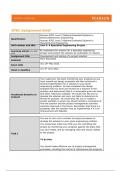
In this task I will access the importance of measuring and managing
employee performance at work. To do this I will explain the terms
managing performance and measuring. Then I will explain how important
it is for my chosen organisation to manage and measure the performance
of the employees at the workplace. I will also explain the benefits of
performance management contrasted with the consequences of failing to
manage performance of the workers in the workplace.
Managing performance:
Motivating employees and encouraging involvement can be both increase
the amount of work that employees are doing, as well as its quality. This
means that employees are motivated to work as hard as they can, and
they are encouraged to take part in the activities and be involved in them.
Measuring Performance:
Measuring performance is a motivation key to get the employees to work
as hard as they possibly can. A business can only find out how hard
employees are working if they measure their performance. E.g. managers
at Asda will measure the performance of the employees working at the
organisation. This will help the managers at Asda know how well the
employees are performing and the managers help the employees if they
are facing any problems at work.
Importance of managing and measuring performance for an
organisation:
It’s really important for my chosen organisation Asda to manage and
measure the performance of their employees. This helps the business
organisation take into account, the skills the employee has to carry out
the job role, whether or not if they are taking the job seriously. This also
tells the managers about the different kinds of problems that the
employee is facing at workplace and whether or not if they have the skills
to face and solve it. Also this tells the mangers whether or not the
employee is using the skills they have to face the problem. This helps the
managers to get to know the worker really well and it’s an opportunity for
the mangers to help the employees in the best way that they can. Based
on the results of the supervision the mangers can decide whether or not if
the employees should be retrained or not.
Benefits of performance management:
The managers can identify the different skills the employee has and
uses to solve the different problems that they face at the workplace.
Also managing performance of the employees tells the mangers
what kind of different techniques the employees use to carry out the
work that they’ve been given. E.g. the managers at Asda manager
manage the performance of the employees to see to what extent
are the employees performing/ whether or not if they are performing
to the best they can or not. This information helps the mangers at
the work place make the decisions about the best performer
, employee of the month to celebrate the achievements of the month.
This is one of the different ways of motivating the employees within
the organisation to motivate the staff/employees.
When the managers at the workplace manage the performance of
the workers then they also know whether or not if the employee
requires new skills. The mangers send the employees to be
retrained when they feel that the employees need to be retrained.
When the employees are retrained they perform much better. The
employees then help the customers even more and provide them
the best service. The customers become happy and they will tell
their friends and family members to purchase the products from
that business organisation. This will help the business get more
customers. The more customers a business has, the more profit that
business will make. E.g. when Asda staffs are retrained they perform
much better, they provide the customers with a better service and
are much nicer to the customers. Then those customers tell the
people they know I.e. family members, relatives and friends about
the good services being provided, this helps the business get new
customers. This increases the chance of the business making more
profit. When the business makes more profit, they expand and
become more popular amongst their consumers.
Consequences of failing to manage the performance of the
workers in the workplace:
If the organisation fails to manage the performance of the
employee, this means that the manager of the workplace; don’t
concentrate on the performance of the employee in the workplace,
then the employee will feel demotivated. This is because when the
employee tries to perform to their best ability for the organisation,
they expect the recognition. They want the feedback and they also
expect to be praised, this motivates the employees at the workplace
to perform even better. When the mangers at the workplace
carelessly don’t consider the performance of the employees within
the workplace, the employee make his or her own rules based on
when they should work and when they shouldn’t. Eventually the
employee will stop performing at-all within the workplace. This will
have a big impact on the business because if the employee doesn’t
perform to their best ability then this means that they will not greet
the customers nicely and they will not help the customers. This will
result less people purchasing goods from the stores. This will lead to
less profit for the business. As the businesses have so many
expenses to pay for I.e. Gas and Electricity bills, Suppliers, Rent of
goods such as: freezers, fridges etc. the business will run into debt.
This means borrowing more money from the other businesses,
shareholders and banks. When the businesses borrow loans from
the banks, they have to pay a rate of interest. The business will not
be able to pay the rate of interest on the loans they borrow. Finally
employee performance at work. To do this I will explain the terms
managing performance and measuring. Then I will explain how important
it is for my chosen organisation to manage and measure the performance
of the employees at the workplace. I will also explain the benefits of
performance management contrasted with the consequences of failing to
manage performance of the workers in the workplace.
Managing performance:
Motivating employees and encouraging involvement can be both increase
the amount of work that employees are doing, as well as its quality. This
means that employees are motivated to work as hard as they can, and
they are encouraged to take part in the activities and be involved in them.
Measuring Performance:
Measuring performance is a motivation key to get the employees to work
as hard as they possibly can. A business can only find out how hard
employees are working if they measure their performance. E.g. managers
at Asda will measure the performance of the employees working at the
organisation. This will help the managers at Asda know how well the
employees are performing and the managers help the employees if they
are facing any problems at work.
Importance of managing and measuring performance for an
organisation:
It’s really important for my chosen organisation Asda to manage and
measure the performance of their employees. This helps the business
organisation take into account, the skills the employee has to carry out
the job role, whether or not if they are taking the job seriously. This also
tells the managers about the different kinds of problems that the
employee is facing at workplace and whether or not if they have the skills
to face and solve it. Also this tells the mangers whether or not the
employee is using the skills they have to face the problem. This helps the
managers to get to know the worker really well and it’s an opportunity for
the mangers to help the employees in the best way that they can. Based
on the results of the supervision the mangers can decide whether or not if
the employees should be retrained or not.
Benefits of performance management:
The managers can identify the different skills the employee has and
uses to solve the different problems that they face at the workplace.
Also managing performance of the employees tells the mangers
what kind of different techniques the employees use to carry out the
work that they’ve been given. E.g. the managers at Asda manager
manage the performance of the employees to see to what extent
are the employees performing/ whether or not if they are performing
to the best they can or not. This information helps the mangers at
the work place make the decisions about the best performer
, employee of the month to celebrate the achievements of the month.
This is one of the different ways of motivating the employees within
the organisation to motivate the staff/employees.
When the managers at the workplace manage the performance of
the workers then they also know whether or not if the employee
requires new skills. The mangers send the employees to be
retrained when they feel that the employees need to be retrained.
When the employees are retrained they perform much better. The
employees then help the customers even more and provide them
the best service. The customers become happy and they will tell
their friends and family members to purchase the products from
that business organisation. This will help the business get more
customers. The more customers a business has, the more profit that
business will make. E.g. when Asda staffs are retrained they perform
much better, they provide the customers with a better service and
are much nicer to the customers. Then those customers tell the
people they know I.e. family members, relatives and friends about
the good services being provided, this helps the business get new
customers. This increases the chance of the business making more
profit. When the business makes more profit, they expand and
become more popular amongst their consumers.
Consequences of failing to manage the performance of the
workers in the workplace:
If the organisation fails to manage the performance of the
employee, this means that the manager of the workplace; don’t
concentrate on the performance of the employee in the workplace,
then the employee will feel demotivated. This is because when the
employee tries to perform to their best ability for the organisation,
they expect the recognition. They want the feedback and they also
expect to be praised, this motivates the employees at the workplace
to perform even better. When the mangers at the workplace
carelessly don’t consider the performance of the employees within
the workplace, the employee make his or her own rules based on
when they should work and when they shouldn’t. Eventually the
employee will stop performing at-all within the workplace. This will
have a big impact on the business because if the employee doesn’t
perform to their best ability then this means that they will not greet
the customers nicely and they will not help the customers. This will
result less people purchasing goods from the stores. This will lead to
less profit for the business. As the businesses have so many
expenses to pay for I.e. Gas and Electricity bills, Suppliers, Rent of
goods such as: freezers, fridges etc. the business will run into debt.
This means borrowing more money from the other businesses,
shareholders and banks. When the businesses borrow loans from
the banks, they have to pay a rate of interest. The business will not
be able to pay the rate of interest on the loans they borrow. Finally