

Samenvatting Strategic HRM -2021-2022
Introduction
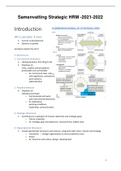
HR is paradox: 4 axes
• Control vs development
• Systems vs people
Find best solution for all 4!
4 dimensions
1. Instrumental dimension
• starting business: first thing to do
• Emphasis on
rules, systems and procedures:
predictable and controllable
o Ex. Formal and clear rules
and regulations, procedures,
work systems,
administration
2. People dimension
• Emphasis on
individual and team
o Communicate and work
with instrumental dimension
o Ex. Motivation,
working conditions,
leadership, communication
3. Strategic dimension
• Contributes to realization of mission statement and strategic goals
o Future, proactive
o Ex. Strategy, goal and objectives, measurement, added value
4. Organizational dimension
• Create appropriate structures and cultures: congruent with vision, mission and strategy
o Innovation → change organizations to more productive ones
o Power
o Ex. Structure and culture, design, development
1
,Part 1: The instrumental dimension
1. The basic elements of
the instrumental dimension (Taylor)
• Efficiency, discipline at low price
• Control through obedience and respect for manager
1.1. The history of administrative control towards internal service
• Efficiency →
person and organization are machine
• The one best way: right rules and procedures
• McDonaldization
2
, • Taylorism
o scientific Management
o Natural soldiering → counteracting natural tendency to avoid working
o Manager: direct control and supervision with emphasis on discipline and technical
work-design
o control system
• Administrative control/services
o Introduction of disciplinary interventions
→ tendency natural soldiering
o Different aspects of instrumental tasks:
administration, service delivery, juridical service, expertise administrative procedures
and legal affairs, negotiations for setting up regulations, rules, agreements and social
laws
1.2. The role of social partners in setting up instrumental systems
• important role in revising and bargaining about new rules and procedures
• Neo-corporatism:
o System of consultation and policy making in industrialized countries and coming to
socio-economic agreements
o 2 models:
▪ Rhineland model
Anglo-Saxon model
1.3. The core business of the instrumental dimension
1.3.1. Administrative service: necessity of paperwork
3
Introduction
HR is paradox: 4 axes
• Control vs development
• Systems vs people
Find best solution for all 4!
4 dimensions
1. Instrumental dimension
• starting business: first thing to do
• Emphasis on
rules, systems and procedures:
predictable and controllable
o Ex. Formal and clear rules
and regulations, procedures,
work systems,
administration
2. People dimension
• Emphasis on
individual and team
o Communicate and work
with instrumental dimension
o Ex. Motivation,
working conditions,
leadership, communication
3. Strategic dimension
• Contributes to realization of mission statement and strategic goals
o Future, proactive
o Ex. Strategy, goal and objectives, measurement, added value
4. Organizational dimension
• Create appropriate structures and cultures: congruent with vision, mission and strategy
o Innovation → change organizations to more productive ones
o Power
o Ex. Structure and culture, design, development
1
,Part 1: The instrumental dimension
1. The basic elements of
the instrumental dimension (Taylor)
• Efficiency, discipline at low price
• Control through obedience and respect for manager
1.1. The history of administrative control towards internal service
• Efficiency →
person and organization are machine
• The one best way: right rules and procedures
• McDonaldization
2
, • Taylorism
o scientific Management
o Natural soldiering → counteracting natural tendency to avoid working
o Manager: direct control and supervision with emphasis on discipline and technical
work-design
o control system
• Administrative control/services
o Introduction of disciplinary interventions
→ tendency natural soldiering
o Different aspects of instrumental tasks:
administration, service delivery, juridical service, expertise administrative procedures
and legal affairs, negotiations for setting up regulations, rules, agreements and social
laws
1.2. The role of social partners in setting up instrumental systems
• important role in revising and bargaining about new rules and procedures
• Neo-corporatism:
o System of consultation and policy making in industrialized countries and coming to
socio-economic agreements
o 2 models:
▪ Rhineland model
Anglo-Saxon model
1.3. The core business of the instrumental dimension
1.3.1. Administrative service: necessity of paperwork
3


