Leading SAFe 2022 With Complete Solutions.
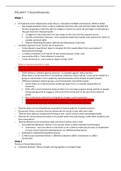
Reasons for adopting Agile - Top 3 Accelerate Product Delivery Enhance ability to manage changing priorities Increase Productivity What does SAFe do? Synchronizes alignment, collaboration and delivery for large numbers of teams Deal in smaller chuncks Contracts Do not build design deliverables into a contract Agile team Cross functional and self-organizing. Can define, build and test valuable things Applied Agile SW Engineering practices with XP, Scrum and Kanban Delivers value every 2 weeks Enterprise, Lean and Large In the large Enterprise, there may be multiple SAFe portfolios. House of Lean Respect for people and culture Flow Innovation Relentless Improvement House of Lean Purpose Best quality High morale House of Lean Flow Avoid start and sop Build quality in Integrate frequently Fast feedback House of Lead Innovation Give members time and capacity to think Producers innovate, customers validate House of Lean Relentless improvement Optimize the whole A constant sense of danger House of Lean Leadership Lead the change Develop people Intrinsic motivation Agile Manifesto Value Individuals and interactions over processes and tools Working SW over comprehensive documentation Customer Collaboration over contract negoiation Responding to change over following a plan Aspects of systems thinking Optimizing a component does not optimize the system A system can evolve no faster than its slowest integration point Value Stream Optimize Focus on delays Deliver customer value Uncerainty Requirements must be flexible Designs must be flexible Preservation of options improves economic results Set based approach Multiple design options Learning points Learning cycles Fast feedback accelerates knowledge Small batch sizes Shorter cycles = faster learning The iterative learning cycle PDCA Plan, Do, Check, Adjust Phase Gates Fix requirements and designs too early Objective Milestones Facilitate learning and allow for continuous cost-effective adjustments towards and optimal solution System Demos Orchestrated to deliver objective progress, product and process metrics BVIR Big Visible Information Radar Queue Work committed to Backlog Work not committed too WIP Limit of three user stories IP. If a developer is done, help other developers or test in order to move the stories forward Limit WIP, reduce batch sizes and manage queue lengths Small batches Go through the system faster Most important batch is the handoff batch Large batches Increase variability High utilization increases variability Severe project slippage is the most likely result Optimum batch size Lowest total cost Example of U curve optimization Total costs are the sum of holding costs and transaction costs Higher transaction costs shift optimum batch size higher Higher holding costs shift batch size lower Reducing optimum batch size Reducing transaction costs reduces total costs and shifts optimum batch size lower Reducing batch size - Increases predicstibility - Accelerates feedback - Reduces rework - Lowers cost Holding cost holding cost (the cost for delayed feedback, inventory decay, and delayed value delivery) Transaction cost transaction cost (the cost of preparing and implementing the batch) U Curve To improve the economics of handling smaller batches—and thus increase throughput—teams must focus on reducing the transaction costs of any batch. This typically involves increasing the attention to and investment in infrastructure and automation, including things such as Continuous Integration and the build environment, DevOps automation, and system test setup times. This is integral to systems thinking (Principle #2) and a critical element in long-view optimization. Queues Long queues are back Committed work Little's Law Reduce queue lengths Faster processing time decreases wait Shorter queue lengths decreases wait Control wait times by controlling queue lengths Cadence 5 Sprints per increment Develop on cadence; release on demand Decentralize decision making Define economic logic behind a decision Empower others to actually make them Value doesn't follow silos Value delivery is inhibited by hand-offs and delays Political boundaries can prevent cooperation Silos encourage geographical distribution of functions Communication across silos is difficult Build cross functional Agile teams Agile teams are cross-functional, self organizing Optimized for communication Deliver value every 2 weeks Teams execute iterations with Scrum Scrum is built on transparency, inspection and adaption ARTs Continuously deliver value 5 - 12 teams (50 - 125+ individuals) Common cadence, PI Common mission, Program Backlog RTE Acts as the Chief Scrum Master Product Management Owns, defines and prioritizes the Program Backlog System Architect/Engineering Provides architectural guidance and technical enablement to the teams on the train System Team Provides processes and tools to integrate and evaluate assets early and often Business Owners Key Stakeholders on the ART PI Planning Cadence-based PI planning meetings are the pacemaker of the Agile Enterprise - Two days every 8-12 weeks. 10 weeks typical - Everyone attends if possible - Product Management owns the features if possible - Development owns Story Planning and HLE - Arch/Eng and US work as intermediaries for governance, interfaces and dependencies PI Planning Process Input - Vision and Top 10 features Output - Team and Program PI objectives and program board PI Objectives Business summaries of what each team intends to deliver in the upcoming PI Typically map to features, but now always Maintain predictability with Stretch objectives They do count in velocity/capacity They are planned However, not included in the commitment Low confidence or many unknowns - move to a stretch Features are implemented by Stories Small increments of value that can be delivered in days and provide value Teams collaborate to deliver Features incrementally via User Stories Features fit in one PI for one ART Stories fit in one Iteration (Sprint) for one team Enabler Stories Exploration Architecture Infrastructure Compliance Story Points Singular number that represents Volume, Complexity, Knowledge, Uncertainty Relative - Not connected to a unit of measure 8 point story should take 4x longer than a 2 point story Story Points 2 Find a small Story that would take about a half-day to develop and a half-day to test and validate. Call it a 1 Estimate every other Story relative to that one Never look back (don't worry about recalibrating) PI Management Review After PI Planning Day 1, Management meets to adjust as needed. What did we just learn? Adjust Vision, Scope, Resources? Bottlenecks? Decisions that need to be made before tomorrow? PI Final Plan Collected at the front of the room Reviewed by all teams Business owners asked if they accept the plans If so, okay. If not, continue to plan. Program Risks ROAM Resolved - Has been addresses. No Longer a concern. Owned - Someone has taken responsibility Accepted - Nothing more can be done. If risk occurs, release may be compromised Mitigated - Team has plan to adjust as necessary PI - Confidence Vote Completed after dependencies are resolved and risks are addressed Range of 1-5 1 = No confidence 5 = Very high confidence PI - Retrospective Help continuously evolve ARTs Continuously deliver value Continuous Exploration Continuous Integration Continuous Deployment Closed Loop Program Events create a closed loop system to keep the train on the tracks - PI Planning - Scrum of Scrums - PO Sync - System Demo - Prepare for PI Planning - Inspect & Adapt ART Sync Used to coordinate progress Programs coordinate dependencies through sync meetings Scrum of Scrums Visibility into progress and impediments Facilitated by RTE PO Sync Visibility into progress, scope and priority adjustments Facilitated by RTE Roadmap Guides the deliver of features over time PX - Committed PX+2 - Foretasted Features Is an industry-standard term familiar to marketing and Product Management Have Benefit Hypothesis and Acceptance Criteria Reflect functional and non functional requirements Fitsin one PI Benefit Hypothesis Justify Feature implementation cost, and provides business perspective when making scope decisions Acceptance Criteria Typically defined during the backlog refinement Prioritize Features For Optimal ROI What is the Cost of Delay (CoD) in delivering value What is the cost to implement the valuable thing? - Business impact, missed revenue, delay other project, opportunity enablement WSJF Weighted Shortest Job First Give preference to jobs with shorter duration and higher CoD using WSJF WSJF = CoD / Duration Components of CoD User and business value - Relative value to the customer or business Time criticality - How user/business value decays over time Risk Reduction & Opportunity enablement (RR & OE) - What else does this do for our business WSJF Stakeholders Business Owners, Product Managers, Product Owners, System Architects Continuously Integrate Stories and Features System Increment Continuous functionality building Continious Story Integration Features Enablers - Functionality needed for a feature to work Spike - research enabler Demo Demo the full system increment every two weeks - Features are functionally complete or toggled so not to disrupt the demonstrable functionality - New Features work together, and with existing functionality - Happens after the team' demo (may lag by as much as one iteration) - Demo from a staging environment, resemble production as much as possible DOD (Definition of Done) E.g. Do not close story unless all defects closed Build quality in - Ensures every increment of the solution reflects quality standards Test First Automate now Automated tests are implemented in the same iteration as the functionality Architectural Runway Existing code, hw components, etc. that enables near-term business features Enablers build up the runway Features consume it Must be continuously maintained
Written for
- Institution
- Leading SAFe
- Course
- Leading SAFe
Document information
- Uploaded on
- November 7, 2022
- Number of pages
- 14
- Written in
- 2022/2023
- Type
- Exam (elaborations)
- Contains
- Questions & answers
Subjects
-
leading safe 2022 with complete solutions