Cloning Applications
1. Research tool
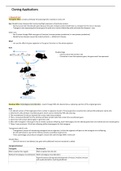
Transgenic Mice: contains artificially introduced genetic material in every cell
Use: Model human diseases that involve low/high expression of particular protein
- Normal cannot be infected with polio because they lack receptor protein CD155 that is a receptor for the virus in humans
- Transgenic mice expressing the human gene for polio virus can be infected by polio and study the diseases + cure
Other uses
- See if certain foreign DNA cause gain of function (increase protein production/ or new protein production)
- Model human diseases caused by mutant proteins → Alzheimer's Disease
Why?
- can see the effect of gene regulation or the gene's function on the whole organism
How
Disadvantage
- cannot control the insertion site
- if insertion is near the repressor gene, the gene won't be expressed
Knockout Mice: Homologous recombination - inserts foreign DNA into desired locus, replacing a portion of the original genome
How
1. An altered version of the target gene that is similar in sequence to part of mouse genome is inserted into cultured ES (embryonic stem) cells.
2. Only few ES cells will have recombinant gene, which can be checked by PCR and culturing
3. The recombinant ES cells are injected into a very early mouse embryo
4. Then, a mouse produced from the embryo will have somatic cells that contain the recombinant gene
5. Some mice will contain altered gene in germ-line cells
6. Mice with transgene in their germ line are bred to produce offspring, each heterozygous for the altered gene (have one normal and one mutant gene)
7. These 2 mice are bred, 1/4 of their offspring will be homozygous for the transgene
Transgenesis with ES cells
- Transgenesis: process of introducing transgene into an organism, so that the organism will pass on the transgene to its offspring
- ES cells will become a part of the embryo and also contribute to germ-line
- These sperm/eggs can produce transgenic mouse with same foreign DNA in every cell
Knockin Mice
- Gene of interest is not deleted, but gene with additional function (mutation) is added
Compare/Contrast
Transgenic Knockout/in
DNA is injected into zygote DNA is injected into ES cells
Without Homologous recombination With homologous recombination
If gene functions during early development of mouse, knockout mouse
will usually die before reaching adulthood
1. Research tool
Transgenic Mice: contains artificially introduced genetic material in every cell
Use: Model human diseases that involve low/high expression of particular protein
- Normal cannot be infected with polio because they lack receptor protein CD155 that is a receptor for the virus in humans
- Transgenic mice expressing the human gene for polio virus can be infected by polio and study the diseases + cure
Other uses
- See if certain foreign DNA cause gain of function (increase protein production/ or new protein production)
- Model human diseases caused by mutant proteins → Alzheimer's Disease
Why?
- can see the effect of gene regulation or the gene's function on the whole organism
How
Disadvantage
- cannot control the insertion site
- if insertion is near the repressor gene, the gene won't be expressed
Knockout Mice: Homologous recombination - inserts foreign DNA into desired locus, replacing a portion of the original genome
How
1. An altered version of the target gene that is similar in sequence to part of mouse genome is inserted into cultured ES (embryonic stem) cells.
2. Only few ES cells will have recombinant gene, which can be checked by PCR and culturing
3. The recombinant ES cells are injected into a very early mouse embryo
4. Then, a mouse produced from the embryo will have somatic cells that contain the recombinant gene
5. Some mice will contain altered gene in germ-line cells
6. Mice with transgene in their germ line are bred to produce offspring, each heterozygous for the altered gene (have one normal and one mutant gene)
7. These 2 mice are bred, 1/4 of their offspring will be homozygous for the transgene
Transgenesis with ES cells
- Transgenesis: process of introducing transgene into an organism, so that the organism will pass on the transgene to its offspring
- ES cells will become a part of the embryo and also contribute to germ-line
- These sperm/eggs can produce transgenic mouse with same foreign DNA in every cell
Knockin Mice
- Gene of interest is not deleted, but gene with additional function (mutation) is added
Compare/Contrast
Transgenic Knockout/in
DNA is injected into zygote DNA is injected into ES cells
Without Homologous recombination With homologous recombination
If gene functions during early development of mouse, knockout mouse
will usually die before reaching adulthood