INTERNATIONAL MONEY AND FINANCE
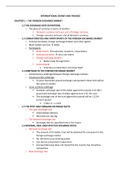
CHAPTER 1 – THE FOREIGN EXCHANGE MARKET
- 1.2 THE EXCHNAGE RATE DEFINITIONS
o The price of currency in terms of another
▪ Domestic currency units per unit of foreign currency
▪ Foreign currency units per unit of domestic currency
- 1.3 CHARACTERISTICS AND PARTICIPANTS OF THE FOREIGN EXCHANGE MARKET
o Commercial banks, foreign exchange brokers and other agents
o Most traded currency → dollar
o Participants
▪ Retail clients → businesses, investors, corporations
▪ Commercial banks → carry out orders
▪ Foreign exchange brokers
• Banks trade through them
▪ Central banks
• Intervene to keep their currencies fixed
- 1.4 ARBITRAGE IN THE FOREIGN EXCHNAGE MARKET
o Instantaneous arbitrage between foreign exchange markets
o Financial centre arbitrage
▪ Ensures that dollar-pound exchange rate quoted in New York will be
the same in London
o Cross currency arbitrage
▪ Example: exchange rate of the dollar against the pound is $1.58/1
pound and exchange rate of dollar against euro is $1.3/1 euro
▪ The exchange rate of the euro against the pound will be 1.2154
euros/1 pound
• 1.58/1.3 = 1.2154
- 1.5 THE SPOT AND FORWARD EXCHNAGE RATES
o The spot exchange rate
▪ Intermediate delivery
▪ Normally two day lag
o The forward exchange rate
▪ Exchange rate for specified time in the future
- 1.6 NOMINAL, REAL AND EFFECTIVE EXCHANGE RATES
o Nominal exchange rate
▪ The amount of US dollars that will be obtained for one pound in the
foreign exchange market
▪ No reference to purchasing power
▪ Can also be presented in index form
▪ Increase/decrease does not imply that the country has more/less
competitive
o Real exchange rate
, ▪ Nominal exchange rate adjusted for relative prices between the
countries under consideration
𝑃∗
▪ 𝑆𝑟 = 𝑆 × 𝑃
• Sr → index of the real exchange rate
• S → nominal exchange rate in index form
• P → index of the domestic price level
• P* → index of the foreign price level
o Effective exchange rate
▪ A measure of whether or not the currency is appreciating or
depreciating against a weighted basket of foreign currencies
- 1.7 A SIMPLE MODEL OF THE DETERMINATION OF THE SPOT EXCHANGE RATE
o The demand for foreign exchange
▪ The higher the price, the less quantity is demanded
▪ Demand for pounds depends upon the demand for UK exports
▪ Increased demand for pounds → shift to the right
• Factors: rise in US income (they can buy more exported goods
from the UK), change in US taste in favour of the UK, rise in
price of US goods
o The supply of foreign exchange
▪ The UK demand for US dollars
▪ The higher the price, the more quantity supplied
▪ If pound appreciates → the cost of US exports becomes cheaper for
UK residents → they demand more US exports
▪ The supply of pounds schedule depends upon the UK demand for US
exports
• Shift to the right if increase in UK income
• Shift to the right if change in UK taste is favour of US
o Equilibrium
▪ Quantity and rate (dollar-pound rate)
- 1.8 ALTERNATIVE EXCHNAGE RATE REGIMES
o Floating exchange rate regime
▪ Authorities do not intervene → they allow the value of the currency to
change
▪ The currency appreciates and depreciates
o Fixed exchange rate regime
▪ Government intervene to keep exchange rate fixed
▪ Appreciation could be seen as undesirable → might hurt exports
▪ Depreciation might be seen as undesirable → might increase the cost
of imports + increase inflation
o Example: fixed rate of Hong Kong dollar against US dollar
o If Bank of England allow the foreign exchange market intervention to increase
the UK money supply and lower UK interest
▪ Risk of overshooting inflation target
CHAPTER 1 – THE FOREIGN EXCHANGE MARKET
- 1.2 THE EXCHNAGE RATE DEFINITIONS
o The price of currency in terms of another
▪ Domestic currency units per unit of foreign currency
▪ Foreign currency units per unit of domestic currency
- 1.3 CHARACTERISTICS AND PARTICIPANTS OF THE FOREIGN EXCHANGE MARKET
o Commercial banks, foreign exchange brokers and other agents
o Most traded currency → dollar
o Participants
▪ Retail clients → businesses, investors, corporations
▪ Commercial banks → carry out orders
▪ Foreign exchange brokers
• Banks trade through them
▪ Central banks
• Intervene to keep their currencies fixed
- 1.4 ARBITRAGE IN THE FOREIGN EXCHNAGE MARKET
o Instantaneous arbitrage between foreign exchange markets
o Financial centre arbitrage
▪ Ensures that dollar-pound exchange rate quoted in New York will be
the same in London
o Cross currency arbitrage
▪ Example: exchange rate of the dollar against the pound is $1.58/1
pound and exchange rate of dollar against euro is $1.3/1 euro
▪ The exchange rate of the euro against the pound will be 1.2154
euros/1 pound
• 1.58/1.3 = 1.2154
- 1.5 THE SPOT AND FORWARD EXCHNAGE RATES
o The spot exchange rate
▪ Intermediate delivery
▪ Normally two day lag
o The forward exchange rate
▪ Exchange rate for specified time in the future
- 1.6 NOMINAL, REAL AND EFFECTIVE EXCHANGE RATES
o Nominal exchange rate
▪ The amount of US dollars that will be obtained for one pound in the
foreign exchange market
▪ No reference to purchasing power
▪ Can also be presented in index form
▪ Increase/decrease does not imply that the country has more/less
competitive
o Real exchange rate
, ▪ Nominal exchange rate adjusted for relative prices between the
countries under consideration
𝑃∗
▪ 𝑆𝑟 = 𝑆 × 𝑃
• Sr → index of the real exchange rate
• S → nominal exchange rate in index form
• P → index of the domestic price level
• P* → index of the foreign price level
o Effective exchange rate
▪ A measure of whether or not the currency is appreciating or
depreciating against a weighted basket of foreign currencies
- 1.7 A SIMPLE MODEL OF THE DETERMINATION OF THE SPOT EXCHANGE RATE
o The demand for foreign exchange
▪ The higher the price, the less quantity is demanded
▪ Demand for pounds depends upon the demand for UK exports
▪ Increased demand for pounds → shift to the right
• Factors: rise in US income (they can buy more exported goods
from the UK), change in US taste in favour of the UK, rise in
price of US goods
o The supply of foreign exchange
▪ The UK demand for US dollars
▪ The higher the price, the more quantity supplied
▪ If pound appreciates → the cost of US exports becomes cheaper for
UK residents → they demand more US exports
▪ The supply of pounds schedule depends upon the UK demand for US
exports
• Shift to the right if increase in UK income
• Shift to the right if change in UK taste is favour of US
o Equilibrium
▪ Quantity and rate (dollar-pound rate)
- 1.8 ALTERNATIVE EXCHNAGE RATE REGIMES
o Floating exchange rate regime
▪ Authorities do not intervene → they allow the value of the currency to
change
▪ The currency appreciates and depreciates
o Fixed exchange rate regime
▪ Government intervene to keep exchange rate fixed
▪ Appreciation could be seen as undesirable → might hurt exports
▪ Depreciation might be seen as undesirable → might increase the cost
of imports + increase inflation
o Example: fixed rate of Hong Kong dollar against US dollar
o If Bank of England allow the foreign exchange market intervention to increase
the UK money supply and lower UK interest
▪ Risk of overshooting inflation target