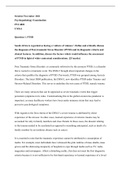
October/November 2021
Psychopathology Examination
PYC4802
UNISA
Question 1: PTSD
South Africa is regarded as having a ‘culture of violence’. Define and critically discuss
the diagnosis of Post-traumatic Stress Disorder (PTSD) and its diagnostic criteria and
clinical features. In addition, discuss the factors which would influence the assessment
of PTSD in light of wider contextual considerations. [25 marks]
Post-Traumatic Stress Disorder, or commonly referred to by the acronym PTSD, is a disorder
that is rooted in a traumatic event. The DSM-5 brought about important changes in the
criteria that qualifies the diagnosis of PTSD. Previously, PTSD was grouped among Anxiety
Disorders. The latest DSM publication, the DSM-5, now identifies PTSD under Trauma- and
Stressor-Related Disorders. This serves to underline the root cause of PTSD, namely trauma.
There are many stressors that can be appraised as severe traumatic events that trigger
persistent symptoms in its wake. Contextualising this in the global coronavirus pandemic is
important, as many healthcare workers have been under immense strain that may lead to
pervasive psychological symptoms.
With regards to the first criteria of the DSM-5 a severe trauma is attributed by direct
experience of the stressor. In other cases, learned experience of extreme trauma may be
accounted for only in family members and close friends. In these cases, the disaster relating
to the trauma needed to be accidental (as opposed to something anticipated, such as death of a
family member by an insidious disease such as cancer.
It is essential to note that the traumatic experience cannot be attributed to consumption of
media. For example, most individuals have witnessed the grim realities of mass deaths, mass
graves and the distressing incapacity of hospitals to cope through media such as TV, radio,
magazines and newspapers. Albeit a disturbing reality, this does not meet the first diagnostic
criteria because it is not sufficient to be first-hand experience or learned experience of a loved
, one's trauma.
Conversely, healthcare workers who have had to deal first-hand with the incapacity of
hospitals, the limited resources available, the mass deaths occurring in their workplace and
their own patients meet the first diagnostic criterion of PTSD.
The next few criteria deal with symptoms characteristic of PTSD. The second criterion
stipulates that in order for a clinician to diagnose a patient with PTSD, the patient should
display one intrusion symptom or more. Intrusion symptoms are essentially memories that
cause the patient distress, feelings of pervasive psychological distress, perpetual nightmares,
dissociative episodes and physiological reactions.
According to the third criterion, a patient should display one or both of these avoidance
symptoms: First, the PTSD patient makes a concerted effort to avoid the feelings, thoughts
and memories that are associated with the traumatic event and that lead to extreme
psychological distress. Secondly, the patient avoids any of the reminders in the environment
that will result in such feelings of angst by recalling memories or thoughts associated with the
traumatic event.
The fourth criterion requires sufferers to experience at least two of the symptoms that relate
to negative mood or thoughts. There are several mood-related symptoms, of which being: not
being able to experience pleasant feelings, a pervasive negative mood, feelings of
detachment, a lack of enjoyment of activities that used to be of interest, mental distortions
and an inability to remember the exact details of the traumatic event.
The fifth criterion requires sufferers to experience at least two of the symptoms that relate to
reactivity and arousal. The symptoms associated herein are disturbances to normative sleep
patterns, an inability to focus adequately, exaggerated startle response, hypervigilence as well
as extreme outbursts of anger and frustration or annoyed temperament in general.
In addition, if the patient matches the diagnostic criteria for PTSA, the clinician is required to
specify whether dissociative symptoms occur concurrently to PTSD symptoms. The clinician
should state whether derealisation is present in the patient, whereby they experience a
pervasive sense of non-reality. The clinician is also required to note whether the patient
Psychopathology Examination
PYC4802
UNISA
Question 1: PTSD
South Africa is regarded as having a ‘culture of violence’. Define and critically discuss
the diagnosis of Post-traumatic Stress Disorder (PTSD) and its diagnostic criteria and
clinical features. In addition, discuss the factors which would influence the assessment
of PTSD in light of wider contextual considerations. [25 marks]
Post-Traumatic Stress Disorder, or commonly referred to by the acronym PTSD, is a disorder
that is rooted in a traumatic event. The DSM-5 brought about important changes in the
criteria that qualifies the diagnosis of PTSD. Previously, PTSD was grouped among Anxiety
Disorders. The latest DSM publication, the DSM-5, now identifies PTSD under Trauma- and
Stressor-Related Disorders. This serves to underline the root cause of PTSD, namely trauma.
There are many stressors that can be appraised as severe traumatic events that trigger
persistent symptoms in its wake. Contextualising this in the global coronavirus pandemic is
important, as many healthcare workers have been under immense strain that may lead to
pervasive psychological symptoms.
With regards to the first criteria of the DSM-5 a severe trauma is attributed by direct
experience of the stressor. In other cases, learned experience of extreme trauma may be
accounted for only in family members and close friends. In these cases, the disaster relating
to the trauma needed to be accidental (as opposed to something anticipated, such as death of a
family member by an insidious disease such as cancer.
It is essential to note that the traumatic experience cannot be attributed to consumption of
media. For example, most individuals have witnessed the grim realities of mass deaths, mass
graves and the distressing incapacity of hospitals to cope through media such as TV, radio,
magazines and newspapers. Albeit a disturbing reality, this does not meet the first diagnostic
criteria because it is not sufficient to be first-hand experience or learned experience of a loved
, one's trauma.
Conversely, healthcare workers who have had to deal first-hand with the incapacity of
hospitals, the limited resources available, the mass deaths occurring in their workplace and
their own patients meet the first diagnostic criterion of PTSD.
The next few criteria deal with symptoms characteristic of PTSD. The second criterion
stipulates that in order for a clinician to diagnose a patient with PTSD, the patient should
display one intrusion symptom or more. Intrusion symptoms are essentially memories that
cause the patient distress, feelings of pervasive psychological distress, perpetual nightmares,
dissociative episodes and physiological reactions.
According to the third criterion, a patient should display one or both of these avoidance
symptoms: First, the PTSD patient makes a concerted effort to avoid the feelings, thoughts
and memories that are associated with the traumatic event and that lead to extreme
psychological distress. Secondly, the patient avoids any of the reminders in the environment
that will result in such feelings of angst by recalling memories or thoughts associated with the
traumatic event.
The fourth criterion requires sufferers to experience at least two of the symptoms that relate
to negative mood or thoughts. There are several mood-related symptoms, of which being: not
being able to experience pleasant feelings, a pervasive negative mood, feelings of
detachment, a lack of enjoyment of activities that used to be of interest, mental distortions
and an inability to remember the exact details of the traumatic event.
The fifth criterion requires sufferers to experience at least two of the symptoms that relate to
reactivity and arousal. The symptoms associated herein are disturbances to normative sleep
patterns, an inability to focus adequately, exaggerated startle response, hypervigilence as well
as extreme outbursts of anger and frustration or annoyed temperament in general.
In addition, if the patient matches the diagnostic criteria for PTSA, the clinician is required to
specify whether dissociative symptoms occur concurrently to PTSD symptoms. The clinician
should state whether derealisation is present in the patient, whereby they experience a
pervasive sense of non-reality. The clinician is also required to note whether the patient