- Bek no p te sa m en va t ti n g Po l i t ica l R he t or ic 2 02 1 -2 0 22 -
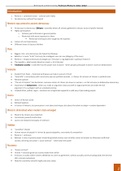
Introduction
1. Rhetoric = contested notion - contrast with reality
2. No democracy without free speech
Rhetoric was central to ancient democracy
• Aristocracy to democracy (Ekklesia = assembly where all citizens gathered to discuss issues of public interest)
• Highly participation
o Ordinary well informed on general politics
o Rhetorical skills were important to them
▪ Rhetorical techniques were taught by the Sophists
• Culture of oral transmission
• Different views of classical thinkers
Plato
• Biggest critic: anti-democracy (he hated the Ekklesia)
• Beliefs in 1 moral “truth” that only the intelligent ones can see (Allegory of the cave)
• Rhetoric = empty/unnecessary & dangerous (“emotion is nog legitimate in political rhetoric”)
• The republic = ideal society based on reason + strict division
• Totalitarian society = small elite has the power (not inclusive: “when people participate it doesn’t work) (≠ deliberative)
Aristotle
• Student from Plato – rhetorical techniques can help in pursuit of truth
• “Good life” in accordance with community (we are political animals) – in favour of inclusion of citizens in political area
• Refuted sophism
• “The art of rhetoric” but disclaimer: exclusive notion of citizen (no slaves or woman = no full inclusion) ± deliberative democracy
• Importance of enthymeme = when you make an argument; base yourself on logical premises and make the full
argument; it’s a syllogism with an unstated premise
• Created ethos, pathos, logos – emotions are a legitimate appeal & a valid way of persuading people
Cicero
• Orator of Roman world
• Refuted Sophism
• In favour of rhetoric; but persuasion is not about techniques but about the talent to adapt + context dependent
Rhetoric diminished when modern state emerged
• Rhetoric by citizens less important
• Centralized, powerful authorities
• Laws to be obeyed (monopoly of violence)
Hobbes
• “Leviathan” (book)
• Human nature of people ↔ driven by passion/appetite; uncertainty & competition
• Rhetoric = confusion
• Believes 1 voice /supreme power should be granted primacy over all other voices to temper an otherwise conflictual
society; will bring civil peace = social contract” - externalize the power
Rousseau
• “Social contract”
• Human = naturally good but society made them selfish
• Envisions a society where citizens deliberate to come to agreement, without actually communicating (obey the General
Will; internal motivation)
• Need for unanimity (small & highly exclusive state)
1
, - Bek no p te sa m en va t ti n g Po l i t ica l R he t or ic 2 02 1 -2 0 22 -
Politics VS the political
• Politics = regular activities taking place within the rules of the game/on a daily basis (in parliament, the committees,
interest groups, social movements …)
• The political = higher principles in society (what are the rules of the game? Who can say what?)
• → rhetoric involves both
Situating rhetoric
• Everything is context dependent
• Not all language is rhetoric, not all rhetoric is language
• Rhetoric is about assembly/construction of ideas/ideology (and delivery)
• It’s about how people ‘make meaning’ of things; concentrates on situated encounters
Classical rhetoric: discovery & arrangement
Ancient rhetorical classifications & techniques
3 occasions of speech:
• Not mutually exclusive, political arguments can combine elements
• Conform to expectations how the speech will be given & what will be said
Epideictic (ceremonial) – wedding, funeral − Honour individuals
− Creating shared sentiment/value
− Praise/blame
− Focus on present
− Paying attention to create sentiment with audience
Forensic (judicial) – defence given in court or attack on − Guilt/innocence
minister − Persuade jury of a judgement
− Based on evidence
− Focus on past
Deliberative (political) – parliamentary debate − Debate legislation/budget/war
− Persuade people of course of action
− Possible outcomes & potential benefits/drawbacks
− Focus on future
The issue
• Related to occasion; there must be an agreement on the issue otherwise talking past each other instead of to each other
• Status theory – Cicero : think about what is exactly the issue that you will be addressing; 4 ways to approach an issue:
o Conjecture: what is the truth?
o Definition: what does it mean?
o Quality: what is the nature of the act?
o Circumstance: is it relevant?
Discovery of the argument (ethos-pathos-logos)
• 3 types of “appeal”/”proof”; most speeches involve all 3 types
Logos Ethos Pathos
− Based on reason − Authority/character of the − Emotion
− Conclusion based on a premise (inductive*/deductive*) speaker − Feelings rather
− Smooth connection between premise & conclusion − Confidence in the speaker than thoughts
− Syllogism (major premise + minor premise = conclusion − Virtue/integrity − Distracting VS
− Enthymeme (omission of a premise; listener defines argument himself) − Goodwill reinforcing
− Sophistry (following rigorous line of reasoning to arrive at a false − Intellect or expertise − Different ways
conclusion − Explicit VS implicit (vocabulary,
− Refutation (anticipation of counter-arguments) − Visual matters style, delivery)
*Inductive = start from concrete empirical case & that’s how you draw the conclusion
*Deductive = when you make the conclusion based on a general abstract
2
, - Bek no p te sa m en va t ti n g Po l i t ica l R he t or ic 2 02 1 -2 0 22 -
Arrangement of the argument
• No fixed structure, many possibilities; flow is essential
• Typical categorization:
1. Introduction/prologue (Exordium) – ethos Attract attention, prepare/inform
2. Narrative (Narratio) – ethos/logos Outline of the facts, shared understanding, mostly not
neutral, make sure it is still credible
3. Proof (confirmation) – ethos/logos/pathos Setting out arguments, crucial in deliberative speech, multiple
4. Refutation (Refutio) – can be part of proof – proofs/arguments, order is important
ethos/logos/pathos
5. Conclusion/epilogue (Perporatio) – pathos Close-off, summary, last impression
Classical rhetoric: style & delivery
Classical rhetoric
• 4/5 canons of speech:
1) Discovery: what kind of arguments (logos, pathos, ethos)?
2) Arrangement: structure?
3) Style: which language?
4) Delivery: how to perform?
5) (Memory): techniques to memorize a speech; learn it by heart!
• Discovery + arrangement = argument
• Style + delivery = aesthetics
Style
• Different actors = different style
o Convey ethos/pathos
• Create meaning by combining words differently
• Different blending, different sensation
• Good speaker uses connotation to describe things so that we get a certain feeling: denotation (= words are denotative
when they just refer to the object that they name; ex: oil) VS connotation (= connotative words are used to associate
between words; ex: oily)
o Risk: different interpretation because you make it less basic
• Can obscure an argument
• Makes speech memorable: soundbite (= figuratively, convey a certain image, sounded well), epithet (short adjective that
you put before a noun to give it more quality; ex: the iron lady)
Figures of speech = tricks & techniques to play with words that you can use to make an argument sound better
Different figures of speech:
Schemes = ways of arranging words Tropes = ways of using words
− Flow of speech − Create meaning
− Make it sound more meaningful − Choice of words
Schemes (examples: pg. 24-26)
Repetition
Anaphora Repeating element at the start of a unit
Epistrophe (inverse of anaphora) Repeating element at the end of a unit
Chiasmus Repeating in reverse order
3
Introduction
1. Rhetoric = contested notion - contrast with reality
2. No democracy without free speech
Rhetoric was central to ancient democracy
• Aristocracy to democracy (Ekklesia = assembly where all citizens gathered to discuss issues of public interest)
• Highly participation
o Ordinary well informed on general politics
o Rhetorical skills were important to them
▪ Rhetorical techniques were taught by the Sophists
• Culture of oral transmission
• Different views of classical thinkers
Plato
• Biggest critic: anti-democracy (he hated the Ekklesia)
• Beliefs in 1 moral “truth” that only the intelligent ones can see (Allegory of the cave)
• Rhetoric = empty/unnecessary & dangerous (“emotion is nog legitimate in political rhetoric”)
• The republic = ideal society based on reason + strict division
• Totalitarian society = small elite has the power (not inclusive: “when people participate it doesn’t work) (≠ deliberative)
Aristotle
• Student from Plato – rhetorical techniques can help in pursuit of truth
• “Good life” in accordance with community (we are political animals) – in favour of inclusion of citizens in political area
• Refuted sophism
• “The art of rhetoric” but disclaimer: exclusive notion of citizen (no slaves or woman = no full inclusion) ± deliberative democracy
• Importance of enthymeme = when you make an argument; base yourself on logical premises and make the full
argument; it’s a syllogism with an unstated premise
• Created ethos, pathos, logos – emotions are a legitimate appeal & a valid way of persuading people
Cicero
• Orator of Roman world
• Refuted Sophism
• In favour of rhetoric; but persuasion is not about techniques but about the talent to adapt + context dependent
Rhetoric diminished when modern state emerged
• Rhetoric by citizens less important
• Centralized, powerful authorities
• Laws to be obeyed (monopoly of violence)
Hobbes
• “Leviathan” (book)
• Human nature of people ↔ driven by passion/appetite; uncertainty & competition
• Rhetoric = confusion
• Believes 1 voice /supreme power should be granted primacy over all other voices to temper an otherwise conflictual
society; will bring civil peace = social contract” - externalize the power
Rousseau
• “Social contract”
• Human = naturally good but society made them selfish
• Envisions a society where citizens deliberate to come to agreement, without actually communicating (obey the General
Will; internal motivation)
• Need for unanimity (small & highly exclusive state)
1
, - Bek no p te sa m en va t ti n g Po l i t ica l R he t or ic 2 02 1 -2 0 22 -
Politics VS the political
• Politics = regular activities taking place within the rules of the game/on a daily basis (in parliament, the committees,
interest groups, social movements …)
• The political = higher principles in society (what are the rules of the game? Who can say what?)
• → rhetoric involves both
Situating rhetoric
• Everything is context dependent
• Not all language is rhetoric, not all rhetoric is language
• Rhetoric is about assembly/construction of ideas/ideology (and delivery)
• It’s about how people ‘make meaning’ of things; concentrates on situated encounters
Classical rhetoric: discovery & arrangement
Ancient rhetorical classifications & techniques
3 occasions of speech:
• Not mutually exclusive, political arguments can combine elements
• Conform to expectations how the speech will be given & what will be said
Epideictic (ceremonial) – wedding, funeral − Honour individuals
− Creating shared sentiment/value
− Praise/blame
− Focus on present
− Paying attention to create sentiment with audience
Forensic (judicial) – defence given in court or attack on − Guilt/innocence
minister − Persuade jury of a judgement
− Based on evidence
− Focus on past
Deliberative (political) – parliamentary debate − Debate legislation/budget/war
− Persuade people of course of action
− Possible outcomes & potential benefits/drawbacks
− Focus on future
The issue
• Related to occasion; there must be an agreement on the issue otherwise talking past each other instead of to each other
• Status theory – Cicero : think about what is exactly the issue that you will be addressing; 4 ways to approach an issue:
o Conjecture: what is the truth?
o Definition: what does it mean?
o Quality: what is the nature of the act?
o Circumstance: is it relevant?
Discovery of the argument (ethos-pathos-logos)
• 3 types of “appeal”/”proof”; most speeches involve all 3 types
Logos Ethos Pathos
− Based on reason − Authority/character of the − Emotion
− Conclusion based on a premise (inductive*/deductive*) speaker − Feelings rather
− Smooth connection between premise & conclusion − Confidence in the speaker than thoughts
− Syllogism (major premise + minor premise = conclusion − Virtue/integrity − Distracting VS
− Enthymeme (omission of a premise; listener defines argument himself) − Goodwill reinforcing
− Sophistry (following rigorous line of reasoning to arrive at a false − Intellect or expertise − Different ways
conclusion − Explicit VS implicit (vocabulary,
− Refutation (anticipation of counter-arguments) − Visual matters style, delivery)
*Inductive = start from concrete empirical case & that’s how you draw the conclusion
*Deductive = when you make the conclusion based on a general abstract
2
, - Bek no p te sa m en va t ti n g Po l i t ica l R he t or ic 2 02 1 -2 0 22 -
Arrangement of the argument
• No fixed structure, many possibilities; flow is essential
• Typical categorization:
1. Introduction/prologue (Exordium) – ethos Attract attention, prepare/inform
2. Narrative (Narratio) – ethos/logos Outline of the facts, shared understanding, mostly not
neutral, make sure it is still credible
3. Proof (confirmation) – ethos/logos/pathos Setting out arguments, crucial in deliberative speech, multiple
4. Refutation (Refutio) – can be part of proof – proofs/arguments, order is important
ethos/logos/pathos
5. Conclusion/epilogue (Perporatio) – pathos Close-off, summary, last impression
Classical rhetoric: style & delivery
Classical rhetoric
• 4/5 canons of speech:
1) Discovery: what kind of arguments (logos, pathos, ethos)?
2) Arrangement: structure?
3) Style: which language?
4) Delivery: how to perform?
5) (Memory): techniques to memorize a speech; learn it by heart!
• Discovery + arrangement = argument
• Style + delivery = aesthetics
Style
• Different actors = different style
o Convey ethos/pathos
• Create meaning by combining words differently
• Different blending, different sensation
• Good speaker uses connotation to describe things so that we get a certain feeling: denotation (= words are denotative
when they just refer to the object that they name; ex: oil) VS connotation (= connotative words are used to associate
between words; ex: oily)
o Risk: different interpretation because you make it less basic
• Can obscure an argument
• Makes speech memorable: soundbite (= figuratively, convey a certain image, sounded well), epithet (short adjective that
you put before a noun to give it more quality; ex: the iron lady)
Figures of speech = tricks & techniques to play with words that you can use to make an argument sound better
Different figures of speech:
Schemes = ways of arranging words Tropes = ways of using words
− Flow of speech − Create meaning
− Make it sound more meaningful − Choice of words
Schemes (examples: pg. 24-26)
Repetition
Anaphora Repeating element at the start of a unit
Epistrophe (inverse of anaphora) Repeating element at the end of a unit
Chiasmus Repeating in reverse order
3