
Knowledge clip - Polysaccharides introduction
● Functionalities of polysaccharides:
○ Thickening.
○ Gelling agents.
○ Stabilization.
■ Emulsification, suspension, foam.
○ Film forming.
○ Aroma binding.
○ Glue properties.
○ Filling agent.
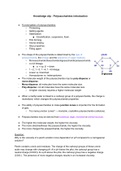
● The shape of the polysaccharide is determined by the type of
polysaccharide, the linkage and the sequence of sugar residues.
○ Monosaccharide/disaccharide/oligosaccharide/polysaccharide.
○ α or β linkage.
■ α = up. β = down.
○ 1→2; 1→3; 1→4; 1→6 linkage.
○ Linear vs. branched.
○ Homopolymer vs. heteropolymer.
● The molecular weight of the polysaccharide may be poly-disperse or
mono-disperse.
- Mono-disperse: all molecules have the same molecular size.
- Poly-disperse: not all molecules have the same molecular size.
○ A higher viscosity requires a higher molecular weight.
● When a methyl ester is linked to a carboxyl group of a polysaccharide, the charge is
neutralized, which changes the polysaccharide properties.
● The ability of polysaccharides to make junction zones is important for the formation
of gels.
○ Too many junction zones? → insoluble, crystalline polysaccharide (cellulose).
● Polysaccharides may be derived from botanical, algal, microbial or animal sources.
● The higher the molecular weight, the higher the viscosity.
● The more stretched/linear the polysaccharide, the higher the viscosity.
● The more charged the polysaccharide, the higher the viscosity.
Question:
Why is the viscosity of a pectin solution more dependent on pH compared to a carrageenan
solution?
Pectin contains uronic acid residues. The charge of the carboxyl groups of these uronic
acids may change with changing pH. At a pH below the pKa, the carboxyl group has a
neutral charge (COOH). At a pH above the pKa, the carboxyl group has a negative charge
(COO-). The presence of more negative charges results in an increased viscosity.
, Carrageenans contain a sulfate group. This group is negatively charged. Upon a change in
pH, this sulfate group remains negatively charged and the viscosity of a carrageenan
solution is therefore less pH-dependent.
Knowledge clip - Pectin; structural properties
● Pectin is one of the most important gelling agents in jams and jellies.
● Sources:
○ Apple pomace.
○ Citrus peel.
● Pectin is found in all cell walls of plant material. It is mainly present in the middle
lamella, but can also be found in the primary cell wall and (in small amounts) in the
secondary cell wall.
● Pectin has hairy and smooth regions.
○ Smooth region → polygalacturonan region. Galacturonic acid is the main unit.
This part determines the gelling properties of pectin.
- Uronic acid: monosaccharide with an acid group attached to it.
● The bonds that uronic acids make with each other are relatively strong and (heat)
stable.
● The acid groups may be methylated.
○ Low-Methylated (LM) pectin. <50% of the acid groups is methylated.
○ High-Methylated (HM) pectin.
Knowledge clip - Pectin: gelling properties
● Depending on the pH, the carboxyl group in pectin molecules may have a negative or
a neutral charge.
○ At a neutral pH, the charge is negative → deprotonated.
○ At an acidic pH, the charge is neutral → protonated.
● Pectin may form 2 types of gels:
1. Calcium gel.
● LM-pectin makes a gel with calcium. The positively charged calcium ions make ionic
bonds with the negatively charged carboxyl groups.
● An ‘egg-box’ model is formed.
2. Sugar-acid gel.
● HM-pectin forms a gel with sugar and acid.
● The sugar attracts water → the water activity decreases, meaning there is less water
available for the pectin molecules. Therefore, the pectin molecules are forced
towards each other = formation of junction zones.
● Upon the addition of acid, the charge of the carboxyl groups becomes neutral → the
pectin molecules can approach each other even more closely!
● Functionalities of polysaccharides:
○ Thickening.
○ Gelling agents.
○ Stabilization.
■ Emulsification, suspension, foam.
○ Film forming.
○ Aroma binding.
○ Glue properties.
○ Filling agent.
● The shape of the polysaccharide is determined by the type of
polysaccharide, the linkage and the sequence of sugar residues.
○ Monosaccharide/disaccharide/oligosaccharide/polysaccharide.
○ α or β linkage.
■ α = up. β = down.
○ 1→2; 1→3; 1→4; 1→6 linkage.
○ Linear vs. branched.
○ Homopolymer vs. heteropolymer.
● The molecular weight of the polysaccharide may be poly-disperse or
mono-disperse.
- Mono-disperse: all molecules have the same molecular size.
- Poly-disperse: not all molecules have the same molecular size.
○ A higher viscosity requires a higher molecular weight.
● When a methyl ester is linked to a carboxyl group of a polysaccharide, the charge is
neutralized, which changes the polysaccharide properties.
● The ability of polysaccharides to make junction zones is important for the formation
of gels.
○ Too many junction zones? → insoluble, crystalline polysaccharide (cellulose).
● Polysaccharides may be derived from botanical, algal, microbial or animal sources.
● The higher the molecular weight, the higher the viscosity.
● The more stretched/linear the polysaccharide, the higher the viscosity.
● The more charged the polysaccharide, the higher the viscosity.
Question:
Why is the viscosity of a pectin solution more dependent on pH compared to a carrageenan
solution?
Pectin contains uronic acid residues. The charge of the carboxyl groups of these uronic
acids may change with changing pH. At a pH below the pKa, the carboxyl group has a
neutral charge (COOH). At a pH above the pKa, the carboxyl group has a negative charge
(COO-). The presence of more negative charges results in an increased viscosity.
, Carrageenans contain a sulfate group. This group is negatively charged. Upon a change in
pH, this sulfate group remains negatively charged and the viscosity of a carrageenan
solution is therefore less pH-dependent.
Knowledge clip - Pectin; structural properties
● Pectin is one of the most important gelling agents in jams and jellies.
● Sources:
○ Apple pomace.
○ Citrus peel.
● Pectin is found in all cell walls of plant material. It is mainly present in the middle
lamella, but can also be found in the primary cell wall and (in small amounts) in the
secondary cell wall.
● Pectin has hairy and smooth regions.
○ Smooth region → polygalacturonan region. Galacturonic acid is the main unit.
This part determines the gelling properties of pectin.
- Uronic acid: monosaccharide with an acid group attached to it.
● The bonds that uronic acids make with each other are relatively strong and (heat)
stable.
● The acid groups may be methylated.
○ Low-Methylated (LM) pectin. <50% of the acid groups is methylated.
○ High-Methylated (HM) pectin.
Knowledge clip - Pectin: gelling properties
● Depending on the pH, the carboxyl group in pectin molecules may have a negative or
a neutral charge.
○ At a neutral pH, the charge is negative → deprotonated.
○ At an acidic pH, the charge is neutral → protonated.
● Pectin may form 2 types of gels:
1. Calcium gel.
● LM-pectin makes a gel with calcium. The positively charged calcium ions make ionic
bonds with the negatively charged carboxyl groups.
● An ‘egg-box’ model is formed.
2. Sugar-acid gel.
● HM-pectin forms a gel with sugar and acid.
● The sugar attracts water → the water activity decreases, meaning there is less water
available for the pectin molecules. Therefore, the pectin molecules are forced
towards each other = formation of junction zones.
● Upon the addition of acid, the charge of the carboxyl groups becomes neutral → the
pectin molecules can approach each other even more closely!


