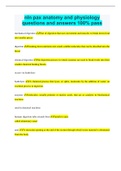
nln pax anatomy and physiology questions and answers 100% pass
nln pax anatomy and physiology questions and answers 100% pass mechanical digestion Part of digestion that uses movement and muscles to break down food into smaller pieces digestion breaking down nutrients into small, soluble molecules that can be absorbed into the blood chemical digestion the digestion process in which enzymes are used to break foods into their smaller chemical buiding blocks occurs via hydrolysis hydrolysis A chemical process that lyses, or splits, molecules by the addition of water; an essential process in digestion. enzymes molecules, usually proteins or nucleic acids, that act as catalysts in biochemical reactions used in chemical reactions humans digestion tube extends from mouth to anus called alimentary canal anus A muscular opening at the end of the rectum through which waste material is eliminated from the body alimentary canal Also known as the gastrointestinal (GI) tract of the digestive tract, the alimentary canal is the long muscular "tube" that includes the mouth esophagus, somatch, small intesitne, and large intestine. carries out stages of digestive process (mechanical and chemical digestion and absorb ion) accessory organs In the GI tract, organs that play a role in digestion but not directly part of the alimentary canal. These include the liver, the gallbladder, the pancreas what takes place in the mouth? mechanical digestion saliva is released from salivary glands to breakdown carbs salivary glands three pairs of exocrine glands in the mouth that secrete saliva saliva contain amylase amylase enzyme in saliva that breaks the chemical bonds in starches pharynx muscular tube at the end of the gastrovascular cavity, or throat, that connects the mouth with the rest of the digestive tract and serves as a passageway for air and food esophagus muscular tube that moves food from the pharynx to the stomach epiglottis The flap of tissue that seals off the windpipe and prevents food from entering. what takes place in the stomach? peristalsis gastric juices help breakdown proteins chyme is created peristalsis involuntary waves of muscle contraction that keep food moving along in one direction through the digestive system gastric juice chemically breaksdown proteins acidic (pH of 2) mucus protects stomach wall from acidity of gastric juices protease Enzyme that breaks down proteins chyme a semiliquid mass of partially digested food that passes from the stomach into the small intestine small intestine digestive organ in which most chemical digestion takes place majority of digestion and absorption occur here!! how long is the SI? 6 meters pyloric sphincter circular muscle that controls the movement of chyme from the stomach to the small intestines liver large organ just above the stomach that produces bile gallbladder stores bile bile a mixture of salts and phospholipids that aids in the breakdown of fat pancreas located partially behind the stomach in the abdomen, and it functions as both an endocrine and exocrine gland. It produces digestive enzymes as well as insulin and glucagon after absorption, products of digestion goes to blood and lymph villi Small fingerlike projections on the walls of the small intestines that increase surface area large intestine colon organ that removes water from the undigested materials that pass through it waste moves via peristalsis rectum stores waste until egestion egestion Removal of undigested waste carbohydrate (enzymes, end products and important locations) 1. amylase, sucrase, maltase 2. glucose 3. starts in mouth, completed in SI protein (enzymes, end products and important locations) 1. proteases 2. amino acids 3. starts in the stomach, completed in SI lipids (enzymes, end products, and important locations)
Written for
- Institution
- Nln pax anatomy and physiology
- Course
- Nln pax anatomy and physiology
Document information
- Uploaded on
- September 10, 2022
- Number of pages
- 21
- Written in
- 2022/2023
- Type
- Exam (elaborations)
- Contains
- Questions & answers
Subjects
-
nln pax anatomy and physiology questions and answers 100 pass
-
mechanical digestion part of digestion that uses movement and muscles to break down food into smaller pieces
-
digestion breaking down nutr



Also available in package deal