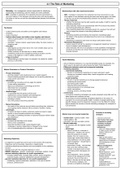
5.3.2 Quality Management
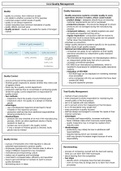
Quality: Quality Assurance:
• quality is a choice, from minimum to best • Quality assurance systems consider quality in every
• can relate to whether a product is fit for purpose operations decision it makes, which could include:
• customers expect certain levels of quality • product design - designers should focus on ensuring
• quality is not always expensive customer requirements are met or surpassed
• certain industries have minimum standards of quality • production process - this should be designed to ensure
• quality affects cost and price products are not damaged during the manufacturing
• Quality product - meets, or exceeds the needs of its target process
market • component delivery - only reliable suppliers are used
and parts are inspected as they arrive
• regular inspections - productions staff are trained to
check their work to ensure faulty goods are not passed
further down the production line
• emphasis on prevention
• design quality assurance systems specific for the business
• quality inputs to get quality outputs
• National and international quality standards
• companies can apply for an inspection of their quality
assurance practises by independent quality standard
organisations
• The International Organisation for Standardisation (ISO) is
an independent global body that aims to promote
universal commercial standards
• ISO 9000 is an international accreditations, which is
awarded to businesses for establishing quality assurance
systems
• evaluation of ISO 9000
• ISO 9000 logo can be displayed on marketing materials
Quality Control: once accredited
• some companies will only use suppliers that have been
• occurs at the end of the production process warded ISO 9000
• finished goods inspected to assess whether they meet a set • long and expensive process
of agreed criteria
• there may be a quality control department
• production staff are free to concentrate on producing goods
whilst the quality control department is responsible for Total Quality Management:
quality control
• two methods • method of lean production
• inspectors check the quality of every finished good • every employee is jointly responsible for maintaining the
• inspectors check the quality of a sample of finished overall quality of the final product
goods • aim is to operate with zero defects
• advantages • aim to prevent errors from happening in the first place
• use of professional inspectors should lead to fewer • try to hit standards every single time
mistakes in the inspection process • every procedure is quality focused
• production staff are free from additional responsibilities • staff are always encouraged to consider the needs of their
allowing productivity to rise internal customers
• disadvantages • advantages
• products are only checked at he end of the manufacturing • increases staff responsibility, increases motivation
process, which can allow significant stocks of faulty • fewer mistakes make which improves overall quality
products to build up • quality inspectors may no longer be needed which
• workers are not involved in the quality control reduces costs
• if only a sample of finished goods is checked, faulty • disadvantages
goods may be missed • productivity may initially fall due to additional staff
responsibilities
• requires training which can increase costs
• staff may demand increases wages because of extra
Quality Circles: responsibility
• a group of employees who meet regularly to discuss
potential improvements to product quality Benchmarking:
• employees typically come from diverse areas to allow a
range of different viewpoints to be considered
• process of comparing yourself with the best and seeing
• motivational and empowering culture what you can learn from their techniques
• makes use of expertise and knowledge • about learning from the competition
• could lead to increased sales, efficiency and reputation • two steps
• have to get commitment of workers to want to ensure • identify which companies have the best processes
quality standards
• work out how they do things and try to learn from those
• diminishing return in ideas processes
Quality: Quality Assurance:
• quality is a choice, from minimum to best • Quality assurance systems consider quality in every
• can relate to whether a product is fit for purpose operations decision it makes, which could include:
• customers expect certain levels of quality • product design - designers should focus on ensuring
• quality is not always expensive customer requirements are met or surpassed
• certain industries have minimum standards of quality • production process - this should be designed to ensure
• quality affects cost and price products are not damaged during the manufacturing
• Quality product - meets, or exceeds the needs of its target process
market • component delivery - only reliable suppliers are used
and parts are inspected as they arrive
• regular inspections - productions staff are trained to
check their work to ensure faulty goods are not passed
further down the production line
• emphasis on prevention
• design quality assurance systems specific for the business
• quality inputs to get quality outputs
• National and international quality standards
• companies can apply for an inspection of their quality
assurance practises by independent quality standard
organisations
• The International Organisation for Standardisation (ISO) is
an independent global body that aims to promote
universal commercial standards
• ISO 9000 is an international accreditations, which is
awarded to businesses for establishing quality assurance
systems
• evaluation of ISO 9000
• ISO 9000 logo can be displayed on marketing materials
Quality Control: once accredited
• some companies will only use suppliers that have been
• occurs at the end of the production process warded ISO 9000
• finished goods inspected to assess whether they meet a set • long and expensive process
of agreed criteria
• there may be a quality control department
• production staff are free to concentrate on producing goods
whilst the quality control department is responsible for Total Quality Management:
quality control
• two methods • method of lean production
• inspectors check the quality of every finished good • every employee is jointly responsible for maintaining the
• inspectors check the quality of a sample of finished overall quality of the final product
goods • aim is to operate with zero defects
• advantages • aim to prevent errors from happening in the first place
• use of professional inspectors should lead to fewer • try to hit standards every single time
mistakes in the inspection process • every procedure is quality focused
• production staff are free from additional responsibilities • staff are always encouraged to consider the needs of their
allowing productivity to rise internal customers
• disadvantages • advantages
• products are only checked at he end of the manufacturing • increases staff responsibility, increases motivation
process, which can allow significant stocks of faulty • fewer mistakes make which improves overall quality
products to build up • quality inspectors may no longer be needed which
• workers are not involved in the quality control reduces costs
• if only a sample of finished goods is checked, faulty • disadvantages
goods may be missed • productivity may initially fall due to additional staff
responsibilities
• requires training which can increase costs
• staff may demand increases wages because of extra
Quality Circles: responsibility
• a group of employees who meet regularly to discuss
potential improvements to product quality Benchmarking:
• employees typically come from diverse areas to allow a
range of different viewpoints to be considered
• process of comparing yourself with the best and seeing
• motivational and empowering culture what you can learn from their techniques
• makes use of expertise and knowledge • about learning from the competition
• could lead to increased sales, efficiency and reputation • two steps
• have to get commitment of workers to want to ensure • identify which companies have the best processes
quality standards
• work out how they do things and try to learn from those
• diminishing return in ideas processes