TAAK 3 OCPD
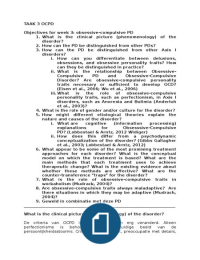
Objectives for week 3: obsessive-compulsive PD
1. What is the clinical picture (phenomenology) of the
disorder?
2. How can the PD be distinguished from other PDs?
3. How can the PD be distinguished from other Axis I
disorders?
i. How can you differentiate between delusions,
obsessions, and obsessive personality traits? How
can they be distinguished in practice?
ii. What is the relationship between Obsessive-
Compulsive PD and Obsessive-Compulsive
Disorder? Are obsessive-compulsive personality
traits necessary or sufficient to develop OCD?
(Eisen et al., 2006; Wu et al., 2006)
iii.What is the role of obsessive-compulsive
personality traits, such as perfectionism, in Axis I
disorders, such as Anorexia and Bulimia (Anderluh
et al., 2003)?
4. What is the role of gender and/or culture for the disorder?
5. How might different etiological theories explain the
nature and causes of the disorder?
i. What are cognitive (information processing)
explanations for Obsesssive-Compulsive
PD? (Lobbestael & Arntz, 2012 Widiger)
ii. How does this differ from a psychodynamic
conceptualization of the disorder? (Gibbs Gallagher
et al., 2003; Lobbestael & Arntz, 2012)
6. What appear to be some of the most promising treatment
approaches for each disorder? What is the conceptual
model on which the treatment is based? What are the
main methods that each treatment uses to achieve
therapeutic change? What is the existing evidence about
whether these methods are effective? What are the
counter-transference "traps" for the disorder?
7. What is the role of obsessive-compulsive traits in
workaholism (Mudrack, 2004)?
8. Are obsessive-compulsive traits always maladaptive? Are
there situations in which they may be adaptive (Mudrach,
2004)?
9. Geweld in combinatie met deze PD
___________________________________________________________________________
What is the clinical picture (phenomenology) of the disorder?
De criteria van OCPD is de laatste jaren erg veranderd. Alleen
perfectionisme is behouden in het huidige beeld van de
persoonlijkheidsstoornis. Criteria zoals rigiditeit, preoccupatie met details,
, hoarding en moeite met het delegeren van taken stammen allemaal af van
de anal fase die door Freud bedacht is.
Prevalentie van OCPD wordt geschat op 1 tot 2%. Terwijl OCD wordt
geschat op 2 tot 3 %.
(Eisen, 2006).
OCPD heeft een lange DSM geschiedenis. En omvat een pervasief patroon
van preoccupatie van netheid, perfectionisme, mentale/interpersoonlijke
controle, ten koste van de flexibiliteit/openheid/efficiëntie. De
polythetische oorsprong van de DSM criteria van OCPD, zorgt voor
verschillende manieren waarop de stoornis zich tot uiting kan brengen. Dit
kan van perfectionistisch, tot emotioneel-gebonden zijn, cognitief rigide of
lage-sensatie zoeken.
Individuen met OCPD kunnen bepaalde gedragingen of denkpatronen laten
zien. Volgens het theoretische perspectief, is een gecomprimeerde
vaardigheid om onzekerheid, onvoorspelbaarheid en potentieel gevaarlijke
natuur van de mensheid te accepteren de basis van de stoornis. Om de
gevolgtrekkelijke anxiety in te perken, streven deze mensen er naar om
een bepaald gevoel van controle en mastery te hebben, ondanks dat dit
wellicht een illusie is.
Veel van de trekken die geassocieerd zijn met OCPD kunnen gezien
worden als een product van controle zich uit op het gebied van
emotionele, interpersoonlijke, cognitieve en gedragsdomeinen. De
cognitieve stijl in OCPD kan zodanig georganiseerd zijn dat het een gevoel
van controle met zich meebrengt. De kenmerk van emotionele constrictie
kan gezien wrden als een verdediging tegen ambiguiteit en potentieel
gevaar binnen interpersoonlijke relaties, waarbij afwijzing, vernedering,
afkeur en in de steek lating kan komen kijken.
Het idee dat intolerantie voor onzekerheid centraal staat is een
onderliggende persoonlijkheidskenmerk bij OCPD wordt steeds meer
aangenomen en is een essentieel onderdeel van de DSM criteria:
preoccupatie met mentale en interpersoonlijke controle.
Er zijn twee manieren om te copen met aversieve situaties: monitoring en
blunting. Monitoring is het proces van informatie zoeken tav aversieve
stimuli. De tweede modus, blunting is het proces van informatie ontwijken
aangaande aversieve stimuli. De functie van monitoring is de reductie van
onzekerheid die ontstaat bij de aanwezigheid van een potentiele dreiging.
Het doel van blunting is de reductie van somatische opwinding. Blunting
wordt vooral gebruikt in situaties waarin de dreiging niet te cotnroleren is.
Terwijl monitoring vooral gebruikt wordt in situaties waarin er een
mogelijkheid bestaat om controle te hebben over de oorsprong van de
dreiging. Mensen die hoog scoren op intolerantie voor onzekerheid
gebruiken dikwijls monitoring.
Objectives for week 3: obsessive-compulsive PD
1. What is the clinical picture (phenomenology) of the
disorder?
2. How can the PD be distinguished from other PDs?
3. How can the PD be distinguished from other Axis I
disorders?
i. How can you differentiate between delusions,
obsessions, and obsessive personality traits? How
can they be distinguished in practice?
ii. What is the relationship between Obsessive-
Compulsive PD and Obsessive-Compulsive
Disorder? Are obsessive-compulsive personality
traits necessary or sufficient to develop OCD?
(Eisen et al., 2006; Wu et al., 2006)
iii.What is the role of obsessive-compulsive
personality traits, such as perfectionism, in Axis I
disorders, such as Anorexia and Bulimia (Anderluh
et al., 2003)?
4. What is the role of gender and/or culture for the disorder?
5. How might different etiological theories explain the
nature and causes of the disorder?
i. What are cognitive (information processing)
explanations for Obsesssive-Compulsive
PD? (Lobbestael & Arntz, 2012 Widiger)
ii. How does this differ from a psychodynamic
conceptualization of the disorder? (Gibbs Gallagher
et al., 2003; Lobbestael & Arntz, 2012)
6. What appear to be some of the most promising treatment
approaches for each disorder? What is the conceptual
model on which the treatment is based? What are the
main methods that each treatment uses to achieve
therapeutic change? What is the existing evidence about
whether these methods are effective? What are the
counter-transference "traps" for the disorder?
7. What is the role of obsessive-compulsive traits in
workaholism (Mudrack, 2004)?
8. Are obsessive-compulsive traits always maladaptive? Are
there situations in which they may be adaptive (Mudrach,
2004)?
9. Geweld in combinatie met deze PD
___________________________________________________________________________
What is the clinical picture (phenomenology) of the disorder?
De criteria van OCPD is de laatste jaren erg veranderd. Alleen
perfectionisme is behouden in het huidige beeld van de
persoonlijkheidsstoornis. Criteria zoals rigiditeit, preoccupatie met details,
, hoarding en moeite met het delegeren van taken stammen allemaal af van
de anal fase die door Freud bedacht is.
Prevalentie van OCPD wordt geschat op 1 tot 2%. Terwijl OCD wordt
geschat op 2 tot 3 %.
(Eisen, 2006).
OCPD heeft een lange DSM geschiedenis. En omvat een pervasief patroon
van preoccupatie van netheid, perfectionisme, mentale/interpersoonlijke
controle, ten koste van de flexibiliteit/openheid/efficiëntie. De
polythetische oorsprong van de DSM criteria van OCPD, zorgt voor
verschillende manieren waarop de stoornis zich tot uiting kan brengen. Dit
kan van perfectionistisch, tot emotioneel-gebonden zijn, cognitief rigide of
lage-sensatie zoeken.
Individuen met OCPD kunnen bepaalde gedragingen of denkpatronen laten
zien. Volgens het theoretische perspectief, is een gecomprimeerde
vaardigheid om onzekerheid, onvoorspelbaarheid en potentieel gevaarlijke
natuur van de mensheid te accepteren de basis van de stoornis. Om de
gevolgtrekkelijke anxiety in te perken, streven deze mensen er naar om
een bepaald gevoel van controle en mastery te hebben, ondanks dat dit
wellicht een illusie is.
Veel van de trekken die geassocieerd zijn met OCPD kunnen gezien
worden als een product van controle zich uit op het gebied van
emotionele, interpersoonlijke, cognitieve en gedragsdomeinen. De
cognitieve stijl in OCPD kan zodanig georganiseerd zijn dat het een gevoel
van controle met zich meebrengt. De kenmerk van emotionele constrictie
kan gezien wrden als een verdediging tegen ambiguiteit en potentieel
gevaar binnen interpersoonlijke relaties, waarbij afwijzing, vernedering,
afkeur en in de steek lating kan komen kijken.
Het idee dat intolerantie voor onzekerheid centraal staat is een
onderliggende persoonlijkheidskenmerk bij OCPD wordt steeds meer
aangenomen en is een essentieel onderdeel van de DSM criteria:
preoccupatie met mentale en interpersoonlijke controle.
Er zijn twee manieren om te copen met aversieve situaties: monitoring en
blunting. Monitoring is het proces van informatie zoeken tav aversieve
stimuli. De tweede modus, blunting is het proces van informatie ontwijken
aangaande aversieve stimuli. De functie van monitoring is de reductie van
onzekerheid die ontstaat bij de aanwezigheid van een potentiele dreiging.
Het doel van blunting is de reductie van somatische opwinding. Blunting
wordt vooral gebruikt in situaties waarin de dreiging niet te cotnroleren is.
Terwijl monitoring vooral gebruikt wordt in situaties waarin er een
mogelijkheid bestaat om controle te hebben over de oorsprong van de
dreiging. Mensen die hoog scoren op intolerantie voor onzekerheid
gebruiken dikwijls monitoring.