Bowlby’s Theory of Maternal Deprivation (1951)
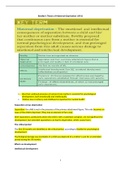
Idea that continual presence of nurture from mother is essential for psychological
development, both emotionally and intellectually.
‘Mother-love in infancy and childhood is important for mental health’
Separation versus deprivation
Separation- the child is not in the presence of the primary attachment figure. This only becomes an
issue of the child is deprived. (They lose an element of her care).
Brief separations, particularly where the child is with a substitute caregiver, are not significant for
development, but extended separations can lead to deprivation, which causes harm.
The critical period
The first 30 months are identified as the critical period, according to Bowlby for psychological
development.
Psychological damage was inevitable of a child was deprived of a mother’s care for an extended
period during the 30 months.
Effects on development
Intellectual development
1
Idea that continual presence of nurture from mother is essential for psychological
development, both emotionally and intellectually.
‘Mother-love in infancy and childhood is important for mental health’
Separation versus deprivation
Separation- the child is not in the presence of the primary attachment figure. This only becomes an
issue of the child is deprived. (They lose an element of her care).
Brief separations, particularly where the child is with a substitute caregiver, are not significant for
development, but extended separations can lead to deprivation, which causes harm.
The critical period
The first 30 months are identified as the critical period, according to Bowlby for psychological
development.
Psychological damage was inevitable of a child was deprived of a mother’s care for an extended
period during the 30 months.
Effects on development
Intellectual development
1