Anthony Kenny - Wittgenstein
Chapter Seven: Anticipation, Intentionality and Verification
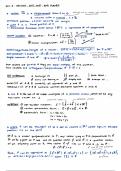
● The later Wittgenstein’s suggestion of diversity of language is often taken to contrast
‘meaning as use’ with the picture theory of the proposition, as in early Witt
○ Wittgenstein does concern himself with different types of sentences from
the Tractatus, but ultimately his considerations support the picture theory of meaning
● We can divide uses of language into the indicative and the imperative moods
○ indicative = language to report facts
■ indicative sentences (propositions) can be analysed
truth-conditonally
○ imperative = language to guide behaviour
■ imperative propositions aren’t obviously true or false
e.g. ‘Pass the salt’
○ it seems like the pictorial element of imperative and indicative statements
can be the same e.g. in ‘the door is open’ and ‘open the door’
■ both contain a state of affairs - one describes the state of
affairs as existent, the other prescribes the state of affairs
■ the connection between language and reality in the two
differs:
● where the indicative statement is false,
the statement is faulted because it doesn’t accord with the actual state of
affairs
● when the imperative statement is ‘false’,
the state of affairs is unsatisfactory because it doesn’t accord with the
statement
■ on this view, the picture theory might refer to what is in
common between the indicative and imperative statements - namely, the picture
(e.g. of the open door), without its attached mood.
● hence it could be called a theory of the
proposition-radical rather than of the proposition
● Wittgenstein was also interested in the optative mood - expression of desire or will in a
wish
○ in the Tractatus, an indicative sentence corresponds to a thought which:
■ stands in an internal relation to a proposition and a state
of affairs
■ contains objects which would correspond to elements of
a fully analysed proposition
■ so, some internal relation between thought, language and
reality is what guarantees the truth-ability of optative propositions?
○ expectation might similarly correspond to a future-tense indicative
statement
■ hence it would stand in an internal relation to the
sentence which expresses it and the state of affairs that fulfils it
● this means that in describing ‘expecting
p’ we must use ‘p’
Chapter Seven: Anticipation, Intentionality and Verification
● The later Wittgenstein’s suggestion of diversity of language is often taken to contrast
‘meaning as use’ with the picture theory of the proposition, as in early Witt
○ Wittgenstein does concern himself with different types of sentences from
the Tractatus, but ultimately his considerations support the picture theory of meaning
● We can divide uses of language into the indicative and the imperative moods
○ indicative = language to report facts
■ indicative sentences (propositions) can be analysed
truth-conditonally
○ imperative = language to guide behaviour
■ imperative propositions aren’t obviously true or false
e.g. ‘Pass the salt’
○ it seems like the pictorial element of imperative and indicative statements
can be the same e.g. in ‘the door is open’ and ‘open the door’
■ both contain a state of affairs - one describes the state of
affairs as existent, the other prescribes the state of affairs
■ the connection between language and reality in the two
differs:
● where the indicative statement is false,
the statement is faulted because it doesn’t accord with the actual state of
affairs
● when the imperative statement is ‘false’,
the state of affairs is unsatisfactory because it doesn’t accord with the
statement
■ on this view, the picture theory might refer to what is in
common between the indicative and imperative statements - namely, the picture
(e.g. of the open door), without its attached mood.
● hence it could be called a theory of the
proposition-radical rather than of the proposition
● Wittgenstein was also interested in the optative mood - expression of desire or will in a
wish
○ in the Tractatus, an indicative sentence corresponds to a thought which:
■ stands in an internal relation to a proposition and a state
of affairs
■ contains objects which would correspond to elements of
a fully analysed proposition
■ so, some internal relation between thought, language and
reality is what guarantees the truth-ability of optative propositions?
○ expectation might similarly correspond to a future-tense indicative
statement
■ hence it would stand in an internal relation to the
sentence which expresses it and the state of affairs that fulfils it
● this means that in describing ‘expecting
p’ we must use ‘p’