100% satisfaction guarantee Immediately available after payment Both online and in PDF No strings attached 4.2 TrustPilot
logo-home
Essay

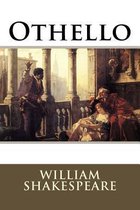
Men Control Women in Othello A* Essay (25/25)

Rating
4.0
(1)
Sold
8
Pages
3
Grade
A+
Uploaded on
24-08-2022
Written in
2022/2023

Achieved full marks, 25/25 Full essay answer to the exam question: “In the literature of love, men control women” • In the light of this view, discuss how Shakespeare presents male attitudes towards women in this extract and elsewhere in the play. • Discuss aspects of love in this extract.

Show more Read less
Institution
Course


Whoops! We can’t load your doc right now. Try again or contact support.

Connected book

Written for

Study Level
Examinator
Subject
Unit

Document information

Uploaded on
August 24, 2022
Number of pages
3
Written in
2022/2023
Type
Essay
Professor(s)
Unknown
Grade
A+

Subjects

Content preview

“In the literature of love, men control women”

 In the light of this view, discuss how Shakespeare presents male attitudes towards women in this extract and
elsewhere in the play.
 Discuss aspects of love in this extract.

Shakespeare presents male attitudes towards women in this extract and the rest of the play as dominant and
controlling, suiting the misogynistic and patriarchal values of Jacobean society. Control is exerted through the
delegation of power and authority to the male characters throughout, the lack of female voice and the manipulative
nature of husbands towards their wives. Hints of female empowerment and control are displayed by all three of the
female characters on multiple occasions, however this is merely an instinctive reaction to the control being forced
upon them by their male counterparts. Any attempt at women controlling men is valiant and defiant, something
which a 21st century feminist audience would surely applaud; however, each is inevitably and ultimately undermined
by the futility of female assertion and the ingrained patriarchal control of men in the social hierarchy.

Notably, men are seen to control women in the literature of love between Othello and Desdemona. Othello implies
this control through the semantic field of military language, particularly in conversation with, or in describing, his
wife. This extract begins with Othello exclaiming “O, my fair warrior!”, an unusual description for one’s lover. While
Othello is aiming to flatter and praise Desdemona to show the requited aspect of their love, it is done in such a way
that creates a power imbalance between the two- Othello as General and Desdemona as warrior. In chief position of
the army, Othello is used to asserting control in his daily life, and so to address Desdemona in the same manner
creates a direct comparison between the authority he has over his soldiers and the authority he feels he rightfully
has over women. Shakespeare’s lexical choice to place the ecphonesis “O’” at the start of Othello’s speech
immediately sets the tone for the audience to infer his delight to see Desdemona. Although this may be interpreted
as kindness and far from controlling behaviour, modern feminists would claim this to be an example of benevolent
sexism; a form of indirect male control of women. The possessive pronoun “my” further strengthens this theory, as
despite showing the importance of Desdemona to Othello, it is possessive and strips her of independence and
personal identity. The adjective “fair” may reference the gentle innocence assumed of women or possibly
Desdemona’s complexion, complimenting her looks benevolently in line with the Jacobean beauty standards of
having fair, pale skin. To be his warrior can also suggest that Desdemona’s bravery and display of qualities are purely
as a service to him (considering the usual dynamic between a general and his warrior).

Another use of military language in this extract is “our wars are done; the Turks are drowned”. “our” said to
Desdemona as a collective may imply the both of them as opposed to the assumption that it is Othello’s army being
spoken of, in which case Othello is stating that the “wars” in his marriage have been resolved- perhaps due to his
willingness to control, as is confirmed by Desdemona’s murder. This statement is ironic and foreshadows further
marital complications, as the wars between the pair have barely begun. Furthermore, this declaration of victory in
Act 2 Scene 1 links to Desdemona’s admittance that her “heart’s subdued” in Act 1 Scene 3. “subdued” means
‘restrained’, and so here Desdemona is directly informing the audience towards the beginning of the play that her
heart is under Othello’s control. An alternative definition of “subdued” is [of a person] to be reserved and dejected,
reflecting the feelings of many women in controlling relationships. Significantly, for the heart as the primal organ
that keeps organisms alive to become suddenly subdued may denote that it has stopped working and no longer
beats, either metaphorically in terms of her love for Othello as a result of his control, or literally as to foreshadow
that it will be Othello that causes her fatal demise. However, this is once again a continuation of military semantics
by Shakespeare, as ‘subdued’ in a military setting means to ‘bring under force’, just as Othello had done to the Turks
that he “drowned”. Again, Othello’s subduing and murder of the Turks foreshadows the subduing and future murder
of Desdemona, both parties losing their lives at the hands of Othello’s control. James 1 st was fascinated by Turkish
history, so the Ottoman-Venetian War of 1570-73, where Turkey invaded Cyprus with success, was likely referenced
for this reason. Alternatively, the similarity of Othello’s language in talking to both his army and his wife shows that
he does not specifically control women, but everyone, and is more symbolic of his nature and egotism as opposed to
a misogynistic attempt to control the opposite sex.

Alternatively, women are seen to reverse the stereotypical gender roles and assert control over the men in ‘Othello’.
Opposing Colderidge’s view that the play is a “moral lesson” to women to choose husbands wisely, one may argue
(especially from a modern-day feminist view) that the play is more a moral lesson to men to not abuse their
$10.96
Get access to the full document:

100% satisfaction guarantee
Immediately available after payment
Both online and in PDF
No strings attached


Also available in package deal

Reviews from verified buyers

Showing all reviews
5 months ago

4.0

1 reviews

5
0
4
1
3
0
2
0
1
0
Trustworthy reviews on Stuvia

All reviews are made by real Stuvia users after verified purchases.

Get to know the seller

Seller avatar
Reputation scores are based on the amount of documents a seller has sold for a fee and the reviews they have received for those documents. There are three levels: Bronze, Silver and Gold. The better the reputation, the more your can rely on the quality of the sellers work.
rachelsewell The University of York
Follow You need to be logged in order to follow users or courses
Sold
24
Member since
3 year
Number of followers
17
Documents
56
Last sold
3 months ago

4.3

4 reviews

5
2
4
1
3
1
2
0
1
0

Recently viewed by you

Why students choose Stuvia

Created by fellow students, verified by reviews

Quality you can trust: written by students who passed their tests and reviewed by others who've used these notes.

Didn't get what you expected? Choose another document

No worries! You can instantly pick a different document that better fits what you're looking for.

Pay as you like, start learning right away

No subscription, no commitments. Pay the way you're used to via credit card and download your PDF document instantly.

Student with book image

“Bought, downloaded, and aced it. It really can be that simple.”

Alisha Student

Frequently asked questions