B5 homeostasis
-homeostasis is the regulation of the internal conditions of a cell or organism to maintain optimum conditions for
function in response to internal and external changes.
-Homeostasis maintains optimal conditions for enzyme action and all cell functions.
The human nervous system
Structure and function
-The nervous system enables humans to react to their surroundings and to coordinate their behaviour
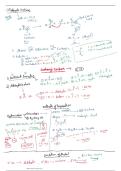
-Information from receptors passes along cells (neurones) as electrical impulses to the central nervous system (CNS).
The CNS is the brain and spinal cord. The CNS coordinates the response of effectors which may be muscles
contracting or glands secreting hormones.
The sequence of events describes how the nervous system works
Reflex actions are automatic and rapid; they do not involve the conscious part of the brain.
, The brain
-The brain controls complex behaviour. It is made of billions of interconnected neurones and has different regions
that carry out different functions.
-
-neuroscientists have been able to map the regions of the brain to particular functions by studying patients
with brain damage, electrically stimulating different parts of the brain and using MRI scanning techniques.
The complexity and delicacy of the brain makes investigating and treating brain disorders very difficult.
-homeostasis is the regulation of the internal conditions of a cell or organism to maintain optimum conditions for
function in response to internal and external changes.
-Homeostasis maintains optimal conditions for enzyme action and all cell functions.
The human nervous system
Structure and function
-The nervous system enables humans to react to their surroundings and to coordinate their behaviour
-Information from receptors passes along cells (neurones) as electrical impulses to the central nervous system (CNS).
The CNS is the brain and spinal cord. The CNS coordinates the response of effectors which may be muscles
contracting or glands secreting hormones.
The sequence of events describes how the nervous system works
Reflex actions are automatic and rapid; they do not involve the conscious part of the brain.
, The brain
-The brain controls complex behaviour. It is made of billions of interconnected neurones and has different regions
that carry out different functions.
-
-neuroscientists have been able to map the regions of the brain to particular functions by studying patients
with brain damage, electrically stimulating different parts of the brain and using MRI scanning techniques.
The complexity and delicacy of the brain makes investigating and treating brain disorders very difficult.