Criminal Law
WEEK 10
MORALITY AND HARM
Lecture 1 - Introductory
Lecture 2 - Defining morality and harm
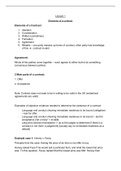
What is a crime?
● There is no universal definition of what a crime is. However there are common
characteristics involved with most crimes; public wrongs, moral wrongs and harm.
● Public wrongs involve behaviour that is harmful or disruptive to the entire public rather
than just one individual.
○ These wrongs don’t have to be done in public, but rather, the public plays a role
in punishing the offender for the offence.
○ Thus, we should criminalise acts that the entire public thinks are wrong. But it will
be up to the Parliament and the Courts to decide.
● Moral wrongs simply refer to the criminalisation of acts we view as immoral.
○ However this raises multiple questions such as whose morality is being judged?
Should we base laws off of the majority’s morals? Is it a religious majority? Ethnic
majority? Etc.
● Another way to label a crime is if it causes harm.
○ John Stuart Mill had the idea of the harm principle, so we should criminalise
those that cause harm to others. So individual harm or societal harm.
Lecture 3 - R v Brown
● Involves a group of men convicted for a series of offences connected to ‘Consensual
Sadomasochistic’ practices. (SAM or BDSM)
○ This involves actual bodily harm, unlawful wounding or keeping a disorderly
house.
○ Their sentences ranged from four and a half years to two years.
○ The activities took place in private room (torture chambers).
○ Involved 44 men, only 16 were prosecuted.
○ These men met over a course of a decade and engaged in these sexual acts and
used video cameras to record the activity.
● A copy of one of the videos was obtained by the police which is what formed the basis of
the prosecution.
○ Police found that they had enough evidence to prosecute 16 of the men who had
used violence, even though it was consensual.
○ None of the men made any complaints to the police and they all consented to
these acts, but these acts were still deemed criminal.
WEEK 10
MORALITY AND HARM
Lecture 1 - Introductory
Lecture 2 - Defining morality and harm
What is a crime?
● There is no universal definition of what a crime is. However there are common
characteristics involved with most crimes; public wrongs, moral wrongs and harm.
● Public wrongs involve behaviour that is harmful or disruptive to the entire public rather
than just one individual.
○ These wrongs don’t have to be done in public, but rather, the public plays a role
in punishing the offender for the offence.
○ Thus, we should criminalise acts that the entire public thinks are wrong. But it will
be up to the Parliament and the Courts to decide.
● Moral wrongs simply refer to the criminalisation of acts we view as immoral.
○ However this raises multiple questions such as whose morality is being judged?
Should we base laws off of the majority’s morals? Is it a religious majority? Ethnic
majority? Etc.
● Another way to label a crime is if it causes harm.
○ John Stuart Mill had the idea of the harm principle, so we should criminalise
those that cause harm to others. So individual harm or societal harm.
Lecture 3 - R v Brown
● Involves a group of men convicted for a series of offences connected to ‘Consensual
Sadomasochistic’ practices. (SAM or BDSM)
○ This involves actual bodily harm, unlawful wounding or keeping a disorderly
house.
○ Their sentences ranged from four and a half years to two years.
○ The activities took place in private room (torture chambers).
○ Involved 44 men, only 16 were prosecuted.
○ These men met over a course of a decade and engaged in these sexual acts and
used video cameras to record the activity.
● A copy of one of the videos was obtained by the police which is what formed the basis of
the prosecution.
○ Police found that they had enough evidence to prosecute 16 of the men who had
used violence, even though it was consensual.
○ None of the men made any complaints to the police and they all consented to
these acts, but these acts were still deemed criminal.