Names :
Surnames :
Student Number :
Module : SAE3701 ASSINGMENT 3
Unique Number : 779146
Question 1
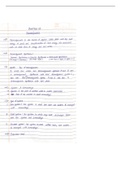
1. The primary purpose of a school is to provide an environment where teaching
and learning take place. An important purpose of schooling is to prepare
people for the world of work beyond school. Nation-building and citizenship –
political goals are the key purposes of schooling. In a democracy, public
education schooling is one of the major vehicles for teaching the values of a
society to children and young adults. Education is about the development of
the individual.
2. Critical intellectuals in education aims to reduce the barriers in place within
the school setting. Critical theory can be used to help those who come from a
disadvantaged background by overcoming educational barriers. It focuses on
the idea that providing a balanced, fair education can lead a person to a better
position in society. Critical intellectuals in education attempts to find the
underlying assumptions in social life that keep people from fully and truly
understanding how the world works.
3. Access to education was opposed as human right. Access to quality
education was guaranteed. Schools were to be transformed to become more
equal in relation to funding allocation. Principles of non-racism, no-sexism and
equal opportunity were espoused. The changes were necessary to make the
, disadvantaged groups equal to the advantaged groups. This made poor and
people of segregated colour equal to the other.
Question 2
1.
Manual work and practical training-misssion education stressed the value of
hard work and work discipline.
Boys were trained to be carpenters, blacksmiths, and masons.
They were gender divisions, girls often learnt needlework and cooking.
Some learners were trained as catechists and teachers to organise services,
spread the gospel among their people and teach basic education in mission
schools.
Some mission schools provided teacher training for a small group of people.
2. The mission schools were usually segregated in lines of colour, even the
schools did not admit whites and blacks in one school. Missionary education
usually had little respect for the local African culture. Local culture and history
were not included in the school curriculum, and the curriculum was usually
based on European schools.
3.
Some missionaries thought blacks should be given exactly the same
education as whites-which meant learning Greek and Latin. There should be
no discrimination.
Some missionaries thought that there should be an adapted curriculum for
black students. This curriculum should take local conditions into account and
prepare blacks for the local society.
Surnames :
Student Number :
Module : SAE3701 ASSINGMENT 3
Unique Number : 779146
Question 1
1. The primary purpose of a school is to provide an environment where teaching
and learning take place. An important purpose of schooling is to prepare
people for the world of work beyond school. Nation-building and citizenship –
political goals are the key purposes of schooling. In a democracy, public
education schooling is one of the major vehicles for teaching the values of a
society to children and young adults. Education is about the development of
the individual.
2. Critical intellectuals in education aims to reduce the barriers in place within
the school setting. Critical theory can be used to help those who come from a
disadvantaged background by overcoming educational barriers. It focuses on
the idea that providing a balanced, fair education can lead a person to a better
position in society. Critical intellectuals in education attempts to find the
underlying assumptions in social life that keep people from fully and truly
understanding how the world works.
3. Access to education was opposed as human right. Access to quality
education was guaranteed. Schools were to be transformed to become more
equal in relation to funding allocation. Principles of non-racism, no-sexism and
equal opportunity were espoused. The changes were necessary to make the
, disadvantaged groups equal to the advantaged groups. This made poor and
people of segregated colour equal to the other.
Question 2
1.
Manual work and practical training-misssion education stressed the value of
hard work and work discipline.
Boys were trained to be carpenters, blacksmiths, and masons.
They were gender divisions, girls often learnt needlework and cooking.
Some learners were trained as catechists and teachers to organise services,
spread the gospel among their people and teach basic education in mission
schools.
Some mission schools provided teacher training for a small group of people.
2. The mission schools were usually segregated in lines of colour, even the
schools did not admit whites and blacks in one school. Missionary education
usually had little respect for the local African culture. Local culture and history
were not included in the school curriculum, and the curriculum was usually
based on European schools.
3.
Some missionaries thought blacks should be given exactly the same
education as whites-which meant learning Greek and Latin. There should be
no discrimination.
Some missionaries thought that there should be an adapted curriculum for
black students. This curriculum should take local conditions into account and
prepare blacks for the local society.