Theatre in the Weimar Republic
Weimar Culture in the 1920s:
Despite the trauma of its early years, during its so-called 'Golden Age' Weimar
experienced a flourishing culture, in Berlin especially, that saw developments in theatre.
This expression of culture was greatly helped by the ending of censorship in the new
republic.
The German Cabaret movement during the Weimar Republic:
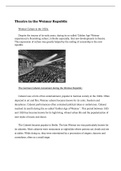
Cabaret was a form of live entertainment, popular in German society in the 1920s. Often
depicted in art and film, Weimar cabaret became known for its color, freedom and
decadence. Cabaret performances often contained political ideas or undertones. Cabaret
reached its zenith during the so-called ‘Golden Age of Weimar ‘. This period between 1925
and 1929 has become known for its high living, vibrant urban life and the popularization of
new styles of music and dance.
The Cabaret became popular in Berlin. The late Weimar era was particularly known for
its cabarets. Most cabarets were restaurants or nightclubs where patrons sat, drank and ate
at tables. While doing so, they were entertained by a procession of singers, dancers and
comedians, often on a small stage.
Weimar Culture in the 1920s:
Despite the trauma of its early years, during its so-called 'Golden Age' Weimar
experienced a flourishing culture, in Berlin especially, that saw developments in theatre.
This expression of culture was greatly helped by the ending of censorship in the new
republic.
The German Cabaret movement during the Weimar Republic:
Cabaret was a form of live entertainment, popular in German society in the 1920s. Often
depicted in art and film, Weimar cabaret became known for its color, freedom and
decadence. Cabaret performances often contained political ideas or undertones. Cabaret
reached its zenith during the so-called ‘Golden Age of Weimar ‘. This period between 1925
and 1929 has become known for its high living, vibrant urban life and the popularization of
new styles of music and dance.
The Cabaret became popular in Berlin. The late Weimar era was particularly known for
its cabarets. Most cabarets were restaurants or nightclubs where patrons sat, drank and ate
at tables. While doing so, they were entertained by a procession of singers, dancers and
comedians, often on a small stage.