27.11.19
L7 – Why we can’t live forever?
Lecture:
Process of aging
o Subclinical age (part of life when starts getting ill)
o Age-related diseases w/ medical intervention and anti-aging therapies (↑subclinical
age)
o ↑ susceptibility as cells don’t function properly
Parabiosis
o Join vascular system of young and old mice
Young mice affected = ↓ neurogenesis, ↓ synaptic plasticity and ↓
cognition
Opposite (rejuvenation) in older
Balance systems
What factors play a role in aging?
o ↓ cell prolif (don’t ↑ or cancer!) then ↑ cell replacement
o DNA damage/repair occur
↑ mutagens and damaging chemicals = rapid prolif = cancer
o Post-mitotic cells = Nerve cells/erythrocytes do not divide when mature
Nerve cell replacement = memory ∆/loss
Stem cells
o Compartments of stem cells (protection of damaging agents)
o Stem cell → stem cell + precursor cells/transit-amplifying cells → post-mitotic cells
→ cell death
o Do slowly reduce telomere length (different)
Cell prolif
o Regenerate liver via prolif by losing surrounding cells (replacing)
Primary cells can divide for 30-50 cells
o Hayflick limit = Stop bc loss of telomere
o Culture becomes senescent
Demoralized by switching on telomerase expression = rebuilding telomeres
(found in cancer cells)
Tumor suppressing mechanisms
o Telomerase is a reverse transcriptase (using RNA template
to extend the ends)
o Human hTERT gene switched on = immortality
Senescence should be cleared, or cell recycled?
Telomeres keep length that they are immortalized at
Low telomerase activity = chromosomal activity, genome instability, growth
arrest and apoptosis
Telomere length/activity are longer in females, determined by
enviro/genetic and are variable amongst individuals
o Age of cells = effects rate or efficiency of cell prolif
Human premature aging syndromes have a very low telomere length
Germ line cells have a fixed length genome
Telomere structure
L7 – Why we can’t live forever?
Lecture:
Process of aging
o Subclinical age (part of life when starts getting ill)
o Age-related diseases w/ medical intervention and anti-aging therapies (↑subclinical
age)
o ↑ susceptibility as cells don’t function properly
Parabiosis
o Join vascular system of young and old mice
Young mice affected = ↓ neurogenesis, ↓ synaptic plasticity and ↓
cognition
Opposite (rejuvenation) in older
Balance systems
What factors play a role in aging?
o ↓ cell prolif (don’t ↑ or cancer!) then ↑ cell replacement
o DNA damage/repair occur
↑ mutagens and damaging chemicals = rapid prolif = cancer
o Post-mitotic cells = Nerve cells/erythrocytes do not divide when mature
Nerve cell replacement = memory ∆/loss
Stem cells
o Compartments of stem cells (protection of damaging agents)
o Stem cell → stem cell + precursor cells/transit-amplifying cells → post-mitotic cells
→ cell death
o Do slowly reduce telomere length (different)
Cell prolif
o Regenerate liver via prolif by losing surrounding cells (replacing)
Primary cells can divide for 30-50 cells
o Hayflick limit = Stop bc loss of telomere
o Culture becomes senescent
Demoralized by switching on telomerase expression = rebuilding telomeres
(found in cancer cells)
Tumor suppressing mechanisms
o Telomerase is a reverse transcriptase (using RNA template
to extend the ends)
o Human hTERT gene switched on = immortality
Senescence should be cleared, or cell recycled?
Telomeres keep length that they are immortalized at
Low telomerase activity = chromosomal activity, genome instability, growth
arrest and apoptosis
Telomere length/activity are longer in females, determined by
enviro/genetic and are variable amongst individuals
o Age of cells = effects rate or efficiency of cell prolif
Human premature aging syndromes have a very low telomere length
Germ line cells have a fixed length genome
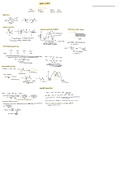
Telomere structure