LCP 4801 2022 ASSIGNMENT:
Multiple choices
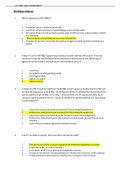
1. Which statement is INCORRECT?
1 A contract can be a bilateral juristic act.
2 A contract entails promises or undertakings on one or both sides.
3 An undertaking in a contract that a certain state of affairs exists, or has existed, is known
as a warranty.
4 The conclusion of a contract can never be multilateral.
5 Freedom of contract means that the parties can agree to anything that is possible and
lawful.
2. X buys Y’s car for R50 000. X pays the purchase price and Y delivers the car to X. Y has the
intention to transfer ownership and X the intention to receive ownership. What type of
agreement(s) did X and Y conclude when Y delivered the car to X?
1 A contract.
2 An agreement extinguishing a debt.
3 A real agreement.
4 Option 1, 2 and 3.
5 Option 2 and 3.
3. X makes an offer to sell her watch to Y for R2 500. X and Y agree on 15 May that X’s offer will
be open for acceptance until 31 May. On 20 May X informs Y in writing that she (X) intends to
sell the watch to Z on 30 May. On 21 May Y informs X that she (Y) accepts the offer, but X
refuses to sell the watch to her (Y). Y wants to compel X to sell the watch to her. How would
you best advise Y?
1 Cancel the contract and seek to interdict X from selling the watch to Z.
2 Enforce the contract and seek to interdict X from selling the watch to Z.
3 Cancel the contract and seek an order for specific performance against X.
4 Enforce the contract and cancel the contract simultaneously through the use of an
interdict.
5 Cancel the pre-emption agreement between X and Z.
4. X and Y conclude a contract. When will their contract be VOID?
1 The conclusion of the contract is expressly prohibited by legislation as a crime.
2 X operates under an error in motive.
3 X threatens to kill Y if she does not conclude the contract.
4 X made an intentional misrepresentation to Y before the conclusion of the contract.
5 X made a dictum et promissum to Y before the conclusion of the contract.
, 5. Liability for which form of misrepresentation may NOT be contractually excluded?
1 An innocent misrepresentation.
2 A negligent misrepresentation.
3 A grossly negligent misrepresentation.
4 A fraudulent misrepresentation.
5 A dictum et promissum.
6. X and Y agree that should X sell her car, she (X) will offer to sell it to Y first, before making an
offer to sell the car to any other person. X sells the car to Z for R50 000 without first offering
it to Y for sale. Delivery of the car has not yet taken place. Which statement is INCORRECT?
1 X gave Y an option to purchase her (X’s) car.
2 X gave Y a right of pre-emption with regard to her (X’s) car.
3 Y can step into the shoes of Z with a unilateral declaration of intent.
4 Both Y and Z only have personal rights against X.
5 The personal right of Y enjoys preference above the personal right of Z
7. Which of the following must a party prove who seeks to set a contract aside on the ground of
undue influence?
1 The other party obtained influence over her.
2 The other party exercised this influence over her, in an unscrupulous manner in
order to induce her to consent to a transaction which is to her detriment and which
she, with a normal free will, would not have concluded.
3 The other party gained his influence over her by standing in a close relationship to
her.
4 Options 1 and 2.
5 Options 1, 2 and 3.
8. X sells his car to Y for R50 000 and undertakes to deliver the car to Y tomorrow morning. The
obligation to deliver the car tomorrow is subject to a
1 suspensive condition.
2 resolutive condition.
3 suspensive time clause.
4 resolutive time clause.
5 modus.
Multiple choices
1. Which statement is INCORRECT?
1 A contract can be a bilateral juristic act.
2 A contract entails promises or undertakings on one or both sides.
3 An undertaking in a contract that a certain state of affairs exists, or has existed, is known
as a warranty.
4 The conclusion of a contract can never be multilateral.
5 Freedom of contract means that the parties can agree to anything that is possible and
lawful.
2. X buys Y’s car for R50 000. X pays the purchase price and Y delivers the car to X. Y has the
intention to transfer ownership and X the intention to receive ownership. What type of
agreement(s) did X and Y conclude when Y delivered the car to X?
1 A contract.
2 An agreement extinguishing a debt.
3 A real agreement.
4 Option 1, 2 and 3.
5 Option 2 and 3.
3. X makes an offer to sell her watch to Y for R2 500. X and Y agree on 15 May that X’s offer will
be open for acceptance until 31 May. On 20 May X informs Y in writing that she (X) intends to
sell the watch to Z on 30 May. On 21 May Y informs X that she (Y) accepts the offer, but X
refuses to sell the watch to her (Y). Y wants to compel X to sell the watch to her. How would
you best advise Y?
1 Cancel the contract and seek to interdict X from selling the watch to Z.
2 Enforce the contract and seek to interdict X from selling the watch to Z.
3 Cancel the contract and seek an order for specific performance against X.
4 Enforce the contract and cancel the contract simultaneously through the use of an
interdict.
5 Cancel the pre-emption agreement between X and Z.
4. X and Y conclude a contract. When will their contract be VOID?
1 The conclusion of the contract is expressly prohibited by legislation as a crime.
2 X operates under an error in motive.
3 X threatens to kill Y if she does not conclude the contract.
4 X made an intentional misrepresentation to Y before the conclusion of the contract.
5 X made a dictum et promissum to Y before the conclusion of the contract.
, 5. Liability for which form of misrepresentation may NOT be contractually excluded?
1 An innocent misrepresentation.
2 A negligent misrepresentation.
3 A grossly negligent misrepresentation.
4 A fraudulent misrepresentation.
5 A dictum et promissum.
6. X and Y agree that should X sell her car, she (X) will offer to sell it to Y first, before making an
offer to sell the car to any other person. X sells the car to Z for R50 000 without first offering
it to Y for sale. Delivery of the car has not yet taken place. Which statement is INCORRECT?
1 X gave Y an option to purchase her (X’s) car.
2 X gave Y a right of pre-emption with regard to her (X’s) car.
3 Y can step into the shoes of Z with a unilateral declaration of intent.
4 Both Y and Z only have personal rights against X.
5 The personal right of Y enjoys preference above the personal right of Z
7. Which of the following must a party prove who seeks to set a contract aside on the ground of
undue influence?
1 The other party obtained influence over her.
2 The other party exercised this influence over her, in an unscrupulous manner in
order to induce her to consent to a transaction which is to her detriment and which
she, with a normal free will, would not have concluded.
3 The other party gained his influence over her by standing in a close relationship to
her.
4 Options 1 and 2.
5 Options 1, 2 and 3.
8. X sells his car to Y for R50 000 and undertakes to deliver the car to Y tomorrow morning. The
obligation to deliver the car tomorrow is subject to a
1 suspensive condition.
2 resolutive condition.
3 suspensive time clause.
4 resolutive time clause.
5 modus.