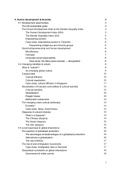
5. Human development & diversity 3
5.1 Development opportunities 3
The UN sustainable goals 3
The Human Development Index & the Gender inequality index 3
The Human Development Index (HDI): 3
The Gender Inequality Index (GII): 5
Empowering women: 6
Case study: empowering women in Colombia 6
Empowering indigenous and minority groups 6
Social entrepreneurship and human development 6
Microfinance: 6
Fairtrade: 7
Corporate social responsibility: 8
Case study: the Rana plaza disaster — Bangladesh 8
5.2 Changing identities & culture 9
What is "culture"? 9
An emerging global culture: 9
Cultural traits 10
Cultural diffusion: 10
Cultural imperialism: 10
Case study: cultural diffusion in Singapore 11
Glocalisation of branded commodities & cultural hybridity 12
Cultural hybridity: 12
Globalisation: 12
Piaggio Vespa: 12
McDonald’s restaurants: 13
The changing urban cultural landscape 13
Evolution: 13
Case study: Seoul, South Korea 13
Diasporas & cultural diversity 14
What is a diaspora? 14
The Chinese diaspora: 14
The Syrian diaspora: 15
The Irish diaspora: 15
5.3 Local responses to global interactions 15
The rejection of globalised production 15
The advantages & disadvantages of a globalised production: 15
Alternatives to globalisation: 16
The rise of NGOs: 17
The rise of anti-immigration movements 17
Case study: Immigration laws in Denmark 17
Geopolitical constraints on global interactions 18
Government & militia control: 18
1
, National trade restrictions: 18
Resource nationalism: 19
The role of civil society 20
Definition of civil society: 20
People’s global action: 20
Civil society, social media & increased use of the internet: 20
Civil society & the promotion of internet freedom: 20
Case study: challenging restricted freedom: the Arab Spring 21
Case study: political change in Myanmar/ Burma 22
2
, 5. Human development & diversity
5.1 Development opportunities
The UN sustainable goals
Development: refers to an improvement in the quality & quantity of life. It includes social
development, economic development, environmental sustainability, as well as other factors
that may be considered important in improving people’s quality of life & standard of living,
including peace & stability, gender equality, happiness, legal rights etc.
Sustainable development: meeting the needs of the present without compromising the ability
of future generations to meet their own needs. It includes social, economic and
environmental sustainability.
As part of the effort to achieve the broad goals of sustainable development, the UN adopted
the SDGs in 2015, as a call to action to end poverty, protect the planet & guarantee the
global well-being of people by 2030.
● The UNDP provides support to governments to integrate the SDGs into their national
development plans & policies in the areas of poverty, inequality, climate change,
environmental degradation, economic prosperity, peace & justice.
The Human Development Index & the Gender inequality index
The Human Development Index (HDI):
The HDI was developed in 1990 by the UN to measure the levels of development.
It is a composite measure of development, i.e it takes into consideration 3 key variables in
determining the level of human development:
3
5.1 Development opportunities 3
The UN sustainable goals 3
The Human Development Index & the Gender inequality index 3
The Human Development Index (HDI): 3
The Gender Inequality Index (GII): 5
Empowering women: 6
Case study: empowering women in Colombia 6
Empowering indigenous and minority groups 6
Social entrepreneurship and human development 6
Microfinance: 6
Fairtrade: 7
Corporate social responsibility: 8
Case study: the Rana plaza disaster — Bangladesh 8
5.2 Changing identities & culture 9
What is "culture"? 9
An emerging global culture: 9
Cultural traits 10
Cultural diffusion: 10
Cultural imperialism: 10
Case study: cultural diffusion in Singapore 11
Glocalisation of branded commodities & cultural hybridity 12
Cultural hybridity: 12
Globalisation: 12
Piaggio Vespa: 12
McDonald’s restaurants: 13
The changing urban cultural landscape 13
Evolution: 13
Case study: Seoul, South Korea 13
Diasporas & cultural diversity 14
What is a diaspora? 14
The Chinese diaspora: 14
The Syrian diaspora: 15
The Irish diaspora: 15
5.3 Local responses to global interactions 15
The rejection of globalised production 15
The advantages & disadvantages of a globalised production: 15
Alternatives to globalisation: 16
The rise of NGOs: 17
The rise of anti-immigration movements 17
Case study: Immigration laws in Denmark 17
Geopolitical constraints on global interactions 18
Government & militia control: 18
1
, National trade restrictions: 18
Resource nationalism: 19
The role of civil society 20
Definition of civil society: 20
People’s global action: 20
Civil society, social media & increased use of the internet: 20
Civil society & the promotion of internet freedom: 20
Case study: challenging restricted freedom: the Arab Spring 21
Case study: political change in Myanmar/ Burma 22
2
, 5. Human development & diversity
5.1 Development opportunities
The UN sustainable goals
Development: refers to an improvement in the quality & quantity of life. It includes social
development, economic development, environmental sustainability, as well as other factors
that may be considered important in improving people’s quality of life & standard of living,
including peace & stability, gender equality, happiness, legal rights etc.
Sustainable development: meeting the needs of the present without compromising the ability
of future generations to meet their own needs. It includes social, economic and
environmental sustainability.
As part of the effort to achieve the broad goals of sustainable development, the UN adopted
the SDGs in 2015, as a call to action to end poverty, protect the planet & guarantee the
global well-being of people by 2030.
● The UNDP provides support to governments to integrate the SDGs into their national
development plans & policies in the areas of poverty, inequality, climate change,
environmental degradation, economic prosperity, peace & justice.
The Human Development Index & the Gender inequality index
The Human Development Index (HDI):
The HDI was developed in 1990 by the UN to measure the levels of development.
It is a composite measure of development, i.e it takes into consideration 3 key variables in
determining the level of human development:
3