

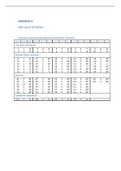
APPENDIX A
tIME vALUE OF MONEY
Summary of Questions by Objectives and Bloom’s Taxonomy
Item LO BT Item LO BT Item LO BT Item LO BT Item LO BT
True-False Statements
1. 1 K 3. 2 K 5. 4 K 7. 6 C 9. 8 K
2. 1 K 4. 3 C 6. 5 K 8. 7 K 10. 9 K
Multiple Choice Questions
11. 1 K 17. 3 AP 23. 4 C 29. 5 AP 35. 5 AP
12. 2 C 18. 3 K 24. 4 AP 30. 5 AP 36. 6 AP
13. 2 AP 19. 3 AP 25. 5 AP 31. 5 AP 37. 6 C
14. 2 K 20. 3 K 26. 5 AP 32. 5 C 38. 6 AP
15. 2 K 21. 4 K 27. 5 AP 33. 5 AP 39. 6 AP
16. 3 C 22. 4 C 28. 5 C 34. 5 AP 40. 6 AP
Exercises
41. 2 AP 47. 3 AP 53. 5 AP 59. 6 AP 65. 6 AP
42. 2 AP 48. 3 AP 54. 5 AP 60. 6 AP 66. 6 AP
43. 2,3 AP 49. 3 AP 55. 5 AP 61. 6 AP
44. 2 AP 50. 3 AP 56. 5 AP 62. 6 AP
45. 2 AP 51. 5 AP 57. 5 AP 63. 6 AN
46. 3 AP 52. 5 AP 58. 5 AP 64. 6 AP
Completion Statements
67. 3 K 68. 3 K 69. 4 K 70. 7 K
, SUMMARY OF LEARNING OBJECTIVES BY QUESTION TYPE
Item Type Item Type Item Type Item Type Item Type Item Type Item Type
Learning Objective 1
1. TF 2. TF 11. MC
Learning Objective 2
3. TF 13. MC 15. MC 42. Ex 44. Ex
12. MC 14. MC 41. Ex 43. Ex 45. Ex
LearningObjective 3
4. TF 17. MC 19. MC 43. Ex 47. Ex 49. Ex 67. C
16. MC 18. MC 20. MC 46. Ex 48. Ex 50. Ex 68. C
Learning Objective 4
5. TF 21. MC 22. MC 23. MC 24. MC 69. C
Learning Objective 5
6. TF 27. MC 30. MC 33. MC 51. Ex 54. Ex 57. Ex
25. MC 28. MC 31. MC 34. MC 52. Ex 55. Ex 58. Ex
26. MC 29. MC 32. MC 35. MC 53. Ex 56. Ex
Learning Objective 6
7. TF 37. MC 40. MC 61. Ex 64. Ex
38. MC 59. Ex 62. Ex 65. Ex
36. MC 39. MC 60. Ex 63. Ex 66. Ex
Learning Objective 7
8. TF 70. C
Learning Objective 8
9. TF
Learning Objective 9
10. TF
,Note: TF = True-False C = Completion
MC = Multiple Choice Ex = Exercise
The chapter also contains one set of five Matching questions.
, CHAPTER LEARNING OBJECTIVES
1. Distinguish between simple and compound interest. Simple interest is computed on
the principal only, while compound interest is computed on the principal and any
interest earned that has not been withdrawn.
2. Solve for future value of a single amount. Prepare a time diagram of the problem.
Identify the principal amount, the number of compounding periods, and the interest
rate. Using the future value of 1 table, multiply the principal amount by the future value
factor specified at the intersection of the number of periods and the interest rate.
3. Solve for future value of an annuity. Prepare a time diagram of the problem. Identify
the amount of the periodic payments, the number of compounding periods, and the
interest rate. Using the future value of an annuity of 1 table, multiply the amount of the
payments by the future value factor specified at the intersection of the number of
periods and interest rate.
4. Identify the variables fundamental to solving present value problems. The following
three variables are fundamental to solving present value problems: (1) the future
amount, (2) the number of periods, and (3) the interest rate (the discount rate).
5. Solve for present value of a single amount. Prepare a time diagram of the problem.
Identify the future amount, the number of discounting periods, and the discount
(interest) rate. Using the present value of a single amount table, multiply the future
amount by the present value factor specified at the intersection of the number of
periods and the discount rate.
6. Solve for present value of an annuity. Prepare a time diagram of the problem. Identify
the amount of future periodic receipts or payment (annuities), the number of
discounting periods, and the discount (interest) rate. Using the present value of an
annuity of 1 table, multiply the amount of the annuity by the present value factor
specified at the intersection of the number of periods and the interest rate.
7. Compute the present value of notes and bonds. Determine the present value of the
principal amount: Multiply the principal amount (a single future amount) by the present
value factor (from the present value of 1 table) intersecting at the number of periods
(number of interest payments) and the discount rate. Determine the present value of
the series of interest payments: Multiply the amount of the interest payment by the
present value factor (from the present value of an annuity of 1 table) intersecting at the
number of periods (number of interest payments) and the discount rate. Add the
present value of the principal amount to the present value of the interest payments to
arrive at the present value of the note or bond.
8. Compute the present values in capital budgeting situations. Compute the present
values of all cash inflows and all cash outflows related to the capital budgeting proposal
(an investment-type decision.) If the net present value is positive accept the proposal
tIME vALUE OF MONEY
Summary of Questions by Objectives and Bloom’s Taxonomy
Item LO BT Item LO BT Item LO BT Item LO BT Item LO BT
True-False Statements
1. 1 K 3. 2 K 5. 4 K 7. 6 C 9. 8 K
2. 1 K 4. 3 C 6. 5 K 8. 7 K 10. 9 K
Multiple Choice Questions
11. 1 K 17. 3 AP 23. 4 C 29. 5 AP 35. 5 AP
12. 2 C 18. 3 K 24. 4 AP 30. 5 AP 36. 6 AP
13. 2 AP 19. 3 AP 25. 5 AP 31. 5 AP 37. 6 C
14. 2 K 20. 3 K 26. 5 AP 32. 5 C 38. 6 AP
15. 2 K 21. 4 K 27. 5 AP 33. 5 AP 39. 6 AP
16. 3 C 22. 4 C 28. 5 C 34. 5 AP 40. 6 AP
Exercises
41. 2 AP 47. 3 AP 53. 5 AP 59. 6 AP 65. 6 AP
42. 2 AP 48. 3 AP 54. 5 AP 60. 6 AP 66. 6 AP
43. 2,3 AP 49. 3 AP 55. 5 AP 61. 6 AP
44. 2 AP 50. 3 AP 56. 5 AP 62. 6 AP
45. 2 AP 51. 5 AP 57. 5 AP 63. 6 AN
46. 3 AP 52. 5 AP 58. 5 AP 64. 6 AP
Completion Statements
67. 3 K 68. 3 K 69. 4 K 70. 7 K
, SUMMARY OF LEARNING OBJECTIVES BY QUESTION TYPE
Item Type Item Type Item Type Item Type Item Type Item Type Item Type
Learning Objective 1
1. TF 2. TF 11. MC
Learning Objective 2
3. TF 13. MC 15. MC 42. Ex 44. Ex
12. MC 14. MC 41. Ex 43. Ex 45. Ex
LearningObjective 3
4. TF 17. MC 19. MC 43. Ex 47. Ex 49. Ex 67. C
16. MC 18. MC 20. MC 46. Ex 48. Ex 50. Ex 68. C
Learning Objective 4
5. TF 21. MC 22. MC 23. MC 24. MC 69. C
Learning Objective 5
6. TF 27. MC 30. MC 33. MC 51. Ex 54. Ex 57. Ex
25. MC 28. MC 31. MC 34. MC 52. Ex 55. Ex 58. Ex
26. MC 29. MC 32. MC 35. MC 53. Ex 56. Ex
Learning Objective 6
7. TF 37. MC 40. MC 61. Ex 64. Ex
38. MC 59. Ex 62. Ex 65. Ex
36. MC 39. MC 60. Ex 63. Ex 66. Ex
Learning Objective 7
8. TF 70. C
Learning Objective 8
9. TF
Learning Objective 9
10. TF
,Note: TF = True-False C = Completion
MC = Multiple Choice Ex = Exercise
The chapter also contains one set of five Matching questions.
, CHAPTER LEARNING OBJECTIVES
1. Distinguish between simple and compound interest. Simple interest is computed on
the principal only, while compound interest is computed on the principal and any
interest earned that has not been withdrawn.
2. Solve for future value of a single amount. Prepare a time diagram of the problem.
Identify the principal amount, the number of compounding periods, and the interest
rate. Using the future value of 1 table, multiply the principal amount by the future value
factor specified at the intersection of the number of periods and the interest rate.
3. Solve for future value of an annuity. Prepare a time diagram of the problem. Identify
the amount of the periodic payments, the number of compounding periods, and the
interest rate. Using the future value of an annuity of 1 table, multiply the amount of the
payments by the future value factor specified at the intersection of the number of
periods and interest rate.
4. Identify the variables fundamental to solving present value problems. The following
three variables are fundamental to solving present value problems: (1) the future
amount, (2) the number of periods, and (3) the interest rate (the discount rate).
5. Solve for present value of a single amount. Prepare a time diagram of the problem.
Identify the future amount, the number of discounting periods, and the discount
(interest) rate. Using the present value of a single amount table, multiply the future
amount by the present value factor specified at the intersection of the number of
periods and the discount rate.
6. Solve for present value of an annuity. Prepare a time diagram of the problem. Identify
the amount of future periodic receipts or payment (annuities), the number of
discounting periods, and the discount (interest) rate. Using the present value of an
annuity of 1 table, multiply the amount of the annuity by the present value factor
specified at the intersection of the number of periods and the interest rate.
7. Compute the present value of notes and bonds. Determine the present value of the
principal amount: Multiply the principal amount (a single future amount) by the present
value factor (from the present value of 1 table) intersecting at the number of periods
(number of interest payments) and the discount rate. Determine the present value of
the series of interest payments: Multiply the amount of the interest payment by the
present value factor (from the present value of an annuity of 1 table) intersecting at the
number of periods (number of interest payments) and the discount rate. Add the
present value of the principal amount to the present value of the interest payments to
arrive at the present value of the note or bond.
8. Compute the present values in capital budgeting situations. Compute the present
values of all cash inflows and all cash outflows related to the capital budgeting proposal
(an investment-type decision.) If the net present value is positive accept the proposal


