Dissent and Revolution, 1917 essays
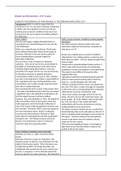
CAUSES OF THE DOWNFALL OF TSAR NICHOLAS II/ THE FEBRUARY REVOLUTION 1917?
Introduction While it could be argued that the
Feb/March 1917 rev was due to Nicholas’ leadership
in WW1, the most significant reason was the pre-
existing socio-economic conditions that were now
too great for the tsar to ignore inevitably leading to
his abdication.
Point 1 WW1 Point 2 socio-economic conditions causing popular
The war was largely a highly influential factor in discontent
causing the tsar’s downfall however it was not the the socio-economic distress acted as the most
most influential. important catalyst for the February revolution to
WW1 was a total disaster for Russia. The Russian take place in 1917.
army suffered defeat after defeat at the hands of
Germany- Nicholas II was seen as the culprit for Russia’s pre-existing socio-economic conditions
these shocking blows as people longed for reflected the Tsar’s failing policies in which he had
alternative leadership. failed them as leader – the war simply brought these
The war led to a loss of respect for Nicholas’ issues to light.
authority – this can be seen in the severe defeat in -Russia had an underdeveloped railway system. It
the Battle of Tannenberg (sep 1914) which led to had to cope with the pressures of moving large
140,000 soldiers being either killed or seriously quantities of troops and supplies to the battlefronts.
wounded. The impact for the tsar was worsened by This made it more difficult to keep the cities
his disastrous decision to appoint himself as supplied with food.
Commander In Chief for the army in 1915. Nicholas -Agricultural methods remained backward and still
was seen as ill-prepared for military responsibility of relied on many peasants being able to work the
this magnitude and many existing problems were land. E.g. wooden ploughs were still used.
exacerbated, such as high casualty rates (8m total) -Millions of peasant farmers were conscripted into
and rates of soldier desertion. the army. This led to a major shortage of manpower
This eventually led to the winter of discontent 1916 on the farms and a corresponding fall in production,
– the wide scale disillusionment with the war played reflecting the economy’s backwards state.
a significant role in the abdication of Nicholas as he -There were serious shortages of food in the city
lost the support group of ordinary soldiers. shops. The price of even the most basic foods was
However, the army did better in 1916. The supply of rising steeply. By 1916, inflation had reached 200
rifles and artillery shells to the Eastern Front was per cent, the value of the rouble had fallen
vastly improved, and in the Brusilov Offensive of substantially and the price of goods was soaring,
June 1916, Russia achieved significant victories over making situations even more tense.
the Austrians. Therefore, WW1 cannot be argued as The major economic catalyst was as a result of the
the most important reason. Russia’s collapsing bread rationing that was to take place on the 1st of
economy was detrimental for Nicholas as Figes March, bringing violent exchanges on the streets of
states that the estimated Russian debt quadrupled Petrograd – protests continued on international
during the war – the failing economy worsened women’s day where even the soldiers refused
Russia’s war performance and so it is Russia’s orders to fire into crowds.
economic state that caused downfall. This is the most significant factor as it brought to
light that the tsar had done little to improve the
quality of life for his nation.
Point 3 Political instability/weak leadership
Nicholas was seen as a rigid, uncompromising
leader.
Nicholas refused to accept any reduction in the
absolute power he held. He was detached from the
plight of the Russian people - When the Duma was
recalled during WW1, the Progressive Bloc was
established who wanted to have more control over
the war. In response, in 1915, Nicholas closed the
Duma in rejection to retain autocracy. This alienated
CAUSES OF THE DOWNFALL OF TSAR NICHOLAS II/ THE FEBRUARY REVOLUTION 1917?
Introduction While it could be argued that the
Feb/March 1917 rev was due to Nicholas’ leadership
in WW1, the most significant reason was the pre-
existing socio-economic conditions that were now
too great for the tsar to ignore inevitably leading to
his abdication.
Point 1 WW1 Point 2 socio-economic conditions causing popular
The war was largely a highly influential factor in discontent
causing the tsar’s downfall however it was not the the socio-economic distress acted as the most
most influential. important catalyst for the February revolution to
WW1 was a total disaster for Russia. The Russian take place in 1917.
army suffered defeat after defeat at the hands of
Germany- Nicholas II was seen as the culprit for Russia’s pre-existing socio-economic conditions
these shocking blows as people longed for reflected the Tsar’s failing policies in which he had
alternative leadership. failed them as leader – the war simply brought these
The war led to a loss of respect for Nicholas’ issues to light.
authority – this can be seen in the severe defeat in -Russia had an underdeveloped railway system. It
the Battle of Tannenberg (sep 1914) which led to had to cope with the pressures of moving large
140,000 soldiers being either killed or seriously quantities of troops and supplies to the battlefronts.
wounded. The impact for the tsar was worsened by This made it more difficult to keep the cities
his disastrous decision to appoint himself as supplied with food.
Commander In Chief for the army in 1915. Nicholas -Agricultural methods remained backward and still
was seen as ill-prepared for military responsibility of relied on many peasants being able to work the
this magnitude and many existing problems were land. E.g. wooden ploughs were still used.
exacerbated, such as high casualty rates (8m total) -Millions of peasant farmers were conscripted into
and rates of soldier desertion. the army. This led to a major shortage of manpower
This eventually led to the winter of discontent 1916 on the farms and a corresponding fall in production,
– the wide scale disillusionment with the war played reflecting the economy’s backwards state.
a significant role in the abdication of Nicholas as he -There were serious shortages of food in the city
lost the support group of ordinary soldiers. shops. The price of even the most basic foods was
However, the army did better in 1916. The supply of rising steeply. By 1916, inflation had reached 200
rifles and artillery shells to the Eastern Front was per cent, the value of the rouble had fallen
vastly improved, and in the Brusilov Offensive of substantially and the price of goods was soaring,
June 1916, Russia achieved significant victories over making situations even more tense.
the Austrians. Therefore, WW1 cannot be argued as The major economic catalyst was as a result of the
the most important reason. Russia’s collapsing bread rationing that was to take place on the 1st of
economy was detrimental for Nicholas as Figes March, bringing violent exchanges on the streets of
states that the estimated Russian debt quadrupled Petrograd – protests continued on international
during the war – the failing economy worsened women’s day where even the soldiers refused
Russia’s war performance and so it is Russia’s orders to fire into crowds.
economic state that caused downfall. This is the most significant factor as it brought to
light that the tsar had done little to improve the
quality of life for his nation.
Point 3 Political instability/weak leadership
Nicholas was seen as a rigid, uncompromising
leader.
Nicholas refused to accept any reduction in the
absolute power he held. He was detached from the
plight of the Russian people - When the Duma was
recalled during WW1, the Progressive Bloc was
established who wanted to have more control over
the war. In response, in 1915, Nicholas closed the
Duma in rejection to retain autocracy. This alienated