

- Autotrophs can use carbon dioxide from the atmosphere as their sole source of carbon, from which they construct
all their carbon-containing biomolecules
- Some autotrophic organisms, such as cyanobacteria, can also use atmospheric nitrogen to generate all their
nitrogenous components.
- Autotrophic cells and organisms are relatively self-sufficient.
- Heterotrophs cannot use atmospheric carbon dioxide and must obtain carbon from their environment in the form of
relatively complex organic molecules such as glucose.
- Multicellular animals and most microorganisms are heterotrophic.
- Heterotrophic cells and organisms, with their requirements for carbon in more complex forms, must subsist on the
products of other organisms.
- Many autotrophic organisms are photosynthetic and obtain their energy
from sunlight, whereas heterotrophic organisms obtain their energy from
the degradation of organic nutrients produced by autotrophs.
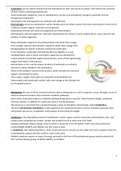
- In our biosphere, autotrophs and heterotrophs live together in a vast,
interdependent cycle in which autotrophic organisms use atmospheric
carbon dioxide to build their organic biomolecules, some of them generating
oxygen from water in the process.
- Heterotrophs in turn use the organic products of autotrophs as nutrients
and return carbon dioxide to the atmosphere.
- Some of the oxidation reactions that produce carbon dioxide also consume
oxygen, converting it to water.
- Thus carbon, oxygen, and water are constantly cycled between the
heterotrophic and autotrophic worlds, with solar energy as the driving force
for this global process
- Metabolism the sum of all the chemical transformations taking place in a cell or organism, occurs through a series of
enzyme-catalyzed reactions that constitute metabolic pathways.
- Each of the consecutive steps in a metabolic pathway brings about a specific, small chemical change, usually the
removal, transfer, or addition of a particular atom or functional group.
- The precursor is converted into a product through a series of metabolic intermediates called metabolites.
- The term intermediary metabolism is often applied to the combined activities of all the metabolic pathways that
interconvert precursors, metabolites, and products of low molecular weight
- Catabolism is the degradative phase of metabolism in which organic nutrient molecules (carbohydrates, fats, and
proteins) are converted into smaller, simpler end products (such as lactic acid, CO2, NH3).
- Catabolic pathways release energy, some of which is conserved in the formation of ATP and reduced electron
carriers (NADH, NADPH, and FADH2); the rest is lost as heat.
- In anabolism, also called biosynthesis, small, simple precursors are built up into larger and more complex molecules,
including lipids, polysaccharides, proteins, and nucleic acids.
- Anabolic reactions require an input of energy, generally in the form of the phosphoryl group transfer potential of
ATP and the reducing power of NADH, NADPH, and FADH2
1
,- In glycolysis , one molecule of glucose is degraded in a series of
enzyme-catalyzed reactions to yield two molecules of the three-
carbon compound pyruvate.
- During the sequential reactions of glycolysis, some of the free
energy released from glucose is conserved in the form of ATP
and NADH.
- Fermentation is a general term for the anaerobic degradation of
glucose or other organic nutrients to obtain energy, conserved
as ATP
Glycolysis has 2 Phases :
(1) Preparatory phase
(2) Payoff phase
▪ For each molecule of glucose that passes through the preparatory phase ;
(a). 2 molecules of glyceraldehyde 3-phosphate are formed ; both pass through the payoff phase
(b). Pyruvate is the end product of the second phase of glycolysis.
▪ For each glucose molecule, two ATP are consumed in the preparatory phase and four ATP are produced in the payoff
phase, giving a net yield of two ATP per molecule of glucose converted to pyruvate.
1) Glucose is first phosphorylated at the hydroxyl group on C-6 .
2) The D-glucose 6-phosphate thus formed is converted to D-fructose 6-phosphate
3) D-fructose 6-phosphate is again phosphorylated, this time at C-1, to yield D-fructose 1,6-bisphosphate . For both
phosphorylations , ATP is the phosphoryl group donor.
4) Fructose 1,6-bisphosphate is split to yield two three-carbon molecules, dihydroxyacetone phosphate and
glyceraldehyde 3-phosphate .
5) The dihydroxyacetone phosphate is isomerized to a second molecule of glyceraldehyde 3-phosphate , ending the
first phase of glycolysis.
6) Each molecule of glyceraldehyde 3-phosphate is oxidized and phosphorylated by inorganic phosphate (not by ATP)
to form 1,3-bisphosphoglycerate .
7) Energy is then released as the two molecules of 1,3-bisphosphoglycerate are converted to two molecules of
pyruvate .
The energy gain comes in the payoff phase of glycolysis .
Much of this energy is conserved by the coupled phosphorylation of four molecules of ADP to ATP.
The net yield is two molecules of ATP per molecule of glucose used , because two molecules of ATP were invested in the
preparatory phase.
Energy is also conserved in the payoff phase in the formation of two molecules of the electron carrier NADH per
molecule of glucose.
2
, In the sequential reactions of glycolysis, three types of chemical transformations are particularly noteworthy :-
(1) degradation of the carbon skeleton of glucose to yield pyruvate
(2) phosphorylation of ADP to ATP by compounds with high phosphoryl group transfer potential, formed during
glycolysis
(3) transfer of a hydride ion to NAD+ , forming NADH.
For each glucose molecule ; 2 ATP are consumed in the preparatory phase and 4 ATP are produced in the payoff phase,
giving a net yield of 2 ATP per molecule of glucose converted to pyruvate.
Energy is also conserved in the payoff phase in the formation of 2 molecules of the electron carrier NADH per molecule
of glucose.
Glucose + 2NAD+ + 2ADP + 2Pi → 2 pyruvate + 2NADH + 2H+ + 2ATP + 2H2O
Three possible catabolic fates of the pyruvate formed in glycolysis
a) Pyruvate is oxidized, with loss of its carboxyl group as CO2 , to
yield the acetyl group of acetyl-coenzyme A ; the acetyl group
is then oxidized completely to CO2 by the citric acid cycle . The
electrons from these oxidations are passed to O2 through a
chain of carriers in mitochondria, to form H2O. The energy
from the electron-transfer reactions drives the synthesis of
ATP in mitochondria .
b) The second route for pyruvate is its reduction to lactate via
lactic acid fermentation. When vigorously contracting skeletal
muscle must function under low-oxygen conditions (hypoxia),
NADH cannot be reoxidized to NAD+ , but NAD+ is required as
an electron acceptor for the further oxidation of pyruvate.
Under these conditions pyruvate is reduced to lactate ,
accepting electrons from NADH and thereby regenerating the
NAD+ necessary for glycolysis to continue. Certain tissues and
cell types (retina and erythrocytes) convert glucose to lactate
even under aerobic conditions, and lactate is also the product
of glycolysis under anaerobic conditions in some
microorganisms .
c) The third major route of pyruvate catabolism leads to ethanol. In some plant tissues and in certain invertebrates,
protists, and microorganisms such as brewer’s or baker’s yeast, pyruvate is converted under hypoxic or anaerobic
conditions to ethanol and CO2, a process called ethanol (alcohol) fermentation .
3
all their carbon-containing biomolecules
- Some autotrophic organisms, such as cyanobacteria, can also use atmospheric nitrogen to generate all their
nitrogenous components.
- Autotrophic cells and organisms are relatively self-sufficient.
- Heterotrophs cannot use atmospheric carbon dioxide and must obtain carbon from their environment in the form of
relatively complex organic molecules such as glucose.
- Multicellular animals and most microorganisms are heterotrophic.
- Heterotrophic cells and organisms, with their requirements for carbon in more complex forms, must subsist on the
products of other organisms.
- Many autotrophic organisms are photosynthetic and obtain their energy
from sunlight, whereas heterotrophic organisms obtain their energy from
the degradation of organic nutrients produced by autotrophs.
- In our biosphere, autotrophs and heterotrophs live together in a vast,
interdependent cycle in which autotrophic organisms use atmospheric
carbon dioxide to build their organic biomolecules, some of them generating
oxygen from water in the process.
- Heterotrophs in turn use the organic products of autotrophs as nutrients
and return carbon dioxide to the atmosphere.
- Some of the oxidation reactions that produce carbon dioxide also consume
oxygen, converting it to water.
- Thus carbon, oxygen, and water are constantly cycled between the
heterotrophic and autotrophic worlds, with solar energy as the driving force
for this global process
- Metabolism the sum of all the chemical transformations taking place in a cell or organism, occurs through a series of
enzyme-catalyzed reactions that constitute metabolic pathways.
- Each of the consecutive steps in a metabolic pathway brings about a specific, small chemical change, usually the
removal, transfer, or addition of a particular atom or functional group.
- The precursor is converted into a product through a series of metabolic intermediates called metabolites.
- The term intermediary metabolism is often applied to the combined activities of all the metabolic pathways that
interconvert precursors, metabolites, and products of low molecular weight
- Catabolism is the degradative phase of metabolism in which organic nutrient molecules (carbohydrates, fats, and
proteins) are converted into smaller, simpler end products (such as lactic acid, CO2, NH3).
- Catabolic pathways release energy, some of which is conserved in the formation of ATP and reduced electron
carriers (NADH, NADPH, and FADH2); the rest is lost as heat.
- In anabolism, also called biosynthesis, small, simple precursors are built up into larger and more complex molecules,
including lipids, polysaccharides, proteins, and nucleic acids.
- Anabolic reactions require an input of energy, generally in the form of the phosphoryl group transfer potential of
ATP and the reducing power of NADH, NADPH, and FADH2
1
,- In glycolysis , one molecule of glucose is degraded in a series of
enzyme-catalyzed reactions to yield two molecules of the three-
carbon compound pyruvate.
- During the sequential reactions of glycolysis, some of the free
energy released from glucose is conserved in the form of ATP
and NADH.
- Fermentation is a general term for the anaerobic degradation of
glucose or other organic nutrients to obtain energy, conserved
as ATP
Glycolysis has 2 Phases :
(1) Preparatory phase
(2) Payoff phase
▪ For each molecule of glucose that passes through the preparatory phase ;
(a). 2 molecules of glyceraldehyde 3-phosphate are formed ; both pass through the payoff phase
(b). Pyruvate is the end product of the second phase of glycolysis.
▪ For each glucose molecule, two ATP are consumed in the preparatory phase and four ATP are produced in the payoff
phase, giving a net yield of two ATP per molecule of glucose converted to pyruvate.
1) Glucose is first phosphorylated at the hydroxyl group on C-6 .
2) The D-glucose 6-phosphate thus formed is converted to D-fructose 6-phosphate
3) D-fructose 6-phosphate is again phosphorylated, this time at C-1, to yield D-fructose 1,6-bisphosphate . For both
phosphorylations , ATP is the phosphoryl group donor.
4) Fructose 1,6-bisphosphate is split to yield two three-carbon molecules, dihydroxyacetone phosphate and
glyceraldehyde 3-phosphate .
5) The dihydroxyacetone phosphate is isomerized to a second molecule of glyceraldehyde 3-phosphate , ending the
first phase of glycolysis.
6) Each molecule of glyceraldehyde 3-phosphate is oxidized and phosphorylated by inorganic phosphate (not by ATP)
to form 1,3-bisphosphoglycerate .
7) Energy is then released as the two molecules of 1,3-bisphosphoglycerate are converted to two molecules of
pyruvate .
The energy gain comes in the payoff phase of glycolysis .
Much of this energy is conserved by the coupled phosphorylation of four molecules of ADP to ATP.
The net yield is two molecules of ATP per molecule of glucose used , because two molecules of ATP were invested in the
preparatory phase.
Energy is also conserved in the payoff phase in the formation of two molecules of the electron carrier NADH per
molecule of glucose.
2
, In the sequential reactions of glycolysis, three types of chemical transformations are particularly noteworthy :-
(1) degradation of the carbon skeleton of glucose to yield pyruvate
(2) phosphorylation of ADP to ATP by compounds with high phosphoryl group transfer potential, formed during
glycolysis
(3) transfer of a hydride ion to NAD+ , forming NADH.
For each glucose molecule ; 2 ATP are consumed in the preparatory phase and 4 ATP are produced in the payoff phase,
giving a net yield of 2 ATP per molecule of glucose converted to pyruvate.
Energy is also conserved in the payoff phase in the formation of 2 molecules of the electron carrier NADH per molecule
of glucose.
Glucose + 2NAD+ + 2ADP + 2Pi → 2 pyruvate + 2NADH + 2H+ + 2ATP + 2H2O
Three possible catabolic fates of the pyruvate formed in glycolysis
a) Pyruvate is oxidized, with loss of its carboxyl group as CO2 , to
yield the acetyl group of acetyl-coenzyme A ; the acetyl group
is then oxidized completely to CO2 by the citric acid cycle . The
electrons from these oxidations are passed to O2 through a
chain of carriers in mitochondria, to form H2O. The energy
from the electron-transfer reactions drives the synthesis of
ATP in mitochondria .
b) The second route for pyruvate is its reduction to lactate via
lactic acid fermentation. When vigorously contracting skeletal
muscle must function under low-oxygen conditions (hypoxia),
NADH cannot be reoxidized to NAD+ , but NAD+ is required as
an electron acceptor for the further oxidation of pyruvate.
Under these conditions pyruvate is reduced to lactate ,
accepting electrons from NADH and thereby regenerating the
NAD+ necessary for glycolysis to continue. Certain tissues and
cell types (retina and erythrocytes) convert glucose to lactate
even under aerobic conditions, and lactate is also the product
of glycolysis under anaerobic conditions in some
microorganisms .
c) The third major route of pyruvate catabolism leads to ethanol. In some plant tissues and in certain invertebrates,
protists, and microorganisms such as brewer’s or baker’s yeast, pyruvate is converted under hypoxic or anaerobic
conditions to ethanol and CO2, a process called ethanol (alcohol) fermentation .
3


