SESSION 6: DIGITAL SIGNALS IN THE CUSTOMER JOURNEY
Schweidel, D. A., Bart, Y., Inman, J. J., Stephen, A. T., Libai, B., Andrews, M., ... & Thomaz, F. (2022).
How consumer digital signals are reshaping the customer journey. Journal of the Academy of Marketing
Science, 1-20.
Schweidel et al. (2022) extend the concept of the customer journey to the technology-enabled customer
journey. They focus on the digital signals that consumers emit which can be used to infer their behavior, and
the (privacy) consequences thereof. This paper can again be used as a backbone for your session, providing
information on what the customer journey is, and how digital signals shape the journey and customers.
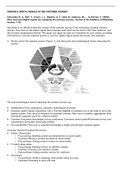
A. Shortly review the customer journey (Figure 1), and discuss the main technological factors impacting the
journey.
The main technological factors impacting the customer journey are:
• Stakeholders: Firms, competitors, customers, technological providers
• Consumer digital signals: Interactions with a firm that highlight if customers are on the right or not on the
explicit journey. They serve as indicators of customer’s interest. They vary in visibility, aggregation level
(individual, segment) and firms´ collection efforts
• Consumer Awareness, knowledge, privacy preference: Consumers make tradeoffs between privacy and
customization (Consumers choice gets limited)
• Firm capabilities: Firms own or acquired knowledge to detect and interpret customer signals
Consumer Signals throughout the journey
• Publicly Observable
o Pre-purchase: Soliciting produt recommendations on social media
o Purchase: Sharnig a product purchase on social media
o Post purchase: Posting product reviews on social media
• Privately observable:
o Pre-purchase: Reading reviews on retailers website
o Purchase: Purchase from retailers website
o Post-purchase: Calling customer service for assistance
• Anonymous:
o Pre-purchase: Window shopping, anonymized online browsing
o Purchase: Purchasing in store with cash
Schweidel, D. A., Bart, Y., Inman, J. J., Stephen, A. T., Libai, B., Andrews, M., ... & Thomaz, F. (2022).
How consumer digital signals are reshaping the customer journey. Journal of the Academy of Marketing
Science, 1-20.
Schweidel et al. (2022) extend the concept of the customer journey to the technology-enabled customer
journey. They focus on the digital signals that consumers emit which can be used to infer their behavior, and
the (privacy) consequences thereof. This paper can again be used as a backbone for your session, providing
information on what the customer journey is, and how digital signals shape the journey and customers.
A. Shortly review the customer journey (Figure 1), and discuss the main technological factors impacting the
journey.
The main technological factors impacting the customer journey are:
• Stakeholders: Firms, competitors, customers, technological providers
• Consumer digital signals: Interactions with a firm that highlight if customers are on the right or not on the
explicit journey. They serve as indicators of customer’s interest. They vary in visibility, aggregation level
(individual, segment) and firms´ collection efforts
• Consumer Awareness, knowledge, privacy preference: Consumers make tradeoffs between privacy and
customization (Consumers choice gets limited)
• Firm capabilities: Firms own or acquired knowledge to detect and interpret customer signals
Consumer Signals throughout the journey
• Publicly Observable
o Pre-purchase: Soliciting produt recommendations on social media
o Purchase: Sharnig a product purchase on social media
o Post purchase: Posting product reviews on social media
• Privately observable:
o Pre-purchase: Reading reviews on retailers website
o Purchase: Purchase from retailers website
o Post-purchase: Calling customer service for assistance
• Anonymous:
o Pre-purchase: Window shopping, anonymized online browsing
o Purchase: Purchasing in store with cash